Step onto the humid, bustling streets of Jakarta or navigate the gridlocked veins of Bangkok. You will hear it before you see it. The low, ubiquitous rumble of internal combustion engines is changing. Slowly, almost imperceptibly, a quieter hum is moving into the gaps.
It comes from the sleek, affordable electric scooters darting between cars, and the shiny new electric buses stopping at crowded curbs.
Southeast Asia is sprinting toward a green future. Dictated by survival and fueled by ambition, nations across the Association of Southeast Asian Nations (ASEAN) have committed to aggressive decarbonization targets. Vietnam wants net-zero emissions by 2050. Indonesia is aiming to phase out coal plants entirely. Thailand wants 30 percent of all its manufactured vehicles to be electric by the end of this decade.
It sounds like a triumph for global climate action.
Yet, if you follow the copper wires, trace the supply chains, and look at the logos stamped on the underside of the newly installed solar panels, a different story emerges. This is not just an environmental transition. It is an economic pipeline. And it leads straight to China.
The Weight of the Grid
Consider a hypothetical engineer named Surya. He works for a state utility company in West Java. For twenty years, Surya’s job was simple: keep the coal fires burning to feed Indonesia’s insatiable appetite for cheap electricity. Today, his managers are handing him blueprints for massive solar arrays and battery storage facilities.
Surya is proud to work on something cleaner for his grandchildren. But when he opens the shipping crates arriving at the port of Jakarta, the paperwork is entirely in Mandarin.
This is the human reality of a macroeconomic shift. Southeast Asia is desperate to build its way out of the climate crisis, but it does not possess the tools to build the gear.
China does.
Over the past two decades, Beijing did something brilliant and deeply calculating. While Western nations debated the subsidization of solar energy, China spent hundreds of billions of dollars mastering the unglamorous, highly polluting, energy-intensive steps of manufacturing green tech. They cornered the market on polysilicon processing. They bought up lithium mines in South America and Africa. They perfected the industrial scale of lithium-ion battery manufacturing.
Now, ASEAN nations are setting ambitious green goals without the domestic supply chains to support them.
The math is brutal. According to reports from the International Renewable Energy Agency, Southeast Asia requires an estimated $294 billion in investment by 2030 to achieve its renewable energy targets. The region cannot fund this alone. Western capital often comes with dense thickets of regulatory red tape, environmental impact audits, and political strings.
China offers a different deal. Speed. Scale. Affordability.
The Trapdoor of Affordability
It is easy to see why Southeast Asian leaders find the Chinese proposition irresistible.
Imagine trying to run a developing economy. You have millions of citizens entering the middle class, all demanding air conditioning, refrigerators, and cars. You cannot tell them to wait. You cannot price them out of the market with expensive European-engineered wind turbines or American electric sedans that cost more than a family's decade of earnings.
Enter companies like BYD, Wuling, and Great Wall Motor.
Walk into a car dealership in Bangkok today. A Chinese-made electric vehicle costs a fraction of its Western counterparts. It is stylish, tech-heavy, and available right now. Thailand’s generous government subsidies for EVs have inadvertently turned the country into a playground for Chinese automakers. In 2023 and 2024, Chinese brands captured over 70 percent of the Thai EV market.
The strategy is elegant. China is not just selling products; they are embedding themselves into the foundational infrastructure of these nations.
When a country buys Chinese buses, Chinese solar grids, and Chinese charging stations, they are signing up for a decades-long relationship. Software updates, replacement parts, proprietary grid management systems—all of it ties back to Shenzhen, Shanghai, and Beijing.
The green transition was supposed to be about energy independence. For Southeast Asia, it is looking more like a shift in dependency. They are trading an old reliance on Middle Eastern oil and volatile global coal markets for a new, total reliance on the Chinese supply chain.
When Domestic Dreams Collate with Reality
Governments in the region are not blind to this. They are trying desperately to leverage this influx of Chinese capital to build their own industrial powerhouse status.
Indonesia is the prime example. President after president has insisted that the country will not merely be an exporter of raw materials. Indonesia sits on the world’s largest reserves of nickel, a critical ingredient in high-performance EV batteries. To force foreign companies to build factories on Indonesian soil, Jakarta banned the export of raw nickel ore.
It was a bold, nationalistic move.
The result? Chinese companies like Tsingshan Holding Group rushed in. They poured billions into massive nickel processing parks on the islands of Sulawesi and Halmahera. They built the smelters. They built the roads. They brought in thousands of Chinese engineers to run the sophisticated operations.
The raw nickel is staying in Indonesia, yes. But who owns the facilities processing it? Who reaps the highest margins of the value chain? Who dictates the technology standard?
The profit flows outward. The environmental degradation of high-emissions smelting stays local.
The invisible stakes of this transition are found in the details of these industrial zones. The local workers face language barriers, immense pressure to meet production quotas, and the realization that the highest-paying, high-tech roles are rarely passed down to them. The dream of becoming a self-sufficient green superpower is constantly colliding with the reality of who holds the keys to the technology.
The Western Absence
Where is the rest of the world in this story?
The United States and Europe talk extensively about friend-shoring and building resilient, non-Chinese supply chains. They pass massive pieces of legislation like the Inflation Reduction Act to build up domestic green manufacturing inside their own borders.
But out here in the Mekong Delta or the ports of Malaysia, those Western initiatives feel abstract. Distant. Irrelevant to the immediate crisis of rising sea levels and choking urban smog.
Western capital demands high returns and flawless governance. Chinese capital demands alignment and market access.
When a Southeast Asian minister needs to green-light a thousand-megawatt solar farm to prevent blackouts next summer, they cannot wait for a three-year Western environmental impact study to clear. They take the call from the state-backed Chinese firm that promises to break ground next month.
This creates a self-reinforcing loop. The more Chinese technology is integrated into the regional grid, the harder it becomes for any other standard to compete. A Western inverter might not communicate properly with a Chinese-designed battery system. A European charging standard might not fit the thousands of Chinese vehicles already clogging the highways.
Standardization is the ultimate form of soft power. China is winning the standard wars without firing a single shot.
The Green Horizon
We often talk about the climate transition as a moral imperative. We look at charts showing plunging emissions and rising gigawatt capacities, celebrating the numbers as signs of a planet healing.
But the charts hide the architecture of the new world order.
The green transition is the largest reallocation of industrial power since the Industrial Revolution. In that first revolution, the West wrote the rules, built the engines, and reaped the wealth. In this second, green revolution, the script has flipped completely.
Southeast Asia's green transition is not a failure. It is working. The air in cities will eventually become cleaner. Carbon outputs will drop. The region will meet its targets, or at least come close enough to avoid the worst-case climate scenarios.
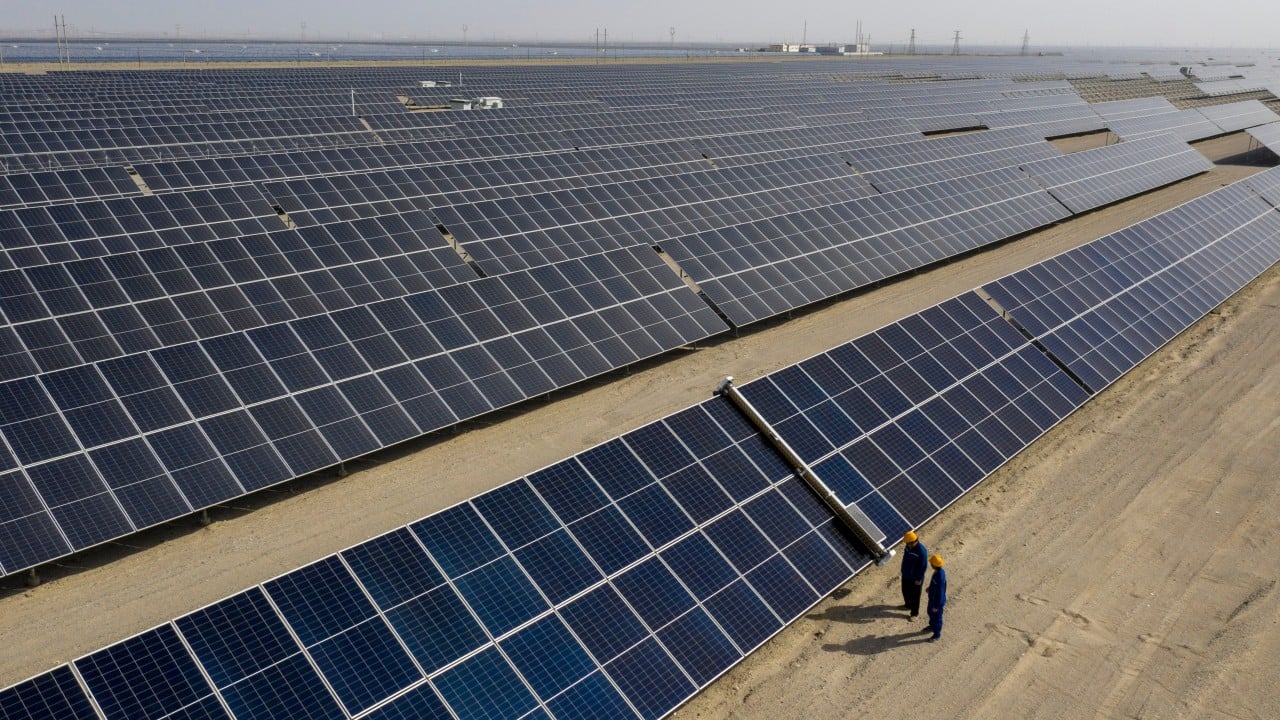
But walk out to the edge of Java's coast, where the vast fields of blue solar panels catch the tropical sun, tilting slowly as the day ages. Watch the maintenance crews wipe away the dust.
Every panel is a mirror reflecting a quiet truth: the green future is arrived, but it speaks only one language.