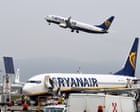
Persistent crude oil shocks and jet fuel spot market spikes to one hundred forty dollars per barrel have exposed the structural fragility of European short-haul aviation. When carrier market leader Ryanair adjusted its fiscal traffic targets downward from two hundred sixteen million to two14 million passengers while citing unhedged winter exposure, the announcement served as an empirical indicator of a deeper cost-function crisis. The underlying mechanics driving this shift involve asymmetric fuel hedging portfolios, rigid fixed-cost asset structures, and an impending shakeout of undercapitalized market participants. Analyzing this disruption requires evaluating the specific operational variables determining carrier survival through seasonal demand troughs.
The Asymmetric Hedging Shield and Cost Disparities
Operating margins in commercial aviation are highly sensitive to Brent crude and crack spread fluctuations, yet exposure levels vary wildly across corporate balance sheets. Fuel typically represents between thirty and forty percent of an airline's total operating expenses. Consequently, risk management strategies regarding derivative contracts dictate short-term survival.
Ryanair operates with eighty percent of its fuel volume hedged at approximately sixty-seven dollars per barrel through March. This creates a massive cost advantage against unhedged or poorly hedged rivals forced to absorb spot market realities.
[Spot Fuel: $140/bbl]
       │
       ├──> Well-Hedged Carriers (e.g., @ $67/bbl) ──> Protected Margins / Controlled Capacity
       │
       └──> Unhedged Competitors (Spot Exposure)  ──> Severe Margin Compression / Forced Shrinkage
When spot prices decouple from historical averages due to geopolitical friction in key transit corridors like the Strait of Hormuz, unhedged operators experience immediate margin compression. They cannot scale ticket prices upward fast enough to match spot-rate velocity without triggering severe demand destruction.
This asymmetry forces an operational dilemma. Competitors lacking deep forward-curve protection must choose between flying loss-making routes during the low-demand winter schedule or proactively ceding slot portfolios and market share. Ceding share damages long-term hub dominance, while flying unhedged capacity accelerates cash burn.
Winter Seasonality and Fixed-Cost Burn Rates
European short-haul networks operate under severe seasonal capacity imbalances. Summer traffic yields high load factors and robust ancillary revenues, subsidizing the structural losses incurred during the low-demand winter months running from November through March.
Carriers cannot simply park an entire fleet without incurring substantial fixed overhead. Lease payments, fixed maintenance reserves, and core administrative expenditures continue regardless of whether an aircraft generates revenue. To mitigate this structural cash drain, disciplined operators execute strategic capacity cuts.
By flattening winter passenger targets, major low-cost networks truncate their exposure to high unhedged winter fuel burn. This tactical contraction reduces off-season loss projections by up to one hundred million euros.
Airlines lacking sufficient liquidity reserves cannot afford these surgical reductions. They maintain flying schedules to generate baseline working capital, inadvertently burning cash on every rotation as high fuel costs outpace low-yield winter fares. This dynamic creates a liquidity bottleneck that separates structurally sound operators from distressed peers.
The Transmission Mechanism to Consumer Pricing
Market forces dictate that sustained cost pressures on core inputs inevitably transfer to end consumers. If high Brent crude benchmarks persist into the following summer scheduling cycle, short-haul ticket prices across Europe will experience material upward repricing.
This inflation operates through three distinct transmission vectors:
- Capacity Rationalization: As distressed carriers exit or shrink operations, aggregate seat supply contracts, driving up load factors and pushing dynamic pricing algorithms higher across remaining operators.
- Cost-Plus Baseline Shift: Even dominant, well-hedged airlines will eventually exhaust their forward-curve protections. As older, low-priced hedge contracts expire, baseline operating costs rise, requiring higher yield floors to maintain net profitability.
- Ancillary Margin Saturation: When core ticket pricing hits consumer elasticity ceilings, carriers attempt to extract revenue through ancillary streams. However, these mechanisms have structural limits before conversion rates drop.
Travelers should expect lower seat density growth and the elimination of ultra-low promotional fare buckets that characterized the post-pandemic capacity wars.
Consolidation and Market Exit Mechanics
The intersection of elevated input costs and restricted winter liquidity points directly toward an accelerated wave of industry consolidation. European aviation features fragmented regional players operating on thin margins.
When working capital buffers thin out during an extended high-fuel regime, these carriers face two paths. They either enter distressed asset restructuring or undergo acquisition by larger balance-sheet conglomerates.
Competitors with weak liquidity profiles will struggle to fund upcoming fleet modernization mandates and debt maturities while simultaneously absorbing sustained fuel penalties. As capacity exits core European nodes, surviving network and point-to-point operators will re-establish pricing power.
Monitor fourth-quarter unit cost reports and winter slot utilization filings across major secondary European bases to gauge which carriers are successfully defending their liquidity runways versus those sliding toward insolvency.