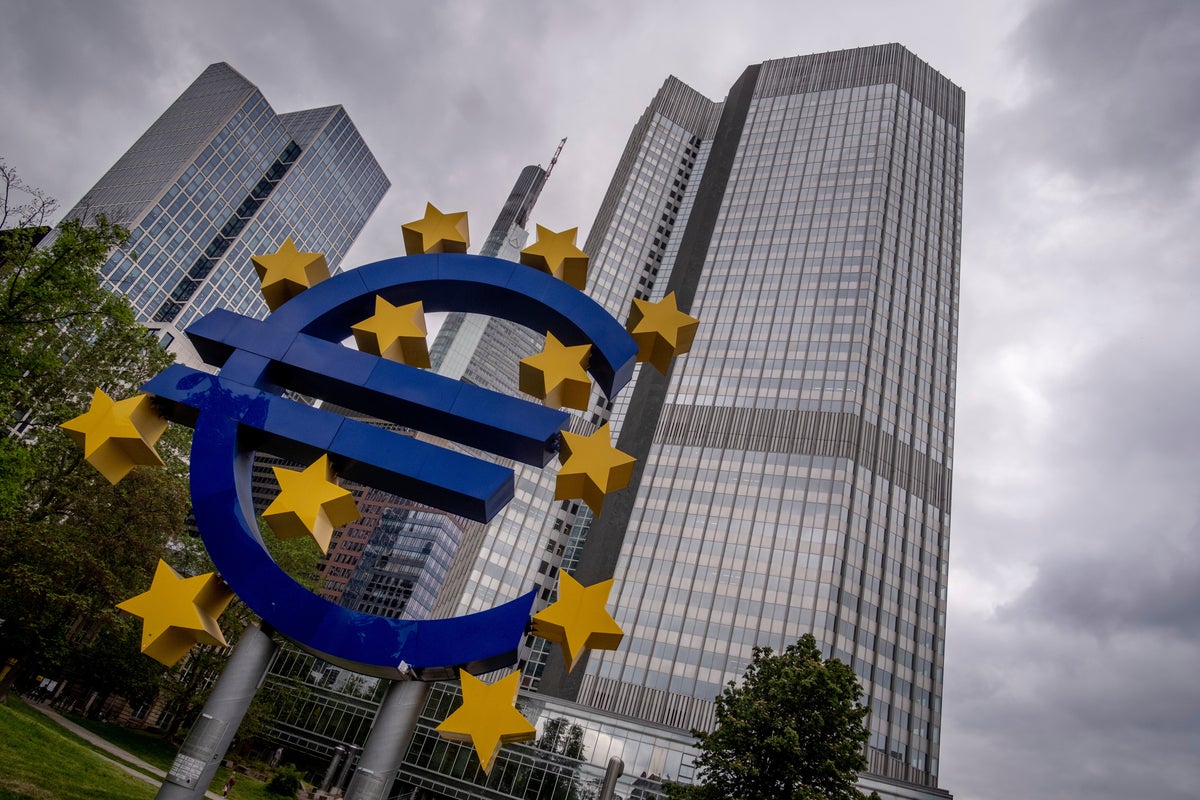
Central bankers love a good crusade. When the European Central Bank raised interest rates again, the official narrative was delivered with the usual gravity: we are pulling liquidity out of the market to break the back of inflation. It sounds disciplined. It sounds resolute.
It is also fundamentally wrong.
The consensus view among mainstream financial journalists and central bank communication teams is that inflation is a monolithic beast tamed only by making borrowing painfully expensive. They treat the current economic pressure as a textbook case of demand-pull inflation—too much money chasing too few goods. But the textbook is outdated, and the medicine is poisoning the patient.
I have watched institutional investors and policymakers play this game for over two decades. They rely on lagging indicators to justify lagging strategies. The ECB is raising rates into a structural supply shock, pretending that making it harder for a German manufacturer to finance a factory upgrade will somehow miraculously lower the global price of liquefied natural gas or unclog maritime shipping routes.
It won’t. It is a fundamental misdiagnosis of the economic disease.
The Myth of the Omnipotent Central Banker
The core argument defending the rate hike rests on a flawed premise: that the central bank can control supply-side shocks by crushing demand. When energy prices surged due to geopolitical friction and structural underinvestment in grid infrastructure, the inflation was pushed from the supply side.
Raising the cost of capital does not produce more oil. It does not plant more wheat. It does not build semiconductor fabrication plants. In fact, it does exactly the opposite.
By making credit expensive, the ECB is actively discouraging the very capital expenditure needed to fix the supply bottlenecks. Imagine a scenario where a logistical bottleneck requires a massive private investment in automated warehousing to lower long-term distribution costs. By raising the cost of borrowing, the central bank ensures that project gets shelved. The supply constraint remains. The structural cost baseline stays high. The central bank achieves nothing except a broader economic slowdown.
This is not a theory; we have seen this script play out before. During the stagflationary periods of the 1970s, the knee-jerk reaction to raise rates blindly often crushed productive industrial capacity long before it cooled the external price pressures. The ECB is repeating history while expecting a different result.
Dismantling the People Also Ask Nonsense
If you look at standard financial forums, the questions being asked reveal how deeply the public has been misled by central bank public relations.
Does raising interest rates lower the price of groceries?
No. Not unless you raise rates so high that people literally cannot afford to eat, which is a catastrophic policy failure, not a success. The price of agricultural inputs—fertilizer, diesel, tractor parts—is driven by global commodity markets and energy costs. The ECB cannot control the weather in the grain belts or the export policies of foreign nations. Pretending a 25 or 50 basis point hike changes what you pay at the supermarket checkout is a comforting lie designed to make central banks look useful.
Why do higher interest rates stop inflation?
They only stop inflation if the inflation is caused by excessive consumer borrowing and speculative spending. If the public is on a wild, debt-fueled shopping spree for luxury goods, higher rates act as a necessary cooler. But when the inflation is driven by structural shortages in housing, energy, and skilled labor, higher rates simply layer a financial crisis on top of an existing supply crisis.
The Brutal Reality of the Transmission Mechanism
The establishment defense argues that even if rates cannot fix supply, they manage inflation expectations. This is the psychological argument: if people believe the ECB is tough on inflation, they won't demand higher wages, preventing a wage-price spiral.
This logic is detached from how modern businesses operate. Companies do not look at the ECB’s deposit rate to decide their annual budget. They look at their raw material costs and their margin targets. If their energy bill triples, they raise prices to survive. If their employees cannot afford rent because the housing supply is choked, those employees demand more money or they leave.
By forcing rates higher, the ECB is squeezing the middle tier of corporate Europe—the Mittelstand companies that form the backbone of the continental economy. Megacorporations with massive cash reserves do not care about a rate hike; they can self-finance or access global capital markets. The mid-sized engineering firm in Baden-Württemberg or the regional logistics provider in Lyon is the one getting choked out by high borrowing costs.
The High Cost of the Contrarian Truth
To be entirely fair, ignoring inflation is not an option either. A completely passive central bank risks capital flight and a crashing currency, which imports even more inflation through dollar-denominated commodities. That is the genuine trap the ECB faces. If they keep rates low while the Federal Reserve raises them, the Euro plummets, and every barrel of oil imported into Europe becomes drastically more expensive.
But acknowledging that constraint is entirely different from the current triumphalist rhetoric claiming that rate hikes are actively "fixing" the internal economy. The ECB is not acting out of economic wisdom; they are acting out of institutional fear. They are trapped by the mechanics of global currency arbitrage.
The Unconventional Blueprint for Corporate Survival
Since the institutional framework is broken, waiting for central banks to save the day is a fool's errand. Businesses must adapt to a regime where capital is expensive but structural inflation remains sticky.
- Purge Long-Term Fixed-Price Contracts: If you are locked into multi-year revenue contracts without inflation-indexing clauses, you are slowly liquidating your own business. Every contract must have dynamic pricing tied to core input indices, not the manipulated consumer price indices published by governments.
- Weaponize the Balance Sheet for Inventory: The old "just-in-time" supply chain model is dead. When capital was free, holding zero inventory made sense. In a volatile, supply-constrained world, physical inventory is a better store of value than cash depreciating in a commercial bank account. Buy inputs forward, store them, and secure your production continuity.
- De-leverage to Re-leverage Strategically: Clear out generic corporate debt that serves no specific growth purpose. Reserve your borrowing capacity strictly for projects that directly reduce your operational dependency on volatile inputs—such as localized energy generation or extreme automation.
The narrative that central banks are the stewards of economic stability is a comforting myth designed for retail investors and financial television. The recent rate hike is not a masterclass in monetary discipline; it is an blunt, clumsy instrument being swung in a dark room full of fragile economic glass. Stop listening to the press conferences. Watch the supply lines. Act accordingly.