The taste of copper never truly leaves the back of the throat. Twenty-five years ago, the sky above lower Manhattan fractured, raining down a fine, alkaline powder that settled on windowsills, clung to fire escapes, and coated the lungs of a city holding its breath. We were told it was safe. We were told to go back to work, to open our windows, to sweep our stoops, and to trust the machinery of government to measure the invisible poison hanging in the air.
Trust is a fragile thing. Once broken by a cloud of pulverized concrete and jet fuel, it shatters into shards so small they can be inhaled without a sound.
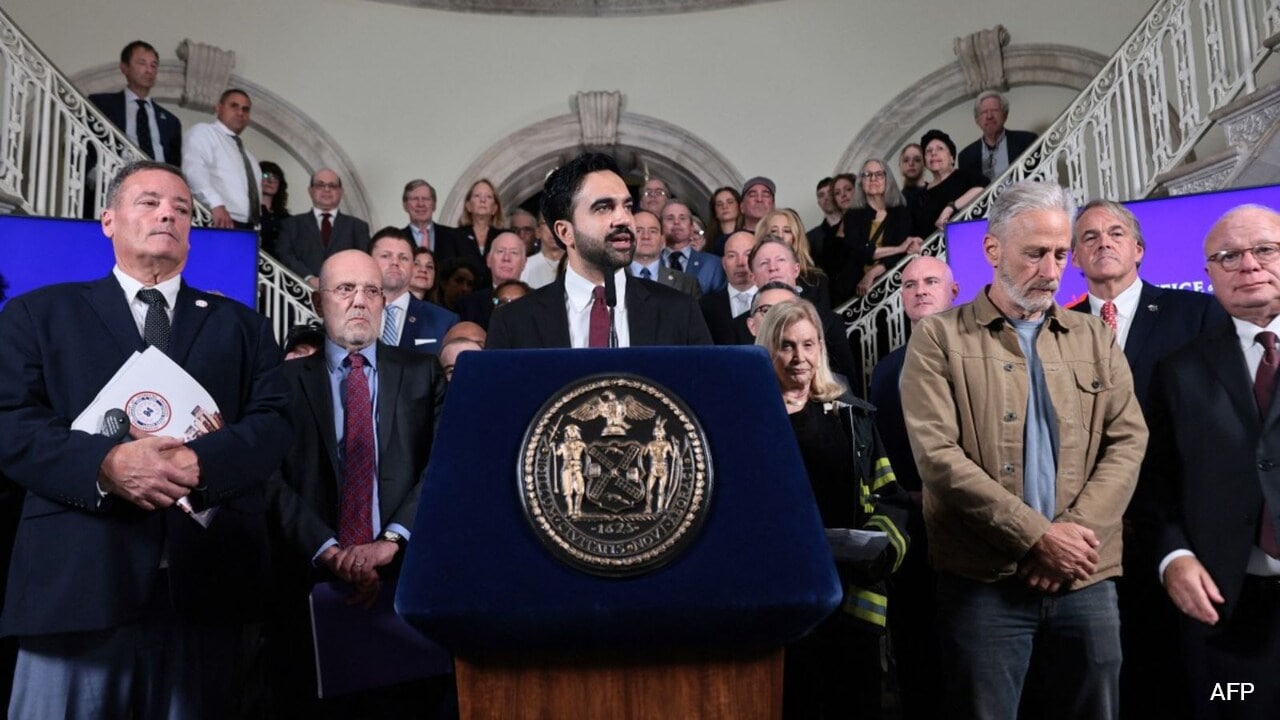
Zohran Mamdani stood before a crowd recently and dragged a long-buried truth back into the sunlight. New York City officials, according to documents and accounts that have spent decades gathering administrative dust, knew the air toxicity following the collapse of the World Trade Center towers was far worse than what was being whispered to the public. They knew. And yet, the official directive remained a soothing murmur designed to keep the economy moving and the panic contained.
Consider what happens when a city decides that public calm is more valuable than public safety.
Imagine walking through the streets of Chinatown or the Financial District in September 2001. You are a delivery worker, a bodega owner, or a teacher returning to a classroom three blocks from the smoking pile. You do not have a specialized respirator. You have a cloth mask or, more likely, nothing at all except your faith in the municipal leaders who look into television cameras and declare that the environment is stable. The air smells metallic and ancient, thick with the ground-up bones of a metropolis. Your eyes water. Your chest burns with every sharp inhalation.
When you ask if it is safe, the answer comes back smooth, measured, and entirely divorced from reality.
That disconnect between official reassurance and bodily reality is where institutional betrayal takes root. Mamdani's recent spotlight on these revelations is not merely an exercise in historical excavation. It is an indictment of a recurring pattern. Whenever disaster strikes, the immediate instinct of power is self-preservation. The bureaucracy wraps itself in plausible deniability, prioritizing corporate continuity and institutional reputation over the biological well-being of the people who make the city run.
The air was a witches' brew of asbestos, benzene, pulverized glass, heavy metals, and dioxins. The Environmental Protection Agency faced immense political pressure to downplay the hazard. Clean up the financial capital. Get the markets open. Show strength. The invisible stakes were paid for with human tissue. Firefighters, police officers, sanitation workers, and ordinary residents inhaled a cocktail of carcinogens that would lie dormant in their tissues for years, waiting for the right moment to turn against them.
When we talk about toxic air, we tend to treat it as an abstract environmental metric. Parts per million. Threshold limits. Acceptable risk margins. But numbers on a spreadsheet do not capture the reality of waking up twenty years later gasping for breath in a bedroom three miles from ground zero, wondering why your lungs feel like dry parchment.
The cover-up was not always a mustache-twirling conspiracy in a smoky backroom. Often, it was more insidious. It was a series of omissions. It was the decision to withhold comprehensive testing data from neighborhoods downwind. It was the failure to mandate proper protective gear for non-union laborers who swept the ash from the asphalt for minimum wage. It was the quiet calculation that acknowledging the full scale of the catastrophe would trigger economic paralysis.
So they traded our lungs for economic stability.
Mamdani pointing out these historical failures forces us to confront a difficult question about how we handle crises today. If the government could obscure the lethality of the air hanging over millions of citizens during the worst domestic attack in modern history, what are they hiding now? What invisible vectors of harm are currently being minimized by spokespeople whose primary job is to protect the status quo from panic?
We want to believe that when the sky falls, someone competent and honest will catch the pieces. We want to trust the emergency broadcast system, the press releases, the solemn press conferences held behind mahogany podiums. But history teaches us that institutional transparency is usually something citizens have to pry open with crowbars, decades after the damage has already been done.
The dust settled long ago. The streets were washed clean by rain and municipal hoses. New towers rose from the footprint of the old ones, taller, shinier, and filled with modern glass. Yet the residue of that deception remains baked into the asphalt and the collective memory of New York. Every time a survivor coughs in the middle of the night, every time a family sits by a hospital bed waiting for test results that trace back to a few weeks in the autumn of 2001, the ghosts of those suppressed reports rattle their chains.
Truth has a long half-life. You can bury it under mountains of bureaucratic memos, dilute it with optimistic press statements, or sweep it into the East River, but eventually, the wind changes direction. The particles rise again, catching the light just right, demanding to be seen by anyone willing to look.