Two minutes. That is the distance between a breath and a funeral when illicit fentanyl enters the bloodstream.
Picture a public restroom behind a convenience store off Broad Street, or a parked sedan idling in the shadow of an overpass near the James River. Consider a hypothetical twenty-four-year-old named Marcus—a composite drawn from thousands of real case files across Virginia—who relapsed on a Tuesday evening after nine months of white-knuckled sobriety. He has a syringe, a small fold of wax paper, and a phone with a cracked screen sitting on his knee. He tells himself he will just take the edge off the panic tightening around his ribs. He pushes the plunger down. Within forty seconds, his respiratory drive switches off like a breaker thrown in a basement. Nobody is there to shake his shoulder. Nobody is holding a four-milligram nasal spray of naloxone. By the time a store clerk notices the locked stall door thirty minutes later, the paramedics are no longer racing to save a life; they are arriving to pronounce a time of death.
Now picture a brightly lit room three miles away, staffed by a registered nurse in blue scrubs, a peer recovery specialist who survived five years on the street, and a stainless-steel table wiped down with medical-grade disinfectant. In that room, Marcus does not die.
Yet in Richmond, Virginia, the elected leaders tasked with protecting the city's residents looked at that room—and unanimously slammed the door shut.
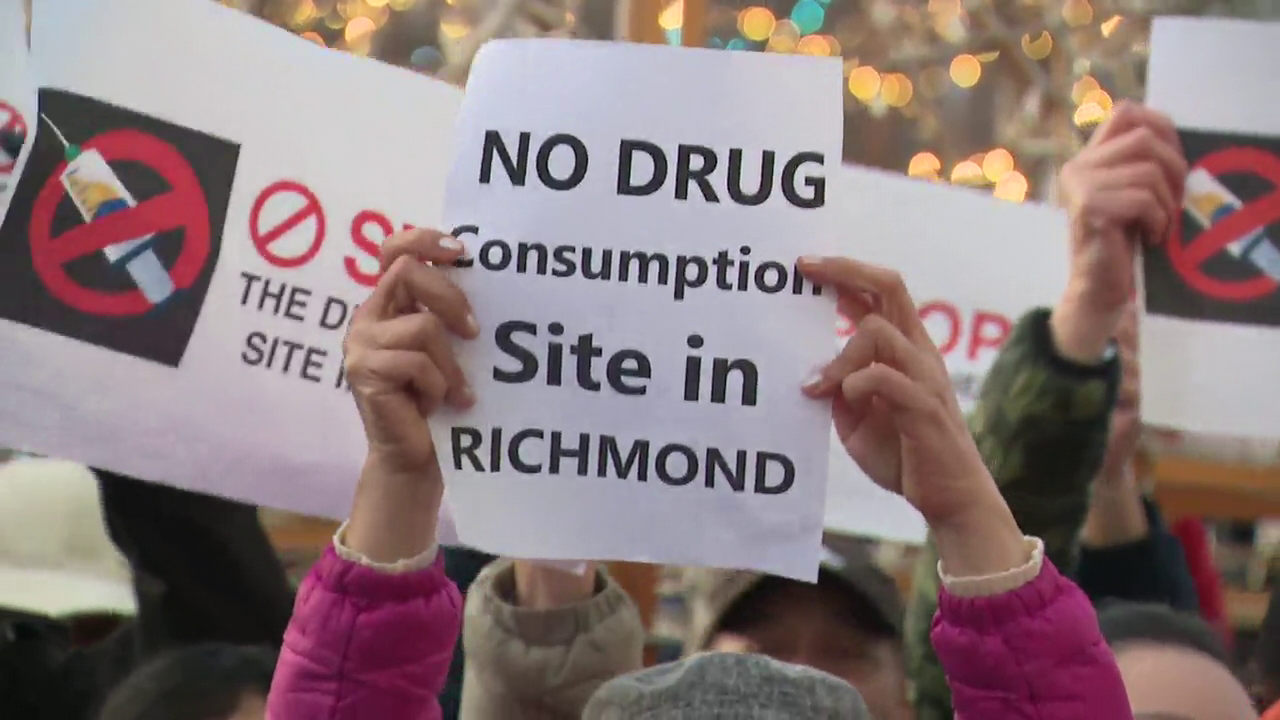
When the Richmond City Council voted down a resolution to explore and authorize supervised consumption sites, the official record captured the moment in cold, procedural ink. A unanimous tally. No dissent. Just a clean, decisive rejection of one of public health's most fiercely debated interventions. To read the standard municipal coverage of that vote, you would think the council had simply declined a zoning variance for a new parking garage. The prose of local governance has a way of anesthetizing tragedy, turning life-or-death policy into dry parliamentary procedure.
Behind that unanimous vote lies a collision of fear, political survival, competing philosophies of compassion, and an epidemic that refuses to wait for City Hall to feel comfortable.
The Anatomy of a Unanimous "No"
To understand why every single member of Richmond's governing body aligned against supervised consumption sites—also known clinically as overdose prevention centers—you have to stand inside the chamber and feel the pressure pressing against the walls from every direction.
On one side sits the raw, undeniable math of the opioid crisis. Across the United States, synthetic opioids have rewritten the rules of mortality, turning what used to be a slow, agonizing decline into an instantaneous ambush. Richmond, like so many mid-sized American cities carrying the twin weights of historic disinvestment and modern housing instability, has absorbed brutal losses. Emergency departments at VCU Medical Center and community hospitals across the metro area have spent years functioning as the last line of defense against a street supply contaminated with fentanyl, xylazine, and shifting synthetic analogs that nobody buying on a corner can accurately measure.
On the other side sits a neighborhood merchant sweeping broken glass and discarded syringes off a brick sidewalk at six in the morning. Sit with that shop owner for ten minutes, and the policy debate stops sounding abstract. She is not a villain. She is exhausted. She worries about customers stepping over unconscious bodies near her front door, about declining foot traffic, about her own safety when locking up after dark. Behind her stand residential associations, school parents, and business coalitions who hear the phrase "supervised consumption site" and immediately picture a magnet for open-air drug markets, loitering, and street crime planted directly on their block.
City council members do not govern in a laboratory. They govern in the crossfire of those phone calls.
When the proposal reached the council floor, the arguments against it crystallized around three core anxieties: legal liability, neighborhood degradation, and the stubborn belief that facilitating safer drug use somehow surrenders the moral imperative of getting people sober. Even council members who privately acknowledged the severity of the overdose crisis balked at the political and legal tightrope required to champion a facility where federally illegal substances are consumed under municipal oversight.
Unanimity in local politics rarely means everyone feels the exact same emotion. Often, it means everyone has calculated the exact same risk. Saying yes to an overdose prevention center requires immense political courage; saying no requires only a nod toward public order and federal statutory ambiguity.
What Actually Happens Inside an Overdose Prevention Center
Misunderstanding thrives in the dark, and few public health concepts are more thoroughly misunderstood than supervised consumption. Critics frequently imagine a chaotic, lawless gallery—a state-sponsored opium den where addiction is indulged and taxpayer money subsidizes self-destruction.
The reality is almost aggressively mundane.
If you walk into an established overdose prevention center—like OnPoint NYC in Manhattan, which opened in late 2021 as the first publicly recognized sites in the United States, or Insite in Vancouver, which has operated continuously since 2003—the atmosphere feels closer to a quiet community dental clinic than a street corner.
There are no dealers inside. Substances are not supplied, sold, or shared on the premises. Instead, an individual brings their own pre-obtained drugs, checks in at a reception desk, and is assigned a clean, well-lit booth equipped with sterile syringes, alcohol swabs, cookers, and sharps disposal containers. Nurses watch from an unobtrusive station, tracking breathing rates and skin color with trained eyes.
If a participant nods off and their oxygen saturation drops, intervention happens in seconds, not minutes. Staff administer oxygen, perform rescue breathing, or deliver calibrated doses of naloxone—often titrated carefully enough to restore breathing without throwing the person into agonizing, violent withdrawal.
In more than three decades of operation across dozens of facilities in Canada, Europe, and Australia, documented fatal overdoses inside supervised consumption sites stand at a stark, astonishing number: zero.
Not low. Zero.
More importantly, the booth is rarely the end of the interaction. It is the front door. Consider the psychological barrier between a person actively using street drugs and the traditional healthcare system. To enter a standard rehab clinic or hospital, a person in active addiction often has to navigate judgmental intake desks, bureaucratic waitlists, insurance verification, and the terrifying expectation that they must be completely abstinent before anyone will help them. So they stay away until an ambulance brings them in unconscious.
An overdose prevention center flips that sequence. By meeting people where they are—literally keeping them alive today without demanding immediate perfection—nurses and peer counselors build trust over dozens of small, unhurried conversations. Over time, the person who came in solely to avoid dying in an alley asks a nurse to look at a worsening skin abscess. Two weeks later, they ask a peer specialist how to get onto buprenorphine or methadone. A month after that, they accept a bed in a detox program.
You cannot rehabilitate a corpse. That blunt truth sits at the foundation of every harm reduction model on earth, yet it remains the hardest pill for traditional politics to swallow.
The Invisible Ledger of Rejection
When a city council votes down a measure like this, the ledger does not stay balanced at zero. The costs do not disappear; they simply migrate into places where they are harder to tally on a municipal budget sheet.
Trace the ripple effects of Richmond's decision through the city's infrastructure.
First, look at emergency response. Every time an overdose occurs in a public park, a library bathroom, or a fast-food parking lot, the city dispatches an ambulance, a fire engine, and often a police cruiser. Paramedics spend forty-five minutes stabilizing a patient who might otherwise have been revived in ninety seconds by a nurse with an oxygen mask. While that ambulance crew is tied up on a preventable street overdose, a resident three neighborhoods away having a heart attack waits longer for transport.
Second, look at public spaces—the exact concern that drove many residents to oppose the sites in the first place. Rejecting supervised consumption sites does not stop people from using drugs in Richmond. It merely guarantees that consumption continues in alleys, behind dumpsters, on transit benches, and in public restrooms. Syringes still end up in storm drains and park grass because there is no centralized, safe indoor space with immediate sharps disposal.
Third, look at infectious disease. Sharing needles or reusing dull equipment drives spikes in HIV and Hepatitis C transmission. Treating a single complex case of HIV or end-stage liver disease over a lifetime costs the public healthcare system hundreds of thousands of dollars—far eclipsing the operational expense of sterile supplies and nursing staff.
These are the invisible stakes. They never appear in the headline announcing a unanimous council vote, because they unfold quietly over months and years in hospital wards, county morgues, and grieving living rooms.
The Trap of False Choices
Why do smart, well-intentioned leaders and citizens keep getting stuck here?
Part of the answer lies in a persistent cultural reflex: the urge to treat addiction primarily as a failure of willpower rather than a chronic, relapsing disorder of brain circuitry and trauma. When we view substance use through a purely moral lens, any intervention that does not immediately demand abstinence feels like surrender. It feels like enabling.
Think of it like a lifeguard watching a swimmer caught in a riptide. Nobody stands on the shoreline shouting that throwing a flotation ring "enables" poor swimming habits, or arguing that the swimmer should first prove they have enrolled in swimming lessons before receiving a buoy. You pull the human being out of the water first. Once their feet are on dry sand and their lungs are clear, you talk about how to keep them out of the current tomorrow.
Opponents of supervised consumption sites often ask whether cities shouldn't just invest more money in treatment beds, affordable housing, and mental health counseling instead. It is a fair question, and it deserves an honest answer: yes, cities desperately need all of those things. In Richmond and across Virginia, waitlists for inpatient treatment and supportive housing remain painfully long.
Framing overdose prevention centers as an enemy of treatment, however, creates a false choice. In cities where these centers operate successfully, they function as high-volume pipelines into treatment. In Vancouver, studies tracking Insite participants found that regular visitors were thirty percent more likely to enter detoxification programs than comparable peers who did not use the facility. Far from trapping people in addiction, consistent contact with medical professionals broke the isolation that keeps addiction lethal.
Still, admitting uncertainty builds more trust than pretending any single policy is magic. Supervised consumption sites are not a cure-all. If a city opens a facility without strict perimeter management, frequent street outreach, adequate security, and surrounding wrap-around services, neighborhood friction can—and does—erupt. Residents living within two blocks of any high-need social service facility have every right to demand clean sidewalks, responsive policing around predatory dealers, and genuine community consultation rather than top-down mandates.
Richmond's council members were not wrong to worry about implementation, funding streams, or the daunting shadow of federal law—specifically the federal "crack house statute" under the Controlled Substances Act, which federal prosecutors have historically used to threaten property owners hosting unauthorized drug consumption. Even though the U.S. Department of Justice has signaled greater flexibility in recent years, no municipal attorney wants to volunteer their city as a federal test case without ironclad state-level protection.
Where the Story Moves Next
By rejecting supervised consumption sites unanimously, Richmond's leaders bought themselves temporary political peace. There will be no ribbon-cutting protests outside a controversial clinic next month. No council member will have to answer angry emails about a new facility opening near a commercial corridor.
Yet the underlying crisis has not signed a truce.
Every night in Richmond, long after the council chambers are dark and the microphones are switched off, dozens of people will sit alone in parked cars, rented rooms, and shadowed doorways, preparing a dose whose potency they cannot verify. Some of them are someone's son who used to play little league in Chesterfield. Some are mothers trying to outrun grief they never learned how to carry. Some are veterans whose pain outlasted their discharge papers.
They do not read municipal resolutions. They do not follow legislative roll calls. They only know the sudden, silent drop when the breath leaves their chest and there is nobody in the room to bring it back.
The door in City Hall is locked for tonight, leaving the cold air outside to do what it has always done.