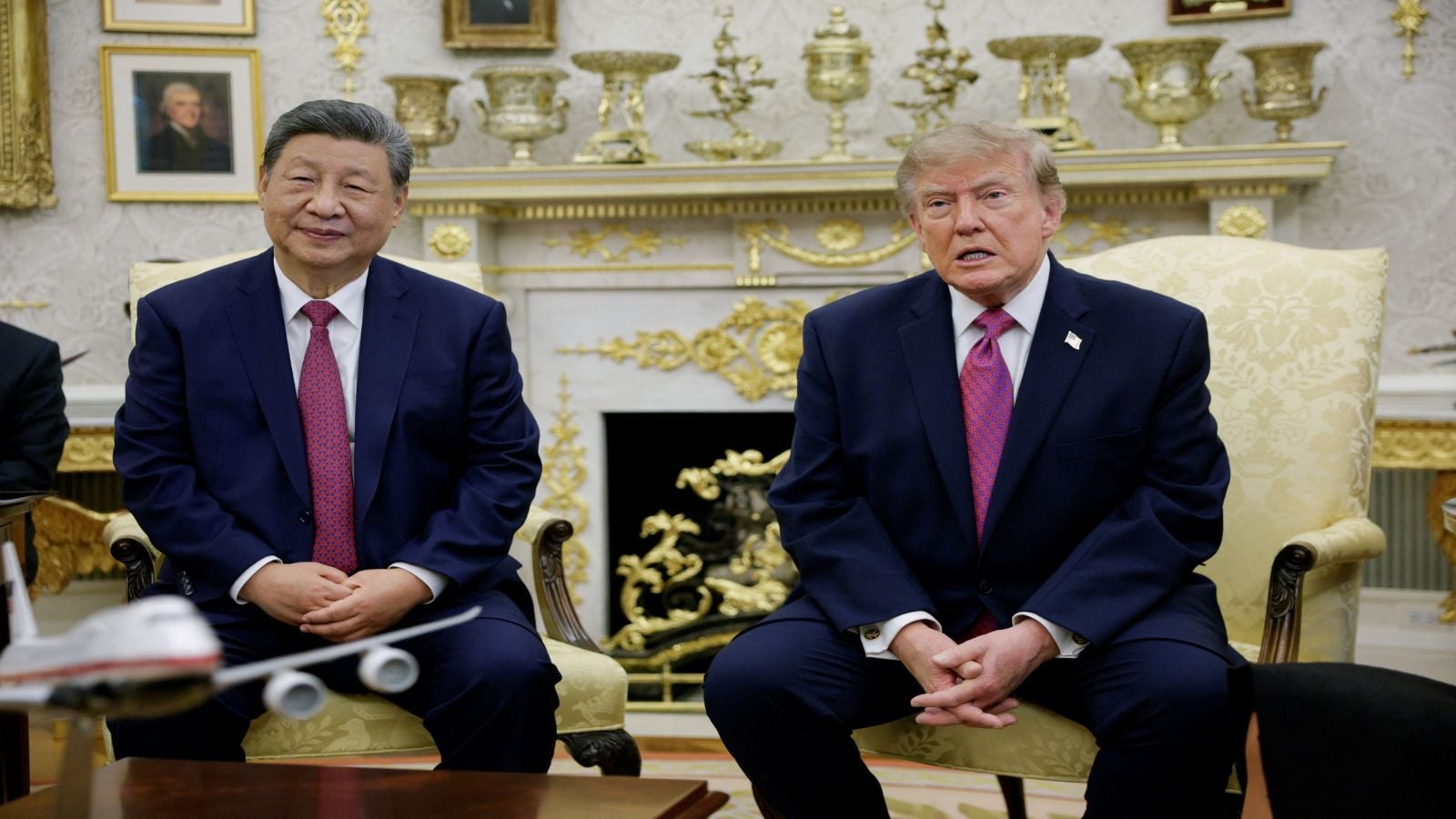
Bilateral negotiations between the United States and China operate under a dual-track framework where high-level political optics frequently mask underlying economic and strategic constraints. The announcement of recurring leadership engagements, culminating around multilateral summits such as APEC in Shenzhen, highlights a transactional approach to diplomacy. Rather than resolving deep-seated structural conflicts, these meetings serve as mechanisms for volatility containment.
The Cost Function of Summit Diplomacy
Statecraft at the highest executive level relies heavily on personalism. When national leaders communicate directly, they bypass bureaucratic friction points within their respective domestic agencies. However, this creates an operational hazard: the compression of complex policy files—ranging from semiconductor export controls to maritime security—into bilateral communiques that lack institutional enforcement mechanisms. Don't forget to check out our earlier post on this related article.
The mechanism of bilateral interaction between Washington and Beijing is governed by a distinct risk calculus. Each side faces a domestic imperative to project strength while avoiding accidental escalation. Consequently, recurring summits function as safety valves. When tariffs loom or technological restrictions tighten, leaders step in to establish temporary floors beneath the relationship. These pauses, however, do not alter the fundamental trajectory of strategic competition.
The Asymmetry of Economic Interdependence
The structural reality underpinning these meetings is an asymmetric interdependence. Washington utilizes regulatory instruments, financial sanctions, and targeted export restrictions to preserve technological primacy. Beijing counters by leveraging supply chain choke points, particularly in critical minerals and rare earth processing. If you want more about the context of this, Associated Press offers an in-depth summary.
This dynamic establishes a zero-sum baseline within a commercially integrated system. When trade delegations negotiate purchase commitments or intellectual property protections, the agreements are inherently unstable because the enforcement mechanisms depend on unilateral compliance. If domestic economic indicators deteriorate in either nation, the political incentive to break the truce outweighs the cost of diplomatic friction.
Multilateral Intersections and Strategic Triangles
Expanding the diplomatic architecture to include trilateral dynamics—such as interactions involving secondary powers or strategic rivals like Russia—adds another layer of analytical complexity. In these expanded configurations, issue linkage becomes the primary tool of statecraft. Leaders attempt to trade concessions across unrelated domains, such as linking regional security assurances to bilateral trade terms.
History demonstrates that cross-domain linkage frequently fails when the stakes are asymmetric. A state facing existential security pressures will rarely trade core military objectives for commercial market access. Therefore, attempts to bundle disparate geopolitical crises into a single summit agenda typically result in parallel monologues rather than integrated solutions.
Strategic Forecasting for Bilateral Stability
The utility of scheduled leadership encounters lies entirely in crisis management rather than conflict resolution. As long as structural decoupling in critical technology sectors proceeds alongside deep integration in consumer goods, bilateral relations will remain bound to a cyclical pattern of escalation, negotiation, and temporary stabilization. Future stability does not depend on the frequency of presidential summits, but on the durability of the administrative guardrails established beneath the political leadership.