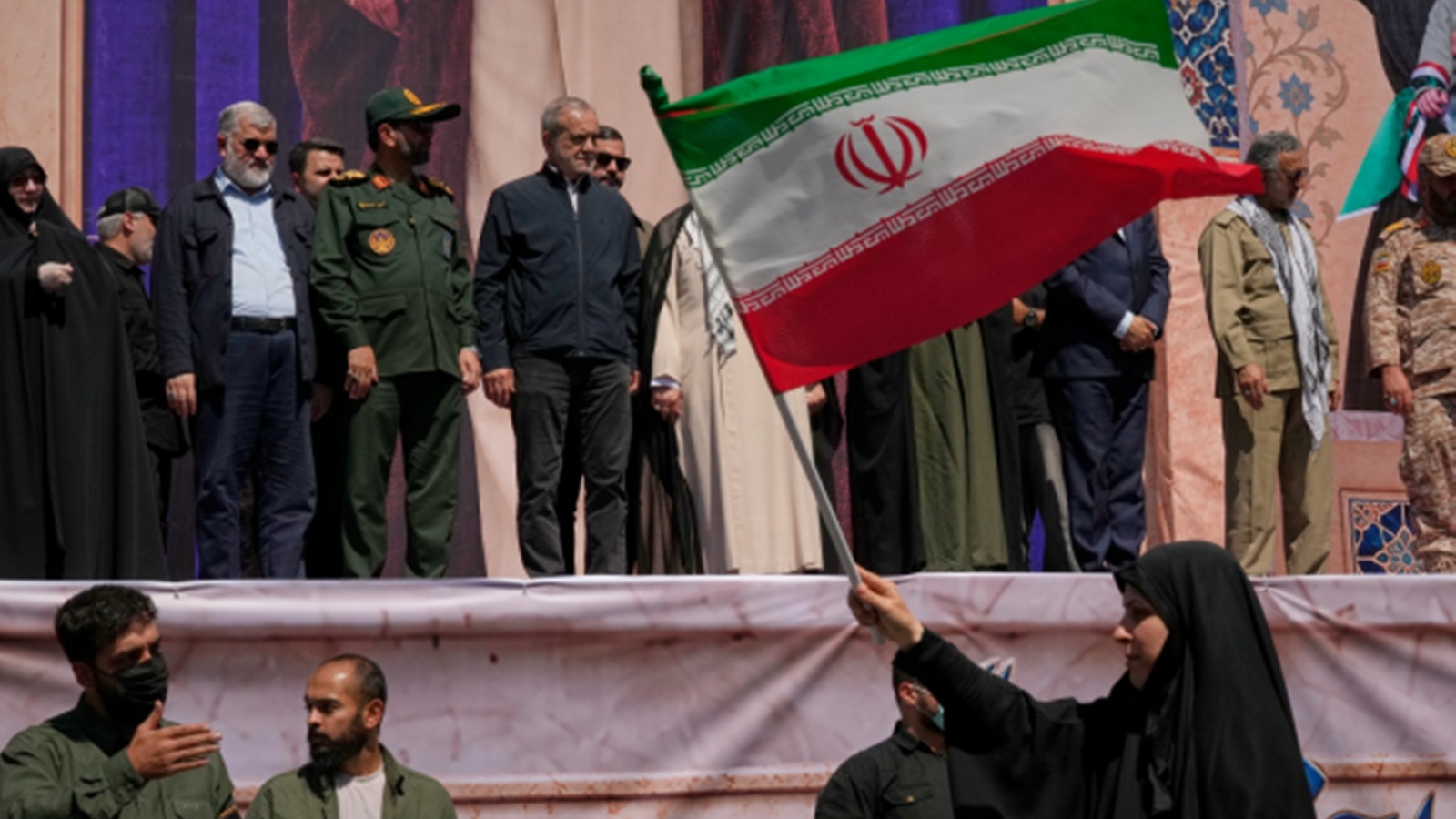
When a state leader declares "no trust" in an adversary's sincerity while remaining seated at the negotiating table, the statement is rarely a literal report of internal emotion; it is a strategic price signal in a high-stakes bargaining game. Standard live-blog coverage of Iranian President Masoud Pezeshkian's remarks on American peace sincerity treats diplomatic rhetoric as a standalone headline. That surface-level reading misses the structural incentives driving both capitals through the 2025–2026 confrontation—from the outbreak of hostilities in late February 2026 and the stalled June memorandum of understanding to maritime friction around the Strait of Hormuz and indirect Qatari-mediated talks.
To understand why negotiations stall despite repeated exchanges of proposals, analysts must separate known facts (public statements, documented military strikes, sanctions regimes, maritime disputes, and diplomatic formats) from educated hypotheses (unobserved leadership intentions, covert political calculations, and hidden red lines). Evaluating the standoff through bargaining theory, commitment problems, and domestic constraint models exposes why distrust persists even when both sides face mounting economic and military costs.
Deconstructing the Standard Live-Blog Narrative
Live-update reporting typically structures coverage around chronology and quotation: a leader questions Washington's sincerity, cites past grievances or strikes, and reiterates a conditional openness to talks. While fast and readable, that format carries three analytical blind spots.
- Conflating posture with policy. Public complaints about bad faith often serve to manage domestic audiences, signal resolve to regional partners, or raise the diplomatic price of concessions before an offer is tabled.
- Treating talks and coercion as mutually exclusive. In protracted crises, states frequently pair diplomatic channels with military strikes, naval pressure, or sanctions to alter the adversary's reservation value—the worst outcome a side will accept before walking away.
- Ignoring asymmetric enforcement capacities. When one side controls financial sanctions and maritime interdiction while the other controls regional escalation and chokepoint access, "trust" is a proxy for verifiability and reversibility rather than personal goodwill.
The Commitment Problem and Credibility Gap
In international relations theory, a commitment problem arises when two parties recognize a mutually beneficial settlement—such as halting strikes, easing maritime blockades, or unlocking frozen funds—but neither can guarantee that the other will honor the terms once concessions are made. Pezeshkian's framing of distrust directly targets this mechanism: if strikes occur alongside diplomatic outreach, or if written understandings fail to hold, each side discounts future promises.
The cause-and-effect chain operates in two directions. From Tehran's perspective, military pressure during negotiations raises the fear that diplomacy is being used to buy time, extract unilateral concessions, or weaken internal stability rather than settle core disputes over regime security, sanctions, and regional operations. From Washington's perspective, demands for sweeping up-front relief—such as lifting sanctions, ending naval blockades, or releasing assets—before core security or nuclear conditions are met create the risk that Tehran pockets economic relief while retaining escalatory leverage.
A negotiated settlement fails not only when sides want incompatible things, but when the sequence of concessions rewards defection before verification is complete.
Why "Sincerity" Is an Operational Metric, Not a Moral One
States rarely act purely on "sincerity" in anarchy; they act on incentive alignment and reputational costs. When Pezeshkian questions whether Washington is genuinely interested in solving problems or seeks to undermine the administration, the core analytical question is whether the United States faces domestic or international incentives to sustain an agreement once signed. Conversely, Washington's skepticism centers on whether Tehran can credibly bind its security apparatus and regional posture to durable limits.
Four Structural Pillars of the Negotiation Deadlock
Rather than viewing the standoff as a single argument over trust, it helps to map the four structural variables that govern every round of indirect talks.
- Sequencing and Conditionality. Disagreements over order of operations—whether confidence-building steps, asset releases, or maritime reopening come before or after broader security and nuclear commitments—frequently stall talks even when negotiators exchange drafts.
- Coercive Bargaining Alongside Diplomacy. Strikes, drone incidents, naval blockades, and sanctions operate as parallel instruments of leverage. Each kinetic or economic shock shifts perceived risk, often hardening bargaining positions rather than softening them.
- Domestic Political Constraints. Both governments operate under domestic pressures. In Iran, inflation, energy strain, and factional scrutiny shape how much flexibility leadership can project without appearing weak; in the United States, voter fatigue over conflict costs and price pressures competes with hawks who oppose concessions.
- Third-Party Mediation Bandwidth. Regional intermediaries—such as Qatar, alongside regional neighbors—can transmit proposals, clarify red lines, and lower communication friction, yet mediators cannot manufacture political will or enforce compliance on their own.
Common Questions Behind the Headlines
Readers tracking these exchanges typically want to know three practical things: whether public distrust means talks are over, why governments negotiate while fighting continues, and what a realistic breakthrough looks like.
Publicly declaring "no trust" does not automatically terminate diplomacy. Governments routinely maintain indirect channels precisely because walking away leaves them with fewer off-ramps if escalation spirals. Similarly, negotiating under fire is a classic coercive diplomacy tactic: each side tries to shape the other's cost-benefit calculation at the table while signaling it will not negotiate from a position of perceived capitulation.
A realistic interim step in such a deadlock rarely solves every grievance at once. Instead, negotiators typically look for modular, verifiable exchanges—narrowly defined pauses, tightly scoped humanitarian or financial steps, or phased maritime understandings—where each move is reversible if the other side defects.
Analytical Framework for Tracking Future Rounds
To evaluate incoming headlines without getting whipsawed by daily rhetoric, apply a four-step diagnostic whenever a new statement or strike occurs.
First, audit the channel versus the megaphone. Distinguish between public speeches aimed at domestic or regional audiences and quiet indirect exchanges carried through mediators.
Second, map concessions to reversibility. Ask whether a proposed step—lifting a sanction, unfreezing funds, halting strikes, or easing transit restrictions—can be quickly reversed if violated, and who bears the cost of reversal.
Third, identify the binding constraint. Determine whether the bottleneck is substantive (incompatible demands on security, sanctions, or chokepoints) or procedural (distrust over who moves first).
Fourth, watch domestic cost thresholds. Track economic indicators, political calendars, and elite cohesion on both sides to judge when the cost of stalemate exceeds the political cost of compromise.
Limitations of This Framework
No analytical model can predict surprise military actions, sudden leadership shifts, or miscalculations in fast-moving crises. Moreover, open-source observers lack full visibility into private diplomatic texts, backchannel assurances, and internal deliberations. Treating educated hypotheses about motives as proven facts is the fastest way to misread a negotiation.
Strategic Recommendation for Decision-Makers and Analysts
Stop measuring diplomatic momentum by expressions of trust or optimism from either capital. Instead, anchor assessments on staged, self-enforcing interim milestones paired with explicit escalation guardrails: any viable near-term off-ramp will depend on narrow, verifiable reciprocal steps—such as localized de-escalation paired with bounded economic or transit adjustments—backed by clear rules against kinetic surprises during active mediation. Until negotiators align incentives so that defection is costlier and harder to conceal than partial compliance, rhetoric about sincerity will remain a bargaining weapon rather than a measure of peace.