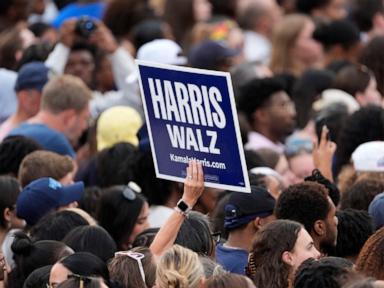
The Democratic National Committee finally released its long-delayed, 192-page post-election autopsy, revealing a party suffering from a fundamental disconnect with the American electorate. While the report delivers a sweeping critique of the 2024 campaign, blaming a failure to connect with Middle America, an over-reliance on identity politics, and a glaring lack of negative firepower against Donald Trump, its most explosive subtext lies in what it attempted to hide. DNC Chair Ken Martin tried to shelve the document, admitting it "was not ready for primetime" before a series of media leaks forced his hand. The document exposes a bitter civil war over strategy, a total failure of advance planning, and an administrative failure that left Kamala Harris politically isolated long before her 107-day sprint even began.
Political autopsies are supposed to be clinical evaluations. This one reads like a deposition from a broken marriage.
The Succession Vacuum and the Three Year Failure
The central friction inside the Democratic apparatus revolves around timing and preparation. The document explicitly states that the White House failed to effectively support Vice President Harris over three and a half years to improve her standing before the dramatic July 2024 candidate switch.
Instead of building a formidable successor, the party machine operated under the assumption that an incumbent Joe Biden would cruise to the nomination. When cognitive decline and plunging approval ratings forced a sudden handoff, Harris was left to inherit a campaign structure she did not build, saddled with liabilities she could not outrun.
The most damaging of these liabilities was the weaponization of her portfolio.
The report notes that the administration stood by as conservative media and eventually mainstream outlets branded Harris the "border czar." It was a title the White House never aggressively contradicted or reframed. By the time Harris took the top of the ticket, the opposition had already spent hundreds of millions of dollars defining her through that single, uncorrected lens. The party lacked the agility to rewrite a narrative that had been hardening in the minds of voters since 2021.
The Rural Math That Did Not Work
For a decade, the dominant Democratic strategy relied on a simple equation: maximize turnout in urban centers, win the suburbs, and let the rural counties bleed out. The 2024 autopsy formally declares this strategy dead.
According to the data, the campaign essentially wrote off rural America, operating under the assumption that suburban margins would compensate for catastrophic losses elsewhere. The math simply collapsed. Rural voters still comprise a massive share of the national electorate, and losing them by eighty-point margins creates a mathematical deficit that cannot be overcome by high turnout in cities like Philadelphia, Detroit, or Milwaukee.
The party ran a campaign based on rational persuasion and complex policy arguments at a moment when the electorate was driven by economic anger and visceral distrust. While Democratic strategists pointed to macroeconomic indicators like Gross Domestic Product growth and low unemployment figures, voters were dealing with the cumulative, compounding weight of a thirty-percent increase in grocery prices since the pandemic.
Consider the reality of a working-class household.
If a family spent $400 a month on groceries in 2019, that same basket of goods cost over $520 by 2024. No amount of white papers on the Inflation Reduction Act could override the daily reality of that grocery receipt. The party spoke the language of spreadsheet achievements; the voters spoke the language of checking accounts.
The Identity Trap and the Boxed In Candidate
Perhaps the most culturally significant section of the report deals with the party’s preoccupation with identity politics. The autopsy warns that millions of working-class and middle-American voters no longer see their lives or values reflected in the Democratic vision.
This cultural alienation became lethal when weaponized through targeted advertising.
The report highlights a specific series of opposition advertisements focusing on Harris’s past support for taxpayer-funded gender-affirming surgeries for federal prisoners and detainees. Democratic pollsters admitted internally that Harris was completely trapped on the issue. Strategists concluded there was no effective counter-response available unless the Vice President explicitly reversed her stance, which she declined to do. The opposition exploited this silence, using it to paint the entire party as ideologically extreme and detached from the concerns of ordinary citizens.
This vulnerability extended to demographic groups the party long viewed as guaranteed components of its coalition.
The autopsy notes a severe underperformance among male voters, particularly Black and Latino men. For years, Democratic operations treated minority voters as a monolith, assuming that racial identity would automatically secure their loyalty. The 2024 data suggests otherwise. Young men of color moved toward the opposition not because they suddenly embraced conservative social ideology, but because they felt ignored by a Democratic apparatus that prioritized cultural rhetoric over direct economic engagement.
The Missing Pages and the Gaza Silence
What the official DNC report leaves out is just as damning as what it includes. The published 192-page document completely omits any mention of the war in Gaza or the administration’s foreign policy decisions.
This omission stands in stark contrast to independent post-election reports, such as the one compiled by RootsAction, which argued that the administration’s unwavering support for the military campaign in Gaza cost the party millions of votes among young people and Arab-American communities in critical swing states like Michigan.
Internal DNC data leaked to outside policy groups earlier in the year suggested that the administration’s Middle East policy was a net-negative that suppressed turnout among the party’s most active grassroots volunteers. Yet, the final document presented to the public scrubbed these findings entirely. By protecting the institutional legacy of the Biden administration, the committee compromised the intellectual honesty of its own review, proving that factional self-preservation still takes precedence over systemic reform.
The Firepower Imbalance
The review makes a startling concession regarding tactical aggression: the opposition simply out-campaigned the institutional Left. The document notes that Republicans borrowed more effectively from Barack Obama’s 2008 playbook than the modern Democratic Party did. They built a decentralized, highly motivated digital apparatus powered by alternative media, podcasts, and independent content creators.
Meanwhile, the institutional Democrats relied on traditional ad buys, legacy television networks, and high-dollar fundraising events that insulated candidates from raw voter interaction.
When the opposition launched a massive, coordinated narrative assault against Harris in August and September, the Democratic leadership made a conscious decision not to engage in negative advertising at the necessary scale. They brought a knife to a psychological warfare fight. There was a profound lack of equivalent negative firepower directed back at Trump, leaving Harris to play defense for the entirety of the autumn campaign.
The lesson of the 2024 autopsy is not that the Democratic Party had the wrong message, but that it no longer possesses the mechanism to hear what the country is actually saying. It is an organization designed to talk to itself, trapped in an echo chamber of its own policy papers, corporate donors, and demographic assumptions. Showing up, listening, and doing it again requires more than a shift in advertising dollars. It requires an entirely different understanding of power, class, and the American worker.