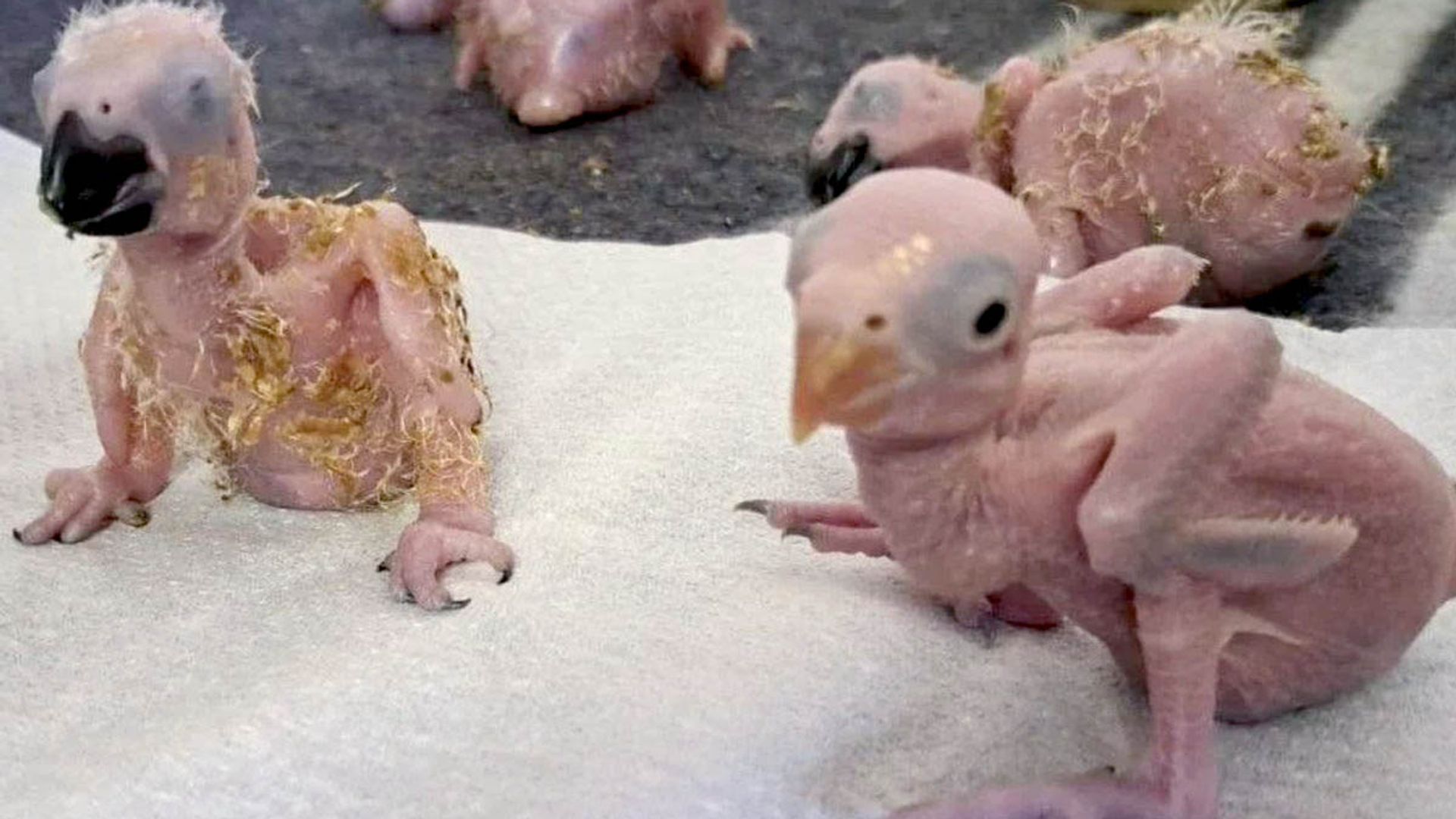
The recent interception of hundreds of endangered parrot eggs at Johannesburg’s OR Tambo International Airport, followed by successful incubation outcomes at the National Zoological Garden in Pretoria, exposes a sophisticated logistical pivot in transnational wildlife crime. Moving viable avian embryos rather than adult specimens alters the risk-reward matrix for illicit syndicates. Syndicate operators face distinct economic incentives that dictate how biological contraband is sourced, packaged, and transported across international borders.
The Economics of Embryo Transport
Traffickers prioritize eggs over adult birds to minimize transit volume while maximizing cargo value per kilogram. An adult exotic parrot requires dedicated caging, continuous feeding, and produces vocalizations that instantly compromise security screening. Conversely, an incubation unit disguised as hand luggage can house dozens or hundreds of embryonic specimens in a dormant biological state.
The cost function for the trafficker relies on three primary variables:
- Acquisition cost at the poaching origin point in South Africa.
- Transit survivability rate determined by thermal stability inside makeshift incubators.
- Black-market retail yield upon delivery to destination nodes such as Southeast Asia.
When operatives transport 418 eggs in a single operation—as recorded in the July intercept involving a 23-year-old suspect—the enterprise aims for high volume absorption. Even if thermal regulation fails during flight, resulting in a fractional mortality rate, the surviving yield of rare CITES-listed chicks commands an exorbitant price among private collectors. This compensates for total losses on intercepted shipments.
Interception Vectors and Jurisdictional Bottlenecks
Law enforcement agencies targeting these syndicates rely on intelligence-driven operations involving specialized environmental inspectorates and border police units. However, structural vulnerabilities persist at major transit hubs. OR Tambo International Airport serves as a primary gateway, forcing security apparatuses to balance high passenger throughput against deep-baggage profiling.
Smugglers exploit standard baggage hand-carry protocols by utilizing battery-powered, low-profile thermal boxes that mimic commercial electronics. The regulatory framework under South African law imposes severe penalties—including fines up to ten million rand and ten-year prison sentences for trafficking protected species. Yet, deterrence fails when potential margins on the black market outscale the expected monetary penalty multiplied by the probability of apprehension.
Biological Recovery and Husbandry Constraints
Seizing illicit eggs creates an immediate operational burden for conservation authorities. Avian embryos demand precise temperature, humidity, and turning protocols to avoid developmental deformities or mortality. When the National Zoological Garden in Pretoria assumes custody of intercepted clutches, veterinary teams absorb the technical complexity of artificial incubation and neonatal hand-rearing.
The transition from a smuggler's makeshift bag to a professional incubator highlights a critical biological bottleneck:
- Thermal shock during the initial airport seizure compromises membrane integrity.
- Carbon dioxide accumulation inside sealed, unventilated smuggling containers suffocates developing embryos prior to inspection.
- Nutritional deficiencies post-hatch require specialized intensive care formulas to prevent metabolic bone disease in altricial chicks.
Successful hatching metrics reported by state zoological staff demonstrate that rapid veterinary intervention can rescue biological assets from compromised supply chains. Nevertheless, reintegrating captive-reared individuals into wild populations remains challenging due to imprinting risks and the lack of native flock behaviors.
Transnational Syndicate Adaptability
The temporal proximity of the August seizure of 50 eggs to the July intercept of 418 eggs, both involving Thai nationals, suggests a persistent logistical pipeline rather than isolated criminal acts. Transnational networks operate with modular redundancy. If one courier route encounters interdiction, syndicates rapidly reallocate capital to alternate couriers or shift exit points through neighboring porous land borders before flying out of regional airfields.
Counter-trafficking strategies must therefore evolve from reactive airport interdictions to upstream surveillance. Disrupting the poaching networks at the nesting phase—long before eggs reach the packaging stage—is the only mechanism capable of altering the economic viability of avian smuggling operations.