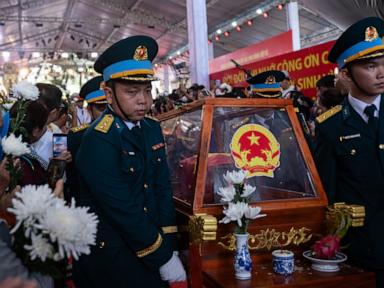
Decades after the guns fell silent across the rice paddies and urban alleyways of Vietnam, the human toll of the conflict continues to emerge from the earth. Nearly sixty years following the Tet Offensive of 1968, the government of Vietnam recently interred the remains of 731 fallen soldiers. This solemn operation highlights a reality that extends far beyond political rhetoric or textbook summaries. The physical remnants of war remain scattered, unidentified, and waiting for closure.
The Tet Offensive stands as a watershed moment of the Vietnam War. In January 1968, North Vietnamese forces and the Viet Cong launched coordinated surprise attacks against military and civilian command and control centers throughout South Vietnam. The offensive shattered the illusion of an imminent American victory, fundamentally altering the trajectory of global geopolitics and domestic politics in the United States. Yet, while historians debate the strategic victories and tactical failures, thousands of families spent generations searching for the missing. For a more detailed analysis into similar topics, we recommend: this related article.
The Logistics of Loss
Locating and identifying remains nearly six decades after a conflict is an extraordinary forensic challenge. Shifting terrain, tropical weather, and the sheer scale of the hostilities created a landscape of hidden casualties. Many bodies were hastily buried in unmarked graves during active combat, while others vanished into dense jungles that later transformed into agricultural land or urban sprawl.
Modern recovery efforts rely on a combination of historical records, witness testimonies, and advanced forensic science. Descendants of the missing, alongside specialized military units and international organizations, comb through archival data from multiple nations. They interview aging veterans who remember the bitter fighting around provincial capitals like Huế and Saigon. For broader background on this development, in-depth reporting can be read on USA Today.
However, the passage of time introduces severe obstacles. The primary witnesses are aging or gone. DNA degradation in humid soil complicates identification processes, requiring extensive laboratory work to match genetic markers with surviving relatives. Each recovery is a race against time and environmental decay.
Beyond the Monument
Official ceremonies and mass burials provide a focal point for national grief and remembrance, but they also underscore the lingering nature of historical trauma. For Vietnam, the ongoing recovery of war dead is an essential component of national reconciliation and closure. The state apparatus treats these operations with profound gravity, recognizing that a nation cannot fully step into the modern economic era while thousands of its citizens remain lost in nameless graves.
At the same time, these events force a wider reckoning with the true cost of prolonged military conflict. The Tet Offensive was characterized by intense urban combat and heavy casualties on all sides. By bringing 731 individuals home, the process strips away the abstract statistics of war and restores individual identity to those who fell during a pivotal chapter of the twentieth century.
The work continues in the hinterlands and border regions. Teams equipped with metal detectors, shovels, and archival maps keep walking the earth, knowing that beneath the surface, thousands more await the dignity of a proper name and a final resting place.