The Smoke of August
My grandfather always said that Champagne is made of patience and cold rain. He spent forty years tending vines in the chalky soils of the Marne, his hands permanently stained the color of wet slate, calloused into shields against the thorns. For generations, the rhythm of his life was carved into stone. You pruned in the dead of winter when the frost bit your ears. You waited. You watched the pale spring flowers struggle against late chills. And always, always, you waited for September.
September was the holy grail. It was the month when the summer heat finally broke, replaced by crisp autumn nights that allowed the grapes to mature slowly, balancing sugar with a sharp, electric acidity. That acidity is the backbone of every great bottle. Without it, Champagne is just sparkling wine, heavy and flabby, lacking the spine that lets it age for decades in a cool cellar.
Then September vanished.
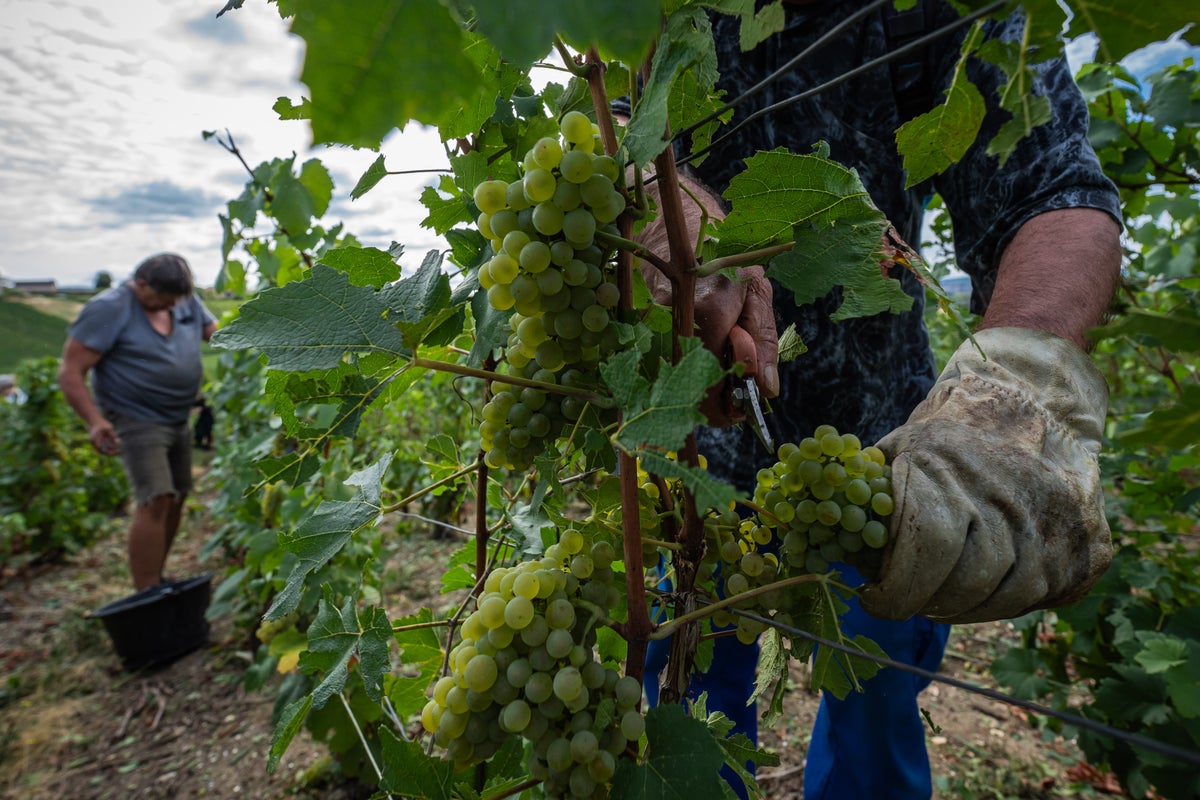
Heatwaves do not arrive with a dramatic roar. They creep in silently, baking the earth until the soil cracks like old porcelain. Last year, the harvest happened in August. The year before that, too. And when you pick Pinot Noir and Chardonnay under a relentless, blinding summer sun, something fundamental shifts inside the fruit. The sugars spike, soaring high while the acidity collapses, melting away under days where thermometers refuse to drop below thirty-five degrees Celsius.
Walk through the rows of vines in Ay or Verzenay right now, and the air feels different. It smells less like damp autumn earth and more like a dusty attic trapped in July. The grapes are smaller, their skins thicker, fighting for moisture that simply is not there in the rain-starved limestone.
Consider what happens next. When the raw material changes, the entire philosophy of winemaking has to mutate to survive.
A Race Against the Clock
Time used to be an ally. Now it is a predator.
To understand the panic gripping the French hillsides, you have to look at the math of acceleration. Over the past three decades, the average harvest date in the region has crept forward by nearly a full fortnight. Two weeks might sound negligible to an outsider, but in the lifecycle of a vine, it represents an eternity. It means the fruit is ripening during the hottest weeks of the year, rather than the cooling tail end of it.
Jean-Luc, a hypothetical grower whose daily anxieties mirror those of dozens of real families I have spoken with in the region, stands at the edge of his plot in the early morning light. It is barely five in the morning, yet the air is already thick, trapping the heat of yesterday against the ground. He crushes a single green berry between his thumb and forefinger. It is sticky, aggressively sweet, missing that sharp, mouth-puckering snap that his father used to test for balance.
"We are flying blind," Jean-Luc murmurs, wiping sweat from his forehead with the back of a dirt-streaked wrist. "The books my grandfather wrote in the fifties are completely useless now. They tell us what to do when the frost threatens in April. They don't tell us what to do when August feels like the Sahara."
The panic is not just philosophical; it is economic and logistical. Grapes picked in blistering heat begin to ferment prematurely right there in the baskets before they even reach the press house. To combat this, harvest crews now have to work in the dead of night, using headlamps and refrigerated transport trucks. The romantic image of workers singing down the rows while the golden morning sun warms their backs has been replaced by the stark, industrial hum of midnight machinery.
The industry is racing against time because the climate is changing faster than the centuries-old regulations of the Appellation d'Origine Contrôlée can adapt. For a long time, the rules were absolute. You could only use specific grape varieties. You had to prune a certain way. You had to yield a strict maximum amount per hectare. Those rules were designed to protect quality. Today, they sometimes feel like handcuffs on a drowning swimmer.
Rewriting the Rules of the Cellar
We are standing at a historic crossroads, and the tension is palpable in every subterranean chalk cave where millions of bottles are currently sleeping.
How do you preserve a tradition of elegance when the weather insists on chaos?
Winemakers are quietly experimenting with things their ancestors would have considered heresy. Some are planting rows of varieties that were once banned or ignored because they ripen later or tolerate drought better. Others are altering their canopy management, purposefully leaving the leaves longer to shade the delicate clusters from the burning solar rays, or training the vines higher off the ground to escape the fierce radiated heat bouncing off the white chalk.
There is a vulnerability here that rarely makes it onto the glossy marketing brochures handed out by the major champagne houses. Behind the shimmering gold foil and the popping corks at New Year's Eve parties lies a profound, quiet terror. The big houses have millions of reserve wines saved from past years in massive stainless-steel tanks—a rainy-day fund of liquid history used to blend a consistent house style year after year. But reserves are finite. If every year becomes an extreme weather event, the cushion shrinks.
The smaller, independent growers—the ones who farm their own tiny plots and make grower champagne—feel this the most acutely. They do not have vast portfolios of corporate capital to absorb a ruined crop or a wildly erratic fermentation. For them, a bad year doesn't just mean a dip in profits; it means losing a generational inheritance.
The Last Drop
Listen closely to the silence of the cellar. Down here, deep beneath the rolling hills, the temperature never changes. It stays cool, dark, and damp, entirely disconnected from the scorching reality of the world above.
Millions of bottles lie horizontal in the racks, undergoing their slow, magical secondary fermentation. They are drinking in the pressure of time, turning still wine into something transcendent, something celebratory.
Yet every single bottle resting in the chalk today was born from a climate that is rapidly disappearing.
The heatwaves will not stop. The harvest will likely creep even earlier, creeping closer to the height of summer, forcing the vignerons to adapt or watch their livelihoods wither on the vine. When you finally pull the cork on a bottle from these recent vintages, you are not just tasting yeast and terroir and limestone. You are tasting an adaptation. You are tasting the desperate, brilliant ingenuity of people who refuse to let go of their history, even as the ground beneath their feet shifts into something entirely unknown.
The bubbles rise in the glass, frantic and bright, rushing toward the surface, only to vanish into the air.