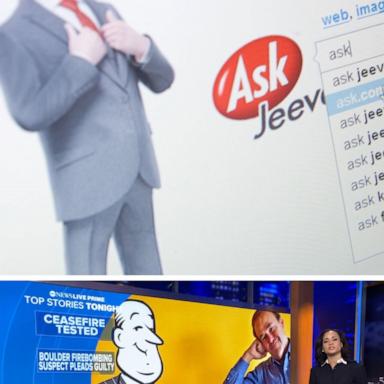
The tech press loves a good funeral. When the news broke that Ask Jeeves—later rebranded to the soulless Ask.com—was finally being put out of its misery as a standalone search engine, the eulogies were dripping with cheap nostalgia. They mourned the loss of the "polite butler." They lamented the end of an era where search felt more like a conversation and less like a data-mining operation.
They are wrong.
The death of Ask Jeeves wasn't a tragedy. It was a mercy killing. The reality that most "industry experts" refuse to admit is that Ask Jeeves was the original sin of the modern internet. It pioneered the very bloat, inefficiency, and algorithmic dishonesty that we now claim to hate about the web. If you’re mourning Jeeves, you aren’t mourning a search engine; you’re mourning a failed experiment that nearly crippled the way we access information.
The Myth of Natural Language Processing
The central argument for Ask Jeeves was its supposed mastery of Natural Language Processing (NLP). The pitch was simple: "Ask a question in plain English, and the butler finds the answer."
It was a lie.
In the late 90s and early 2000s, Jeeves wasn't "understanding" your questions. It was running primitive pattern matching against a curated database of common queries. I watched companies dump millions into early semantic search models during that era, trying to replicate this "human" feel, only to realize they were building a glorified FAQ page.
Google won not because it was "colder" or "more robotic," but because it acknowledged a fundamental truth about human behavior: we don't want to talk to our computers; we want our computers to find what we're looking for.
By forcing users to phrase queries as full questions, Ask Jeeves added friction. It forced the user to work for the machine. The "Ask" model was built on the arrogance that the interface mattered more than the index. When you strip away the cartoon butler, you were left with a search results page that was objectively inferior, slower, and more prone to manipulation than its peers.
The Birth of the Toolbar Plague
Let’s talk about the "Ask Toolbar."
While the nostalgic crowd remembers the butler's white gloves, those of us who spent the mid-2000s cleaning up enterprise systems remember Ask as the original pioneer of "crapware." Ask.com didn't survive on the strength of its technology; it survived by being the unwanted hitchhiker on your Java updates.
This was the blueprint for the modern, aggressive monetization of the browser. Ask proved that if you couldn't build a better product, you could just buy your way onto a user’s desktop through deceptive bundling. Every time you see a modern app trying to sneak three extra checkmarks into an installation process, you are seeing the ghost of Jeeves.
It wasn't a "pioneer in search." It was a pioneer in the degradation of the user experience. It taught the industry that user consent was an obstacle to be bypassed, not a standard to be upheld.
Why Curation is a Death Trap for Information
The "Ask" philosophy relied heavily on human-curated results in its early days. The "lazy consensus" says this was a more "refined" way to browse.
This is a fundamental misunderstanding of how information scales. Human curation is, by definition, a bottleneck. It is subject to the biases, limitations, and exhaustion of the curators.
Imagine a scenario where the sum total of human knowledge is expanding at an exponential rate, but your gatekeeper is a team of editors in a suburban office park trying to decide which "What is the best way to cook an egg?" link is the most authoritative. You don't get the best answer; you get the most popular answer from six months ago.
Brin and Page’s PageRank changed the world because it realized that the internet itself was the curator. The links were the votes. By trying to maintain a "butler" persona, Ask was attempting to hold back the tide with a teaspoon. It was a centralized solution to a decentralized problem.
The Teoma Blunder and the Death of Innovation
In 2001, Ask Jeeves acquired Teoma, a search engine that actually had interesting technology. Teoma used "subject-specific popularity" to rank pages. It was a legitimate threat to Google’s dominance because it understood authority within specific niches.
What did Ask do with it? They buried it.
They spent years trying to massage Teoma’s sophisticated algorithmic clusters into the "Ask" brand. They prioritized the butler over the tech. It’s a classic case study in how brand vanity kills engineering excellence. I have seen dozens of startups make this exact same mistake: they fall in love with their "voice" and forget that their job is to solve a technical problem.
Ask.com became a zombie. It was sold to IAC, stripped for parts, and turned into a content farm aggregator. This wasn't a sudden fall from grace; it was the inevitable result of a company that never actually figured out what it wanted to be. Was it a search engine? A Q&A site? A software distributor? By trying to be a "concierge," it ended up being a telemarketer.
The Irony of the "New" Search Era
The most hilarious part of the Ask Jeeves nostalgia is that we are seeing the same mistakes repeated today with LLM-based search.
Everyone is excited that we can now "talk" to our search engines again. We’re right back to the "Ask a question" prompt. But the core problem remains: the more you focus on the conversational interface, the more you obscure the source of the data.
Ask Jeeves failed because it prioritized the feeling of being helped over the utility of the results. Current AI search models are flirting with the same disaster. They provide confident, "polite" answers that are often disconnected from reality.
If you want to know why Ask Jeeves shut down, look no further than your own search habits. You don't want a butler. You don't want a conversation. You want a direct pipeline to the truth.
Stop Crying Over Dead Pixels
The closure of the Ask search infrastructure wasn't a loss for the internet. It was the removal of a redundant, bloated relic that had long since stopped contributing to the advancement of human knowledge.
The internet is more efficient, more direct, and less cluttered without the butler's interference. We don't need a middleman to "interpret" our queries. We need tools that get out of the way.
Ask Jeeves was the first major player to think that the "brand" was more important than the "index." It paid the price. Any company today—AI-driven or otherwise—that thinks they can win by being "friendly" instead of "functional" is destined to follow Jeeves into the digital graveyard.
The butler didn't quit. He was fired for incompetence. Stop trying to hire him back.