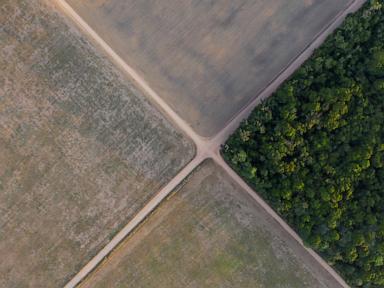
The Amazon rainforest just lost one of its most effective shields. Brazil's Supreme Court recently upheld state-level legislation that penalizes companies complying with the historic Amazon soy moratorium. If you've been tracking global environmental policy or agricultural supply chains, you know this isn't just a localized legal dispute. It marks the effective collapse of a voluntary agreement that kept bulldozers out of millions of hectares of fragile ecosystems for nearly twenty years.
Let's break down what actually happened. Back in 2006, major grain traders struck a deal with environmental groups and the government. They agreed not to buy or finance soybeans grown on any Amazon land cleared after July 2008. That rule applied even when clearing was technically legal under Brazil's Forest Code. Under national law, landowners in the Amazon can legally clear up to twenty percent of their property. The moratorium went further, creating a zero-deforestation standard that drastically slashed habitat loss without harming overall agricultural productivity.
That balance broke down when top agricultural powerhouses like Mato Grosso and Rondônia fought back. These states passed laws stripping tax incentives and financial benefits from any business that adopted environmental standards stricter than national baseline laws. Faced with massive tax penalties, major grain traders pulled out of the pact en masse.
The Supreme Court Ruling
When the case reached Brazil's highest court, the justices delivered a split verdict that pleased almost no one while effectively sealing the fate of the moratorium. The court declared that the private agreement itself remains technically constitutional, meaning companies aren't breaking federal law by trying to be green. But the justices simultaneously upheld the state laws allowing local governments to punish those same companies by revoking tax breaks.
You don't need a degree in corporate finance to see the outcome here. No major corporation will voluntarily absorb severe tax disadvantages just to uphold a private conservation pledge. By validating state-level financial retaliation, the court gave regional governments the exact weapon they needed to kill the pact.
Industry groups like the Mato Grosso Soy Producers Association celebrated the decision as a victory for state sovereignty and local economic growth. They argued that private entities shouldn't impose restrictions that go beyond what elected legislatures mandate. On the other side, environmental advocates point out the glaring contradiction. Praising a conservation agreement with one hand while validating the financial mechanisms used to destroy it with the other leaves the rainforest wide open.
What This Means for Global Markets
Brazil produces roughly forty percent of the world's soybeans. When production shifts in Mato Grosso or Pará, global commodity markets feel the shockwaves.
Research published in the journal Science warns that dismantling this framework could drive up to 1.4 million hectares of additional deforestation over the next decade. That represents an area roughly the size of Portugal vulnerable to legally permitted clearing. For international brands buying soy for animal feed or processed foods, supply chain traceability just got infinitely more complicated. Consumers in Europe and North America increasingly demand deforestation-free supply chains, but local producers in South America face immense pressure to maximize output.
The legal uncertainty is clearing up, but the environmental outlook is getting murkier. If you are sourcing agricultural commodities, stop relying on voluntary corporate pledges to manage your environmental risk. Expect tighter international scrutiny, shifting trade rules, and a scramble for independent verification as traditional self-regulation collapses. Look closely at your direct suppliers today, because the legal safety nets of yesterday are gone.
The end of the soy moratorium in Brazil
This short video provides a concise breakdown of how the collapse of the Amazon soy moratorium impacts local farming rules and rainforest preservation.


