Trash dumps do not die easily. They settle, they vent methane, and they sit on the municipal balance sheet as perpetual liabilities. For decades, the standard playbook for a capped municipal landfill in New Haven involved a grim cycle of mowing grass, monitoring leachate, and praying the environmental capping held against heavy rain. Then the math shifted.
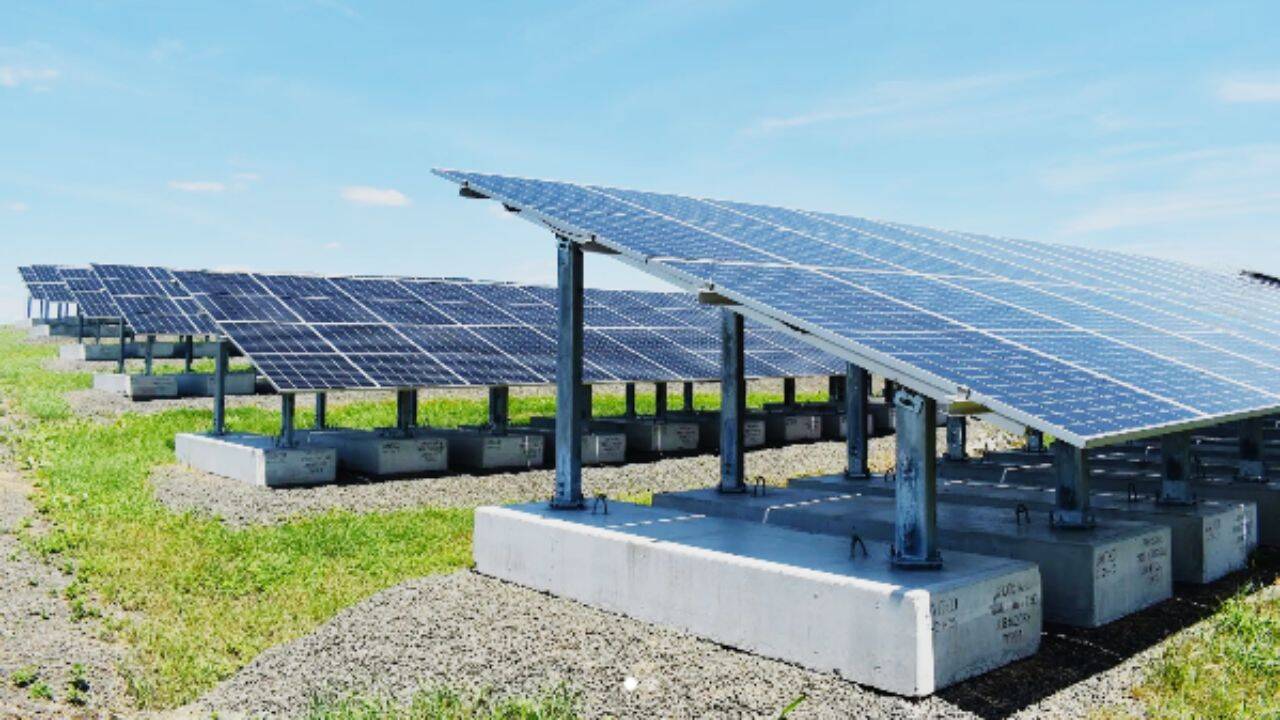
A former waste site on the city's perimeter now generates enough electricity to power about 200 homes while pumping seventy-two thousand dollars annually directly into city coffers. That transformation represents more than a green makeover. It is a masterclass in urban asset recovery. Most cities view closed dumps as dead zones. Forward-looking municipalities are realizing those barren mounds of compacted refuse are prime real estate for renewable infrastructure.
Building solar arrays on top of municipal waste sites solves a spatial crisis that urban planners face across the country. Cities need massive tracts of flat land for utility-scale solar installations, but empty acreage inside municipal boundaries is scarce and prohibitively expensive. Landfills offer cheap, wide-open acreage with zero commercial value for housing or retail.
Yet turning garbage into a power generator is not a plug-and-play operation. It requires navigating a minefield of federal regulations, engineering hurdles, and financial structuring that stops most local governments in their tracks.
The Engineering Nightmare Beneath the Panels
You cannot simply drive steel I-beams into a capped landfill. Doing so risks puncturing the geomembrane liner designed to keep toxic liquids from leaching into local groundwater and prevents explosive methane gas from migrating into the atmosphere. One wrong drill bit can trigger an environmental disaster or a massive regulatory fine from the Environmental Protection Agency.
Engineering firms working on brownfield solar projects rely on ballasted mounting systems. Instead of driving pilings deep into the earth, these systems use heavy concrete blocks or weighted sleds to hold the solar panels in place on the surface. The entire array rests gently on top of the synthetic cap like a massive, low-profile puzzle.
Settlement is the second major headache. Landfills are not static. The organic material beneath the surface continues to decompose over decades, causing the ground to shift, sink, and slide unevenly. If one corner of a solar array drops six inches while the rest stays stable, the electrical conduits snap and the panels warp. Engineers must design flexible racking systems equipped with adjustable legs and articulated joints that can bend and sway as the earth settles beneath them.
Electrical integration adds another layer of complexity. Bringing power off a remote landfill requires running underground conduit and interconnecting with the local utility grid. Utilities are notoriously slow to approve distributed generation projects, and upgrading local transformers to handle the sudden influx of photovoltaic power can stall a project for months.
The Financial Engine Driving Brownfield Solar
Municipalities rarely have the capital or the specialized engineering staff to build utility-scale solar arrays on their own dime. Developing a landfill solar project requires a delicate financial choreography involving public-private partnerships, federal tax incentives, and third-party developers.
Under the traditional model, a private renewable energy developer leases the capped landfill from the city for a nominal fee. The developer shoulders the multi-million dollar capital cost of engineering, permitting, and construction. They also harvest the federal tax credits available for renewable energy generation—credits that a tax-exempt city government cannot use directly.
In exchange, the city receives a guaranteed revenue stream through lease payments or a cut of the electricity sales. The New Haven project brings in seventy-two thousand dollars a year in lease revenue. That money goes straight to the general fund, offsetting local property taxes or funding municipal services without costing taxpayers a single cent in upfront capital.
Beyond direct lease revenue, these projects offer a hedge against volatile energy markets. Cities consume massive amounts of electricity to run water treatment plants, streetlights, and municipal buildings. By anchoring a local solar installation, municipalities can negotiate virtual net metering agreements, locking in stable, predictable power rates for decades.
The Regulatory Labyrinth
Building on a landfill means answering to a sprawling alphabet soup of regulators. The state department of energy and environmental protection must sign off on any disturbance to the landfill cap. The local zoning board has a say. The utility company demands endless interconnection studies.
The biggest hurdle often comes from federal oversight via the Comprehensive Environmental Response, Compensation, and Liability Act, better known as Superfund, or equivalent state-level brownfield statutes. Even after a landfill is officially closed and capped, liability lingers. If a solar developer damages the environmental cap during construction, the city—as the ultimate property owner—can be held liable for remediation costs that dwarf the value of the solar project.
Smart cities insulate themselves by drafting ironclad contracts that shift all operational and environmental liability onto the private developer. The contract must mandate rigorous post-construction monitoring to ensure the cap remains airtight and gas extraction systems continue to function without interruption.
Why Every City is Not Doing This Yet
If brownfield solar is such an obvious win, why are most municipal dumps still empty fields of high grass?
Bureaucratic inertia is a powerful force. City councils move slowly, and municipal legal departments are risk-averse. When faced with the prospect of negotiating a complex twenty-year lease with an energy developer over a potentially hazardous waste site, many local politicians choose the path of least resistance and do nothing.
Upfront soft costs also deter smaller municipalities. Conducting the initial feasibility studies, geotechnical surveys, and structural analyses can cost tens of thousands of dollars before a single panel is ordered. For cash-strapped towns, risking that kind of capital on an unproven project feels like a gamble.
Grid capacity is another hard bottleneck. Many older landfills are located on the edges of urban centers or in rural areas where the local electrical grid is outdated. If the nearby substation cannot handle additional power capacity, the cost of paying the utility for grid upgrades can single-handedly kill the project's return on investment.
The Broader Shift in Urban Land Use
The success of projects like the New Haven solar installation signals a broader philosophical shift in how cities view degraded land. For generations, urban expansion meant pushing outward, paving over greenfields and forests while leaving blighted industrial sites and garbage dumps to rot in place.
That model is financially and environmentally unsustainable.
Cities are running out of space. Brownfields, landfills, and industrial grayfields represent the last major untapped land reserves within municipal boundaries. Converting a garbage dump into a power plant proves that cities can turn liabilities into active economic and environmental assets.
The seventy-two thousand dollars annual payout in New Haven is modest compared to a municipal budget, but it represents found money derived from literal trash. Scale that model across the thousands of closed landfills scattered across the country, and the collective output transforms from a local curiosity into a cornerstone of regional energy independence.
The technology works. The financial models are proven. The regulatory pathways, while painful, are well-mapped. The only remaining barrier is the willingness of local leadership to stop viewing old garbage dumps as monuments to past waste and start seeing them as the power grid of the future.