Red.
Not the warm crimson of an autumn leaf or the velvet curtain of an old theater, but the harsh, backlit hexadecimal red of a brokerage app at 10:42 in the morning. For anyone who has ever watched a retirement account evaporate in real time, that specific shade of red has a physical weight. It sits right behind the sternum, cold and heavy, turning a routine Tuesday into a silent emergency.
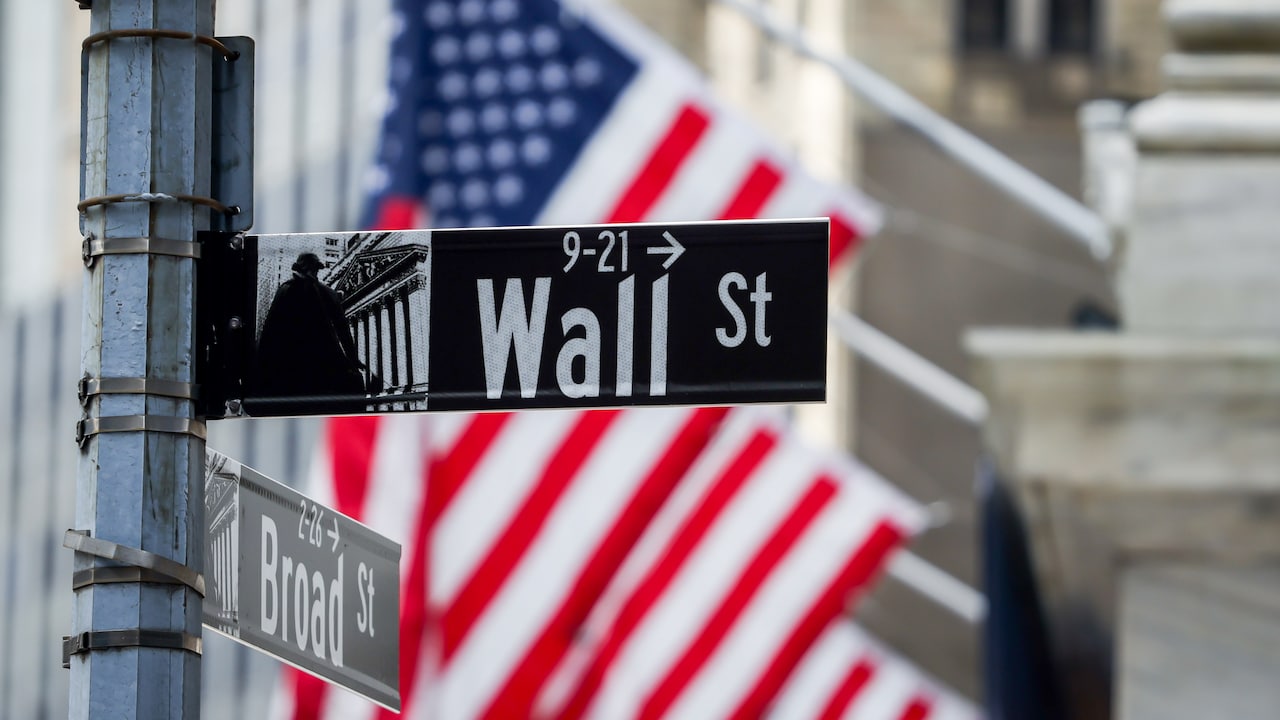
Consider a hypothetical investor named Marcus. Marcus isn’t a hedge fund titan in a tailored suit staring at six monitors in Midtown Manhattan. He is a forty-two-year-old structural engineer in Ohio who spent the last six years quietly funneling ten percent of every paycheck into an index fund heavy on semiconductor giants and cloud software monopolies. For months, Marcus felt like a genius. Every time he checked his phone while waiting for his coffee to brew, the green numbers had climbed a little higher. The market wasn't just growing; it felt like an unstoppable engine of pure, frictionless wealth. Then came the morning when the engine coughed, sputtered, and dragged Wall Street toward its worst single-day drop since June.
Financial headlines love to describe these moments with bloodless clinical detachment. They talk about "tech stocks selling off," "valuation resets," and "profit-taking." Those phrases are sanitizing agents. They scrub away the sweat, the panic, and the quiet realization millions of ordinary people face when they discover that the diversified portfolio they thought they owned was actually a massive, unhedged bet on seven or eight Silicon Valley behemoths.
The Architecture of an Illusion
To understand why a bad day in technology drags the entire American stock market into the mud, you have to look under the floorboards of modern investing. Most people believe that buying the S&P 500 means buying a slice of the whole economy—a little bit of banking, some healthcare, a dash of manufacturing, some retail, and a sprinkle of software.
That used to be true. It isn't anymore.
Over the past decade, a handful of mega-cap technology companies grew so enormous that they warped the gravity of the financial system. Think of the stock market as a massive cargo ship. In a healthy market, the weight is distributed evenly across dozens of shipping containers—energy, industrials, consumer goods, finance. If one container shifts, the ship barely tilts. Today, however, roughly a third of the ship’s entire weight is stacked inside a single, towering crate labeled "Big Tech." When a sudden gust of wind hits that crate—whether from a disappointing earnings forecast, a spike in Treasury yields, or a sudden whisper that artificial intelligence spending isn't paying off fast enough—the whole vessel lists violently to one side.
I remember sitting at my desk during the sharp tech routs of 2022, watching the exact same mechanics play out in slow motion. The air in the room felt weirdly thin. Every notification on my screen carried the same breathless urgency, yet nobody around me was screaming like they do in movies about the 1929 crash. Modern financial panic is eerily quiet. It happens in bedrooms, in breakrooms, and in the backseats of Ubers, illuminated by the pale glow of smartphone screens. You don't hear the ticker tape anymore; you just feel the phantom vibration in your pocket telling you that three months of your salary vanished before lunch.
Why did the sell-off happen so fast? Because the trade had become painfully crowded. When everyone rushes to the same side of the boat to admire the view, it only takes one nervous passenger stepping backward to trigger a stampede. Institutional algorithms—lines of code programmed to sell the microsecond certain price thresholds are breached—don't pause to ask whether a company still makes great products. They simply execute. A two percent dip triggers automated selling, which forces a four percent dip, which triggers margin calls for over-leveraged traders, which forces them to sell their healthy, profitable stocks just to cover their losses in tech.
That is how a localized storm in Silicon Valley becomes a hurricane on Wall Street. The selling spreads like a brushfire jumping a highway. Even companies that make tractors, sell groceries, or insure homes get dragged down into the red, not because their businesses suddenly broke, but because frightened investors treat the entire market like a single giant ATM when they need cash in a hurry.
The Math of Expectations
There is an old rule on Wall Street that rarely makes it into beginner investing guides: a great company is not always a great stock.
During the months leading up to a major tech sell-off, optimism stops being an emotion and becomes a mathematical requirement. Imagine a high jumper who clears seven feet, and the crowd cheers. The next week, the bar is raised to seven-foot-two. He clears it. Soon, the bar is set at nine feet—a height no human has ever reached—and the ticket prices are based on the assumption that he will clear it effortlessly. When he finally clips the bar at eight-foot-eleven, an astonishing athletic feat by any rational standard, the crowd boos and demands a refund.
That is the trap of stratospheric valuations. When a tech company trades at forty or fifty times its annual earnings, the stock price isn't reflecting what the company is doing today. It is pricing in perfection for the next five years. It assumes zero supply chain hiccups, zero regulatory crackdowns, zero aggressive competitors, and endless, compounding customer demand.
The moment reality intrudes—perhaps a chief financial officer uses the word "cautious" on an earnings call, or a government report shows inflation refusing to die—that perfection evaporates. Investors suddenly remember that interest rates matter.
Think of interest rates as gravity. When rates are near zero, gravity is weak, and promises of profits ten years in the future can float sky-high. When interest rates stay stubbornly high, gravity snaps back on. Money sitting safely in a government bond starts paying a guaranteed, respectable return without any drama. Suddenly, paying a massive premium for a tech company’s hypothetical profits in 2030 looks less like vision and more like recklessness. Capital retreats from the edge of the diving board and walks back toward the shallow end of the pool.
The Psychological Trap of the Dip
Whenever the market suffers its worst day since June, a chorus of loud voices immediately begins chanting three seductive words: Buy the dip.
On social media, finance influencers post screenshots of falling charts with rocket emojis, lecturing anyone who feels nervous about having "paper hands." It sounds bold. It sounds contrarian. Yet for the person actually staring at their life savings shrinking, that advice feels insulting, almost gaslighting. It ignores the fundamental terror of not knowing whether you are catching a falling pillow or a falling knife.
Let’s go back to Marcus, our hypothetical engineer in Ohio. Sitting at his kitchen table that evening, the house quiet after his kids have gone to bed, Marcus opens his laptop. His rational brain knows the historical statistics. He knows that since 1950, the S&P 500 has suffered an average intra-year drop of roughly fourteen percent, and yet it has finished positive in the vast majority of those years. He knows that missing just the ten best recovery days in the market over a twenty-year span can cut an investor's total return nearly in half.
Knowing those numbers doesn't stop his palms from sweating.
This is the true emotional core of a market sell-off, and it has nothing to do with balance sheets or semiconductor fabrication plants. It is a battle between two parts of the human brain. Our ancient survival wiring evolved to keep us alive on the savannah: when you see the herd running away from a rustling bush, you don't stop to calculate statistical probabilities—you run. In nature, fleeing first and asking questions later kept our ancestors from being eaten. In the stock market, that exact same instinct tricks us into selling our assets at the absolute worst possible moment, locking in temporary paper losses as permanent financial scars.
Surviving the Noise Without Losing Your Nerve
If you feel unsettled watching Wall Street bleed red, take a breath. Confusion and fear aren't signs that you are bad with money; they are proof that you are human. The financial media industrial complex thrives on your adrenaline. Every flashing banner, every somber anchor reading out point drops on the Dow, is engineered to keep you glued to the screen, mistaking noise for signal.
When the tech sector drags the market down, the antidote isn't frantic trading. It is deliberate, quiet inspection.
First, look at what you actually own, not what the headlines say the market is doing. If your money is sitting in broad index funds and you don't need that cash to buy a house or pay tuition in the next three years, a bad day—or even a bad month—is merely the admission price you pay for long-term growth. Volatility isn't a flaw in the stock market; it is the engine that generates returns higher than a savings account. Without the stomach-churning drops, the extraordinary gains wouldn't exist.
Second, check your concentration. Many people who think they are cautious investors are shocked to discover that between their workplace retirement plan, their personal brokerage account, and their company stock grants, nearly half their net worth is tied to the exact same slice of the tech sector. True diversification feels boring when tech is booming and feels like a warm coat in a blizzard when tech cracks. Owning pieces of unglamorous businesses—healthcare providers, utilities, consumer staples, international companies—won't make you rich overnight, nor will it make for exciting cocktail party chatter. It will, however, let you sleep when Nasdaq futures plunge at three in the morning.
Finally, stop checking the scoreboard every hour. Watching a volatile market tick by tick is like weighing yourself every twenty minutes while trying to lose weight; the fluctuations are meaningless, and the obsession will drive you crazy. Set automated contributions, step away from the glowing red screen, and let time do the heavy lifting that panic always ruins.
Long after the closing bell rings on Wall Street and the financial commentators pack up their microphones to argue about what tomorrow morning might bring, the servers in massive data centers across Virginia and Oregon keep humming in the dark. Millions of engineers, logistics workers, nurses, and builders set their alarms for the morning, preparing to wake up and create real value in the physical world, completely indifferent to the mood swings of a ticker symbol.


