The teacup did not fall. It danced.
For three seconds, the only sound in the small kitchen in Caraga was the frantic ceramic chatter of a heirloom dish vibrating against a wooden table. Then came the sound that anyone who lives on the Pacific Ring of Fire fears in their very marrow. It was not a crack or a snap. It was a low, subterranean roar, a deep-throated growl from the belly of the earth that sounded less like shifting tectonic plates and more like a dying monster.
Then, the world tilted.
When a magnitude 7.8 earthquake strikes, science explains it through the cold language of mechanics. The Philippine Trench, a vast underwater canyon where the Philippine Sea plate dives beneath the Sunda plate, snapped. Decades of pent-up elastic strain energy released in a matter of seconds, sending shockwaves tearing through the crust. But science does not capture the terrifying reality of a floor suddenly behaving like the deck of a ship in a typhoon. It does not capture the smell of pulverized concrete dust filling the throat, or the blinding, sudden darkness when the power grid fails in a heartbeat.
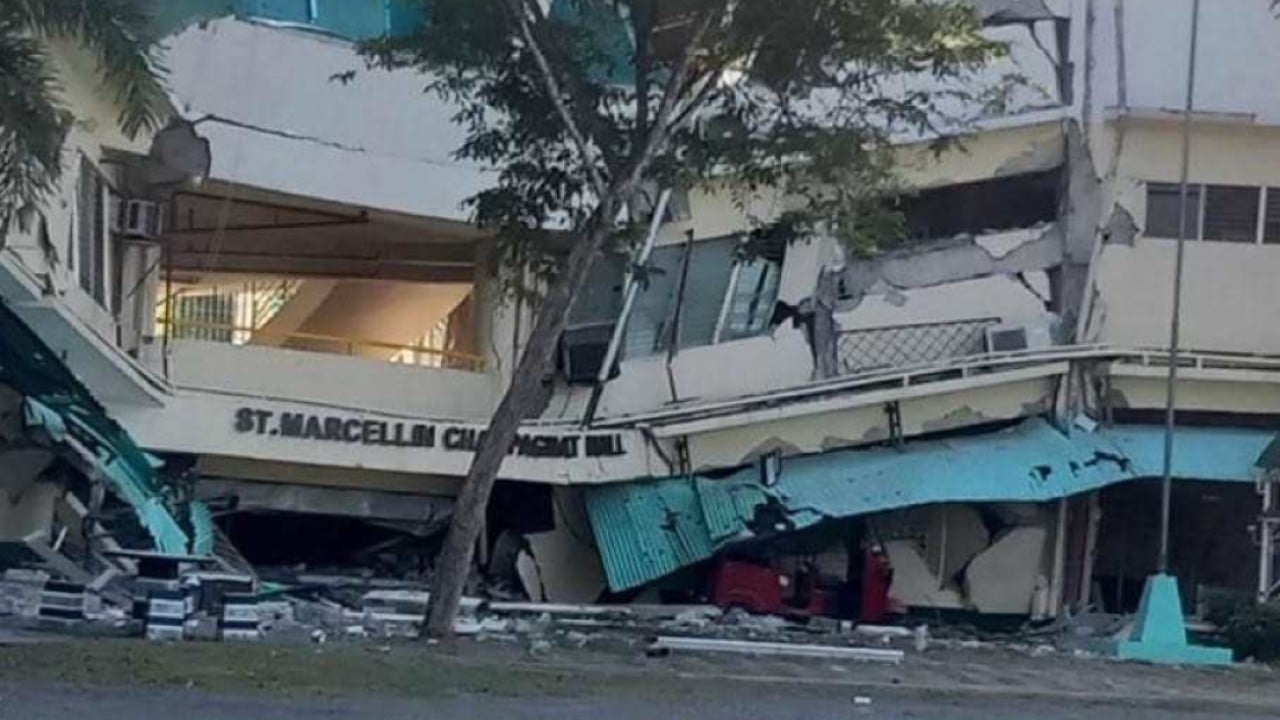
Twelve people woke up that morning with ordinary plans. A grocery list. A doctor's appointment. A shift at a local store. By nightfall, they were gone. Over two hundred others lay in makeshift triage centers, their bodies broken by the very structures built to protect them.
To understand the true scale of a disaster like this, we have to look past the sterile headlines and enter the lives of those who survived the violent shaking.
The Geography of Vulnerability
Earthquakes are democratic in their timing, but deeply discriminatory in their destruction.
Consider a hypothetical resident named Maria. She represents thousands in the provincial towns outside the major metropolitan areas. Maria runs a small sari-sari store built from hollow blocks and corrugated iron sheets. When the earth buckled, her immediate world did not just shake; it disintegrated. The local hospital, already stretched thin by regional inequities, suddenly faced an influx of hundreds of laceration and crush injuries within an hour.
This is where the true crisis of a 7.8 magnitude quake reveals itself. It is not just about the raw energy released at the epicenter. It is about the gap between structural engineering and human survival.
In the capital cities of the world, skyscrapers rest on massive seismic dampers—giant pendulums and rubber bearings that allow buildings to sway safely like trees in the wind. But in the rural provinces of the Philippines, infrastructure is a patchwork of historical endurance and economic compromise. Homes are built incrementally, block by block, as families save enough money to buy cement. These structures lack the steel rebar reinforcement required to withstand the violent horizontal whipping motions of a major quake.
When the ground moves at several gees of acceleration, these unreinforced masonry walls do not flex. They explode outward, or worse, pancake downward.
The Seconds That Matter
The human brain is poorly wired for exponential disasters. When the shaking begins, there is a brief, paralyzing moment of disbelief. The mind tries to rationalize the anomaly. Is that a heavy truck passing by? Is it just a dizzy spell?
By the time the brain registers the truth, the window for safe movement has already closed.
During a major seismic event, the ground motion can be so violent that standing up is physically impossible. The advice from emergency management agencies has evolved over decades, moving away from old myths like standing in doorways, which can swing wildly and cause severe injury. Today, the directive is universal: Drop, Cover, and Hold On.
But even this simple directive assumes the presence of a sturdy table or desk. In many homes affected by this recent quake, there was no such refuge. People were forced to rely on pure instinct, shielding their children with their own bodies as roof tiles rained down around them.
The response from emergency services in the aftermath of a 7.8 magnitude event is a race against a ticking clock. The first twenty-four hours are known as the golden hours of search and rescue. After this window, the survival rate for individuals trapped under collapsed structures drops exponentially.
Local responders, often regular citizens and under-equipped municipal workers, become the frontline heroes. They dig through rubble with bare hands and rudimentary tools, guided only by the faint cries of neighbors trapped beneath the debris.
The Long Echo of the Ring of Fire
The Philippines is no stranger to geological fury. It sits atop one of the most seismically active zones on the planet. The country is crisscrossed by fault lines, including the massive Philippine Fault System, which shears through the archipelago from Luzon to Mindanao.
This latest event is a grim reminder of a historical pattern. Every few decades, the earth demands a heavy toll from this region. The memory of the 1990 Luzon earthquake, which claimed thousands of lives, still lingers in the national psyche. Yet, collective memory tends to fade under the pressure of daily economic survival.
The underlying issue is a systemic cycle of risk.
We build, we forget, the earth shakes, and we mourn. Then, we build the exact same way in the exact same places. Breaking this cycle requires a fundamental shift in how we value infrastructure. It demands strict enforcement of building codes, investment in community-level disaster preparedness, and an acknowledgment that geological hazards are an inevitable cost of living in this beautiful, volatile corner of the world.
The true tragedy of the twelve lives lost is that many of these fatalities were entirely preventable. They were not killed by the earthquake itself; they were killed by the failure of the built environment to withstand it.
The Quiet Aftermath
As the sun sets over the damaged provinces, the immediate chaos begins to subside, replaced by a heavy, anxious silence. The aftershocks continue to rumble every few hours, a cruel psychological torment that prevents any real sense of safety from returning. Nobody wants to sleep indoors.
Thousands of families set up temporary shelters in open fields, parks, and basketball courts, wrapping themselves in plastic tarpaulins to shield against the tropical night rain. They whisper to one another, eyes wide, listening to the ground. Every minor tremor sends a jolt of adrenaline through the crowd, sparking fresh panic.
The physical debris will eventually be cleared away. The roads cracked open like eggshells will be patched with asphalt. The broken bridges will be re-engineered. But the invisible fractures left in the community will take far longer to heal.
A grandmother sits on a plastic crate near the ruins of her home, holding a cracked ceramic teacup she salvaged from the mud. She is not crying. She is simply staring at the space where her living room used to be, watching the dust settle in the moonlight.