The rain along the Irish border does not fall so much as it lingers. It hangs in the damp night air like a heavy wool blanket, slicking the tarmac of the back roads that wind through South Armagh and County Louth. These are quiet routes, flanked by ancient hedgerows, stone walls, and fields where cattle graze beneath a bruised sky.
Most nights, nothing happens here. A tractor turns off toward a farm house. A delivery van cuts across the border to save ten minutes on a haul.
Then comes the night when a single vehicle moves without lights, carrying enough violent force inside its trunk to erase a street.
When officers pulled over a suspicious vehicle near the border during a targeted operation, they found what security forces have feared for years: an improvised explosive device, fully wired and ready for detonation. A car bomb.
To read the police report is to consume cold, clinical prose. An operation was conducted. A suspect was detained. An explosive device was made safe.
To sit in the chill of a border patrol car, however, is something entirely different. It is the sudden, heart-stopping realization that the peace fought for across decades remains a fragile glass sculpture—one that a handful of men with a cylinder of fertilizer and a detonator are still trying to shatter.
A Ghost on a Country Lane
Consider a hypothetical driver named Sean.
Sean has lived along the border his whole life. He remembers the watchtowers. He remembers the military checkpoints, the clatter of British Army helicopters hovering overhead like metallic dragonflies, and the bitter, exhausting anxiety of pulling up to an armed guard just to buy groceries in the next town over.
When those towers came down after 1998, Sean watched the concrete crumble with a relief so deep it felt like breathing fresh air for the first time in thirty years. The border disappeared. Not from the map, but from daily life. Farmers worked fields that crossed invisible county lines. Families drove back and forth for soccer matches, Sunday dinners, and school runs without stopping.
Now picture Sean driving home on a Tuesday evening. Up ahead, blue lights flash against the mist.
At first, he thinks it is a routine traffic check or a localized accident. But as he draws closer, he sees heavy armored vehicles. Officers in high-visibility jackets move with a tense, methodical urgency. The road is cordoned off. Bomb disposal experts—the ATO, or Ammunition Technical Officer unit—are on the scene.
In that moment, the years melt away. The ghost of a violent past steps out from the hedgerows and stands right in the middle of the road.
This is the invisible stake of an intercepted bomb. It is not merely the destruction it would have caused at its destination, devastating as that would have been. It is the toxic shadow it casts over millions of ordinary people who simply want to live without fear.
The Chemistry of Terror
An improvised explosive device is a crude, terrifying thing. It does not require high-grade military hardware or high-tech facilities to construct. It requires basic agricultural chemicals, a commercial detonator or homemade primary explosive, a power source, and a trigger mechanism.
It is violence built from ordinary hardware items.
When police stop a vehicle carrying such a payload, the danger is immediate and absolute. A bump on a rough country lane, a wiring fault, or a panicky decision by the driver can trigger a detonation that leaves a crater in the road and obliterates everything within fifty yards.
The officers who approach that vehicle do not have the luxury of distance. They step toward the unknown. They shine a flashlight into a back seat or a boot, knowing that a single misstep could mean they never go home to their children.
Why does this still happen?
The political settlement in Northern Ireland brought an end to the formal conflict known as the Troubles, but small, violent splinter groups—often referred to as dissident republicans—never accepted the peace. They operate in the shadows, far removed from the mainstream political process and rejected by the overwhelming majority of the population on both sides of the border.
These groups do not possess the capacity to wage a sustained campaign. Instead, they rely on sporadic, high-impact acts of violence. A bomb planted outside a police station. A device hidden near a courthouse. A car loaded with explosives, sent rolling into a populated area.
Their goal is simple: to provoke a reaction, to force a return to visible security infrastructure, and to drag a society that has moved on back into the mud of ideological conflict.
The Quiet Work of Prevention
When an interception happens, it looks like a sudden stroke of luck. A car is stopped. A device is neutralized.
In reality, luck has almost nothing to do with it.
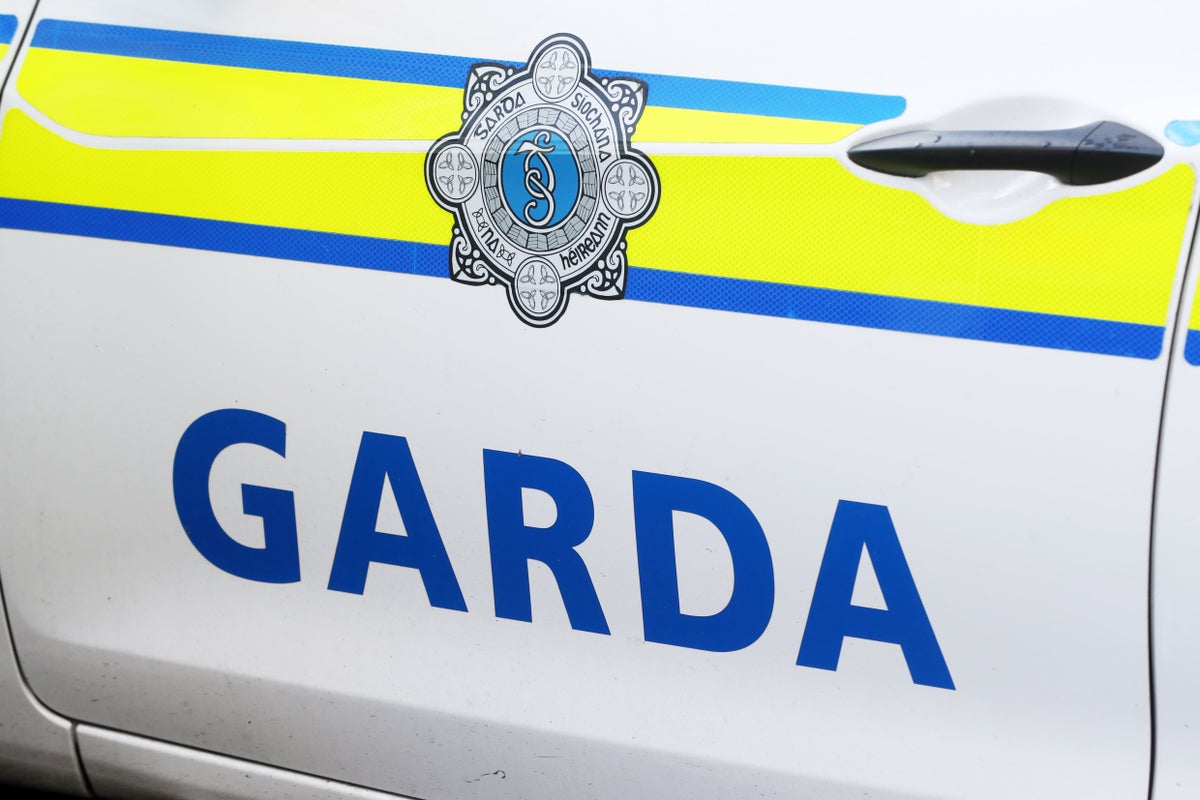
Interceptions are the culmination of months of patient, painstaking intelligence work. Human informants, electronic surveillance, cross-border cooperation between the Police Service of Northern Ireland and An Garda Síochána—the Irish national police—all converge in a single, tense moment on a dark road.
The cooperation between these two forces is perhaps the most significant shift of the post-peace era. Decades ago, the border was a barrier to law enforcement, a seam that criminals and paramilitaries could cross to evade capture. Today, that seam has been stitched shut by shared intelligence networks, joint operations, and absolute institutional trust.
When a vehicle moves toward the border carrying lethal cargo, the communication between authorities on both sides happens in real time. Officers do not debate jurisdiction while a bomb is on the move. They act.
Yet, despite these successes, the threat remains persistent. Intelligence is never perfect. For every device intercepted, security forces know that the margin between a successful operation and a catastrophic news headline is razor-thin.
What Is Truly at Risk
It is easy to treat news of a thwarted car bomb as a minor bulletin—a brief headline scrawled across a television ticker before the broadcast moves on to economic reports or weather forecasts.
That is a dangerous mistake.
The true impact of these events lies in the delicate psychological fabric of the borderland communities.
When a bomb is discovered, schools go into lockdown or change their bus routes. Roads are closed for hours, forcing workers into long detours through dark rural lanes. Farmers are cut off from their land. The rhythm of normal life stumbles.
More than that, it reawakens old traumas.
For those who lived through the darkest decades of the late twentieth century, the sight of bomb disposal robots and armed checkpoints is not a news story. It is a trigger. It brings back memories of lost relatives, ruined businesses, and decades spent living under a cloud of constant paranoia.
The young people living along the border today have grown up in a different world. They hold passports from different nations, travel freely, and build businesses that span the entire island. They do not view their neighbors across the border line as adversaries or strangers. To them, the border is merely a line on a map, invisible and irrelevant.
The individuals who load explosives into the back of a car are trying to rob those young people of their future. They are trying to rebuild the walls that an entire generation sacrificed so much to tear down.
Standing on the Line
Back on the rain-slicked road near the border, the bomb disposal team completes its work.
A controlled explosion echoes through the valley—a dull, heavy thud that shakes the wet leaves from the trees. The device is rendered safe. The forensic teams move in, meticulously collecting every fragment of wire, every drop of chemical residue, searching for the microscopic clues that will lead them to the workshop where the bomb was built.
By morning, the police tape is cleared away. The armored vehicles drive off. The road reopens.
A milk tanker rumbles past the spot where the car was stopped hours earlier. A school bus follows close behind, its windows fogged up with the breath of children talking about their weekend plans.
The road looks completely ordinary again. The hedgerows are quiet. The rain continues to fall gently over the green fields.
The peace holds—not because the threat has vanished entirely, but because on a dark back road, in the quiet hours of the night, ordinary men and women stood between a violent past and a living future, and refused to let the darkness cross the line.