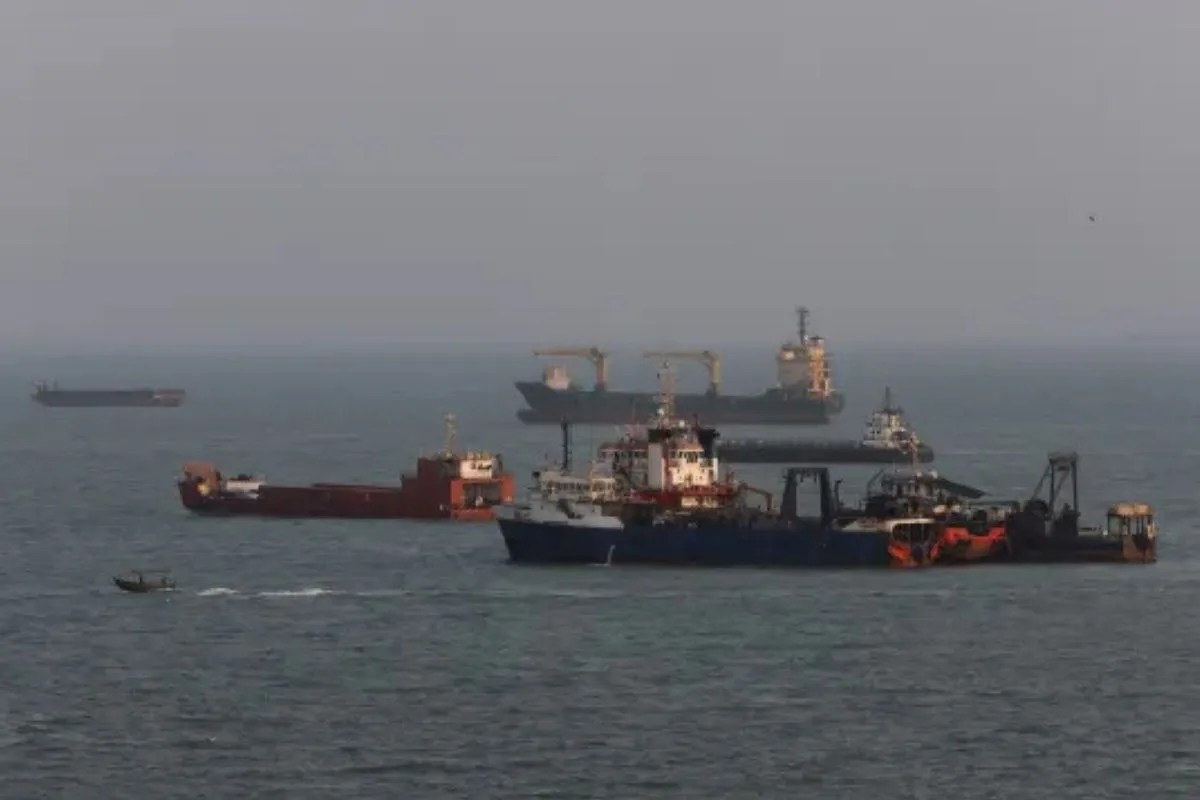
The physical reopening of the Strait of Hormuz does not mean the global energy crisis is over. While mainstream financial commentators are already declaring an end to the supply squeeze, they are misreading the plumbing of the global oil market. The sudden return of delayed tankers is creating a temporary inventory bulge, not a structural oversupply. Traders who assume the market is suddenly drowning in crude are ignoring depleted strategic reserves and the underlying lack of global production capacity. The shortage has not turned into a permanent glut. It has merely shifted from a logistical choke point to a storage bottleneck.
The Mirage of the Tanker Wave
When a maritime bottleneck clears, the immediate aftermath looks like an oversupply. Dozens of Very Large Crude Carriers (VLCCs) that were floating idly are now discharging millions of barrels simultaneously into Western and Asian ports.
This is an illusion of abundance.
To understand why this happens, consider a hypothetical pipeline that gets blocked for a month. When you clear the blockage, the backed-up fluid rushes out all at once at maximum flow. That initial burst feels like a flood, but once the pressure normalizes, the flow drops back to its baseline.
The baseline right now is tight.
Global oil demand has remained stubbornly resilient, defying predictions of a sharp macroeconomic slowdown. Refiners are running at high utilization rates to rebuild depleted diesel and gasoline inventories. When the current fleet of discharged tankers empties its cargo, the market will face the same reality it did before the closure. There is very little spare production capacity outside of a few OPEC members.
The Paper Market Versus the Physical Reality
Wall Street algorithms react to headlines, not physical delivery timelines. The moment news broke that transit through the strait was normalizing, automated futures trading triggered massive sell-offs.
This paper sell-off decoupled from actual physical trading.
In the physical market, barrels of sour crude from the Middle East are still fetching solid premiums. Refiners in South Korea and India cannot run their operations on financial futures contracts. They need physical molecules, and those molecules are still expensive because long-term structural supply growth is lagging.
- Underinvestment in upstream assets: For nearly a decade, major oil producers have underfunded exploration and production, favoring share buybacks and dividend payouts instead.
- The shale slowdown: The American shale patch, which previously acted as a swing producer capable of putting out fires in the global market, has matured. Operators are focusing on capital discipline rather than frantic volume growth.
- Refining constraints: Building a new refinery takes years and billions of dollars. Even if crude oil were abundant, the capacity to turn it into usable fuel is severely constrained.
This structural deficit cannot be solved by simply clearing a shipping lane. The geopolitical risk premium may have evaporated from the daily price tickers, but the structural premium remains firmly embedded in the physical supply chain.
The Strategic Petroleum Reserve Dilemma
Western governments spent the last few years drawing down their Strategic Petroleum Reserves (SPR) to combat high prices at the pump. This strategy was always a short-term patch, a credit card statement that eventually requires payment.
Now, those inventories are at historic lows.
The reopening of the strait presents a tactical window for state buyers to begin aggressive replenishment programs. The United States, along with several European nations, must buy tens of millions of barrels just to return their emergency reserves to safe operating levels. This institutional buying creates a hard floor under oil prices.
Any significant drop in the price of crude will trigger automated and discretionary state purchasing. This dynamic prevents a true, sustained glut from forming. The moment oil becomes cheap enough to signal an oversupply, governments will step in to absorb the excess volume, effectively locking it away from commercial markets.
Shipping Costs and the Hidden Friction
Even with the strait open, global shipping has fundamentally changed. Insurance underwriters have updated their risk models, and premium rates for transiting the region are not reverting to pre-crisis baselines.
The cost of moving a barrel of oil remains elevated.
Shipowners are factoring in higher crew wages, increased security protocols, and lingering compliance costs. These expenses act as a tax on every barrel of oil moving through the Persian Gulf. When transportation costs rise, it creates a wedge between what a producer receives and what a consumer pays.
This friction suppresses the kind of frictionless trade required to create a global supply glut. It distorts regional pricing, making oil artificially expensive in consuming regions even if it appears abundant at the source.
The Misguided Consensus
The financial press loves a binary narrative. A month ago, the story was an existential energy scarcity that would cripple global industry. Today, the story is an unstoppable tidal wave of oil that will crash prices. Both narratives are wrong. They overlook the sophisticated ways national oil companies manage their output to defend price floors.
OPEC+ has repeatedly demonstrated that it will cut production to counter any genuine demand destruction or structural oversupply. The alliance does not view the reopening of a shipping lane as a reason to let prices crater. If the temporary surge of tankers threatens market stability over the next quarter, production quotas will tighten.
The idea that producers will passively watch a glut develop ignores the past five years of aggressive market management. The market is entering a phase of volatile stabilization, not a prolonged bear market. The underlying math of global supply and demand remains precariously balanced. Investors who short crude based on the assumption that a cleared waterway solves a decade of underinvestment are about to learn a very expensive lesson in commodity mechanics.