Bass.
It thuds through floorboards sticky with spilled beer and cheap citrus soda, vibrating up through the soles of sneakers until every ribcage in the room feels like a drum skin pulled tight. You can smell it before you even reach the porch—sweat, stale malt liquor, laundry detergent trying and failing to mask mildew, and that sharp, metallic tang of dozens of bodies packed into a space meant for half as many. A college party on a weekend night. A rite of passage, or so the posters taped to campus bulletin boards always promise. Bright colors. Smiling faces. Belonging. Learn more on a similar issue: this related article.
Except belonging has a price tag when the doors shut and the crowd turns.
Reports out of Chicago have shaken people far beyond the city limits, describing an assault at a fraternity gathering where a woman was raped while onlookers allegedly chanted, "When's my turn?" Reading a headline like that feels like being hit with cold water in the middle of a crowded room. One moment you are scrolling past routine news; the next, a single sentence forces you to confront a kind of cruelty that doesn't just violate a body—it hijacks the air around it. More analysis by NPR highlights similar views on the subject.
I have sat across from survivors in quiet rooms where the fluorescent lights hummed louder than any speaker at a weekend party. I have listened to people trace the edges of a memory with trembling fingers, trying to make sense of how a night that started with music and laughter turned into a trap. Sometimes the hardest part isn't even explaining what happened behind closed doors. It's explaining the voices outside them.
The Architecture of a Crowd
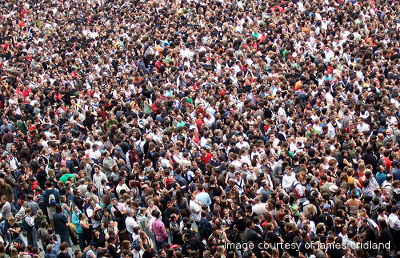
Crowd behavior is a strange, slippery thing. Left alone, most people claim a steady moral compass. Put them shoulder-to-shoulder in a loud room fueled by alcohol, peer approval, and the thrill of breaking rules, and that compass can spin wildly off true north.
Psychologists have studied group dynamics for decades, looking at how individuals shed personal accountability when swept up in a collective surge. Think of it like a river after a heavy storm. A single drop of rainwater doesn't carve a canyon on its own. Thousands of drops moving in the same channel, pushed forward by momentum and gravity, can tear up roots and shift stone. Nobody in the current has to invent the force; they just lean into what's already moving.
In high-pressure social spaces—especially closed, status-driven environments like fraternity houses—that current often runs strong. Status is currency. Approval from the pack feels like warmth in a cold wind. When someone crosses a line and the people around them laugh, cheer, or chant instead of stepping back, the violation stops looking like an aberration to the crowd. It starts looking like a performance.
Let me offer a hypothetical scenario to make that dynamic concrete. Suppose a young man named "Devon" walks into a crowded basement party. Devon isn't a cartoon villain. Maybe he tells himself he's a good guy, the kind who holds doors open and tips well at diners. Now suppose a commotion breaks out near a back room, and someone starts shouting a crude chant. If Devon stays silent or joins in to avoid looking stiff, uncool, or disloyal to his friends, his silence acts like mortar between bricks. It holds the wall up.
Cruelty rarely needs a thousand active hands to succeed. Often it just needs a chorus that makes the victim feel utterly alone and makes the perpetrator feel untouchable.
What Cold Headlines Leave Out
News summaries are built for speed. A headline gives you the shock in twelve words or fewer, then moves on to the next alert on your screen. That speed is useful when you need to know a major event occurred, yet it strips away almost everything that gives the story human weight.
A dry report tells you what allegedly happened and where. It rarely lingers on the minutes before the doors closed, or the hours after the noise died down. It doesn't capture the sudden shift from ordinary social noise to predatory theater. Nor does it show the quiet aftermath—the second-guessing, the shame that belongs nowhere near the person who was harmed, the reluctance to report when a room full of witnesses seemed to treat someone else's pain as entertainment.
Even when you haven't lived through sexual violence yourself, you probably recognize the knot in your stomach when you picture being outnumbered in an unfamiliar space. Most of us have felt that flash of vulnerability at least once: walking down a quiet street late at night, realizing the exit is farther than you thought, noticing how quickly the mood in a room can sour. Now stretch that feeling out until every voice around you sounds hostile or indifferent.
That is the invisible stake in stories like this. When a crowd cheers an assault, the harm multiplies outward. It tells everyone listening that safety in public or semi-public spaces is conditional, and that empathy can be switched off on cue.
Why Bystanders Hold More Power Than They Think
It is easy to feel helpless when reading about an extreme failure of basic decency. People ask how culture gets so twisted, how young adults—supposedly at the threshold of adulthood, curiosity, and independence—can participate in or egg on something so dark.
I don't pretend to have a neat, comforting answer to that. Human behavior is messy, contradictory, and sometimes terrifyingly small. Anyone who claims to have all the psychology of a crowd figured out in five bullet points is selling certainty where there is mostly friction and fog.
Still, one truth shows up again and again in research on intervention and group norms: crowds are far more fragile than they look.
A chant sounds unified until one voice breaks rhythm. A joke loses its edge the second someone refuses to laugh. Most people in a group are watching cues from everyone else to figure out what is expected. When everyone performs toughness or indifference, everyone assumes everyone else agrees.
Imagine a metaphor of a house of cards built on a folding table during a breezy afternoon. It looks intricate, maybe even impressive from across the yard. Yet it takes only one steady, deliberate breath—one person stepping out of the script, pulling a friend away, calling for help, refusing to play along—to topple the whole illusion of consensus.
That doesn't mean intervening in a volatile situation is simple or risk-free. Real life isn't a movie where a single speech stops trouble dead in its tracks. Safety matters, timing matters, and knowing when to step in versus when to get staff, security, or authorities involved can make all the difference.
What matters most is the refusal to treat someone else's violation as background noise.
Rebuilding the Unspoken Rules
Institutions—universities, fraternities, event hosts, communities—love talking about rules, policies, and zero-tolerance pledges. Paper is patient. It will hold any promise you print on it.
Real culture lives in what happens when nobody is grading you and the music is too loud to hear yourself think. It lives in whether a group checks on a friend who looks overwhelmed, whether hosts shut down rooms that cross into danger, and whether people treat consent and basic dignity as non-negotiable rather than optional mood-killers.
When headlines like this surface from Chicago, they shouldn't just spark brief outrage followed by a scroll to sports scores or recipe videos. They invite a harder look at the rooms we build, the crowds we join, and the quiet bargains people make to fit in.
Because the scariest part of a crowd cheering an assault isn't just the cruelty in the room. It's the realization of how easily ordinary people can trade their conscience for a laugh.
Outside on a chilly Chicago street, the bass from a house party fades into wind and distant traffic, leaving behind a silence heavy enough to hear a single voice—if anyone chooses to speak.


