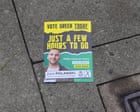
The rain in London does not fall so much as it lingers, a gray mist that settles into the brickwork of Holborn and refuses to leave. Stand on the corner of Theobalds Road on a Tuesday morning, and you can smell the damp wool of commuters rushing toward the underground, the metallic tang of diesel, and the faint, sweet scent of roasting coffee beans from a corner shop that has survived three recessions.
It is a place of perpetual motion. But beneath the surface roar of the Central Line, a quieter kind of friction is taking hold.
Picture Sarah, a fictional shorthand for the thousands who make this dense urban pocket their home. She has lived in a cramped third-floor flat off Red Lion Square for six years. Her walls are paper-thin; she knows the cadence of her neighbor’s coughing fits and the exact hour the postman drops the heavy stack of council leaflets through the letterbox. Sarah does not care much for Westminster abstract nouns. She cares about whether the bin lorry comes on time, why the local GP booking line disconnects after four rings, and whether the flickering sodium streetlight outside her bedroom window will ever be fixed.
Lately, however, Sarah’s kitchen table conversations have drifted to a heavier question. A political question.
Holborn and St Pancras is not just a constituency on a map. It is a psychological landscape. It stretches from the blood-red brick of working-class housing estates to the glass-fronted monoliths of tech firms creeping up from King's Cross, a churning crucible where old loyalties collide with modern anxieties. And right now, the people who walk these pavements find themselves asking a sharper version of a timeless dilemma: what happens when the movement that promised to save the earth collides with the messy, bruised reality of human neighborhood politics?
Consider the weight of expectation.
For decades, the political left in inner-city London operated on a kind of gravitational certainty. You turned out for the party, the party looked after the public realm, and the cycle spun on. But gravity is failing. The electorate here is aging, yet perpetually young with transient students and desperate first-time buyers. They are squeezed by rents that defy gravity and air that tastes of exhaust.
When green politics enters this room, it arrives wearing two faces. One face is idealistic, pointing toward clean air zones, insulated council blocks, and pedestrianized streets where children can kick a football without dodging delivery scooters. The other face looks like exclusion. It looks like a council tax hike justified by carbon metrics, or a consultation leaflet written in bureaucratic jargon that requires a degree in urban planning to decode.
This is where the crossroads begins.
It is easy to draft policies in an air-conditioned room three miles away. It is another thing entirely to stand in a damp community hall on a Thursday night and explain to a pensioner living on a fixed pension why her diesel hatchback—her only lifeline to the weekly grocery shop across town—is suddenly treated like a moral failing.
History teaches us that political movements rarely die from outside attacks. They die from internal asphyxiation. They die when the distance between the manifesto and the muddy boots of daily life becomes too wide to bridge.
Look closely at the corner of Guilford Street. The independent bookshops are fighting rising business rates. The community gardens, carved out of bombed-out rubble decades ago, are eyed by developers looking for another square of glass and steel. The people here are tired. Not lazy-tired, but bone-tired from a decade of economic squeezing that leaves little room for abstract political purity.
When debates flare over local leadership, over who stays and who goes, over whether a candidate represents the grassroots or the lecture hall, the underlying tremor is always the same. Trust.
Trust is a fragile ecosystem. It takes years to cultivate through blocked drains cleared, missed collections resolved, and quiet phone calls returned. It takes seconds to shatter with a condescending press release or a policy pushed through without listening to the baker, the nurse, or the bus driver.
The pavement outside the station is slick with oil and rain. A red double-decker bus groans to a halt, its brakes hissing a tired sigh into the morning air. Dozens of people pour out, heads down, umbrellas tilted against the drizzle, marching toward their day. They are not thinking about tactical voting or ideological purity tests. They are thinking about rent, and warmth, and whether tomorrow will be just a little bit easier than today.
The politicians who walk these same streets ignore that heartbeat at their peril. The crossroads is here, right beneath our boots, and the next step belongs to those willing to listen to the silence between the raindrops.



