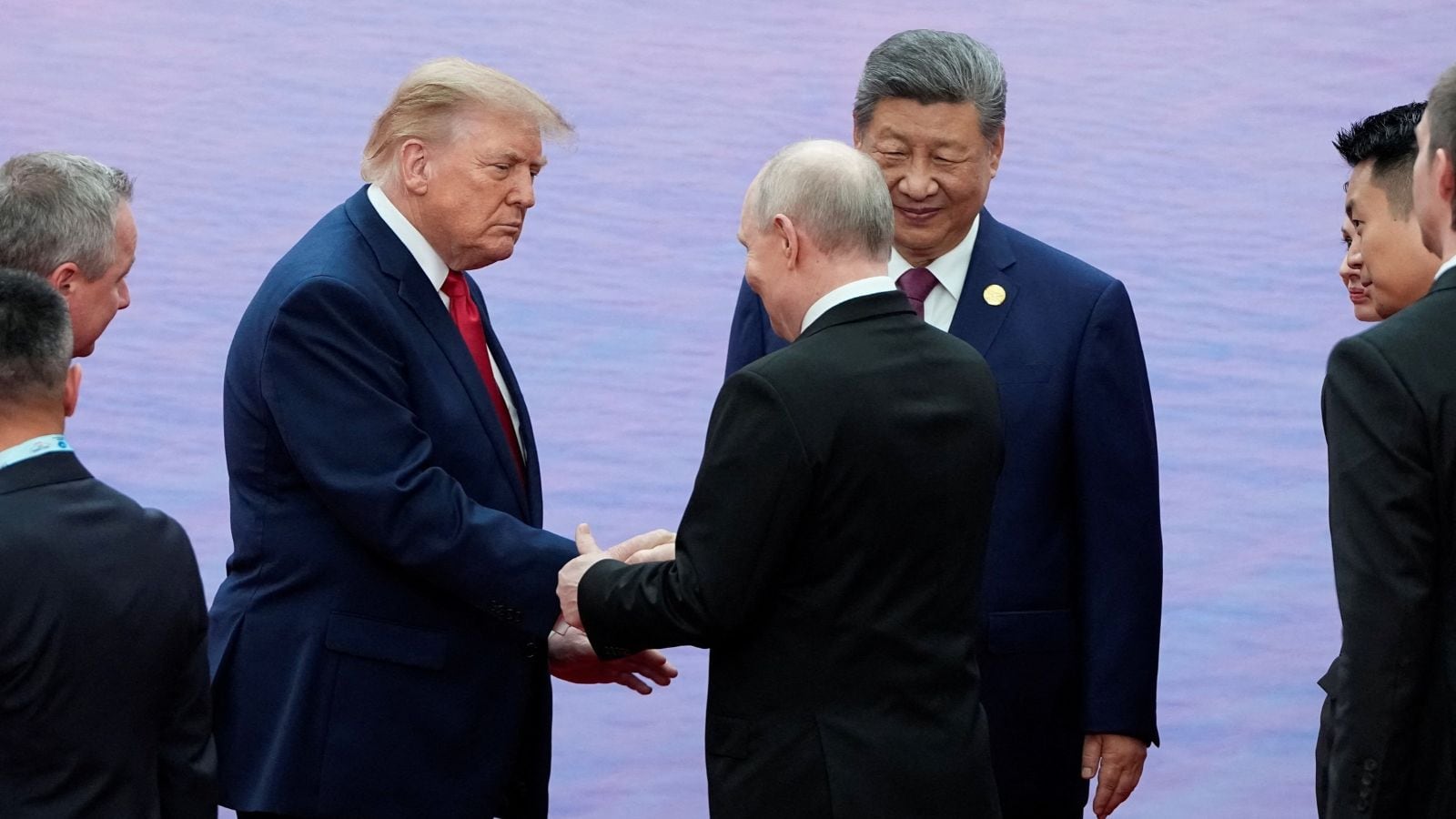
Three leaders walking into one room sounds like a thriller script. Yet the real story behind a potential Trump, Xi, and Putin summit isn't about dramatic handshakes or overnight peace deals. It's about cold, hard transactional leverage across three interlocking crises that none of these men can solve alone.
When headlines claim that nuclear arms, ending the war in Ukraine, and halting conflict with Iran will top the agenda, they usually miss how tightly these issues are chained together. You can't pull one thread without yanking the other two. Having spent years tracking trilateral diplomacy and arms control breakdowns, I can tell you that summit planners don't treat these as separate bullet points on a whiteboard. They treat them as bargaining chips in a single high-stakes swap.
Why Nuclear Arms Control Is the Real Anchor
Let's start with the elephant in the room. The New START treaty—the last remaining bilateral nuclear arms limit between Washington and Moscow—expired in February 2026. Right now, for the first time since the early 1970s, there are zero legally binding caps on the world's two largest nuclear arsenals.
That vacuum terrifies defense planners. It's also why nuclear arms sits at the very top of any Trump-Xi-Putin meeting.
During his first term, Trump repeatedly pushed to bring Beijing into a trilateral nuclear pact. China flatly refused back then because its stockpile was a fraction of the American and Russian arsenals. Things look different now. According to Pentagon assessments and Stockholm International Peace Research Institute (SIPRI) estimates, China has rapidly expanded its operational warhead count past 500 and is racing toward 1,000 by 2030.
Washington won't sign a new bilateral cap with Russia while China builds freely. Moscow won't accept limits unless American missile defense systems and tactical weapons in Europe are on the table. And Beijing? Xi Jinping won't freeze his arsenal unless Washington backs off on Taiwan and lifts high-tech export controls.
See the trap? Every side wants a cap on the other two without limiting itself. A three-way summit is the only venue where those cross-cutting demands can even be placed on the same table. Don't expect a formal treaty to emerge from a single weekend. Expect an agreement to freeze certain missile deployments or restart basic data exchanges so nobody miscalculates during a crisis.
The Ukraine War and the Transactional Reality
If nuclear talks are the anchor, Ukraine is the immediate currency. Conventional wisdom in Washington and Brussels says the war ends when Russia withdraws or runs out of cash. That's wishful thinking.
Russia's economy has shifted onto a full war footing, cushioned by discounted energy sales to China and India. Meanwhile, Ukraine faces severe manpower shortages and fatigue across Western capitals over endless aid packages. Trump has made no secret of his desire to broker a rapid settlement, viewing the conflict as a drain on American resources that distracts from competition with China.
Putin knows this. He's betting that Washington's impatience gives him room to lock in territorial gains in eastern and southern Ukraine.
Where does Xi fit into ending the war in Ukraine? Right in the middle.
China has kept Russia's defense industrial base alive through dual-use exports—machine tools, microelectronics, and optics. Xi hasn't crossed the red line into sending complete lethal weapons systems, mostly because he wants to protect Chinese trade access to European markets. If Trump offers Beijing tariff relief or eases semiconductor restrictions, Xi suddenly has a financial incentive to lean on Putin to accept a ceasefire along current front lines.
Here's what most pundits miss about that dynamic:
- Putin hates looking like Beijing's junior partner, so he won't take direct orders from Xi.
- Instead, Xi uses subtle economic friction—slowing down cross-border bank settlements or tightening customs checks—to nudge Moscow toward the negotiating table.
- Trump can then pitch a frozen conflict as a victory that stopped the bloodshed and saved American taxpayers billions.
European leaders will hate being sidelined, and Kyiv will face excruciating choices over security guarantees versus lost territory. Still, when three superpowers decide a regional war has outlived its usefulness to them, smaller nations rarely get a veto.
Iran Is the Wildcard Nobody Wants to Own
Middle East crises have a nasty habit of blowing up carefully scripted diplomacy. Whether you look at direct military clashes, proxy attacks across the Red Sea, or Tehran's nuclear enrichment creeping closer to weapons-grade thresholds, the conflict involving Iran threatens global oil supplies and pulls American naval assets away from the Indo-Pacific.
Neither Trump, Xi, nor Putin actually wants a full-scale regional war in the Persian Gulf, though for completely different reasons.
Trump wants low gas prices at home and zero appetite for another endless American ground war in the Middle East. A sustained conflict with Iran spikes global crude prices overnight, hammering the U.S. economy and wrecking political capital.
Xi's calculus is even simpler. China buys roughly 90 percent of Iran's exported oil at steep discounts. A wider war that shuts down the Strait of Hormuz or destroys Iranian export terminals cuts off cheap energy and rattles China's fragile domestic recovery.
Putin benefits from higher oil prices, sure, and he's relied heavily on Iranian drones and ballistic missiles for his campaign in Ukraine. Yet Moscow doesn't want Tehran to collapse or trigger an American military intervention that destabilizes Russia's southern flank.
At a trilateral summit, Iran becomes the ultimate side deal. Washington wants Beijing to choke off Iranian oil revenues and stop technology transfers to Tehran's missile program. Moscow can offer to revive aspects of nuclear monitoring or rein in regional militias—provided Washington eases sanctions pressure elsewhere. It's messy, cynical horse-trading. Honestly, that's usually how Middle East ceasefires actually get built.
Why Three-Way Summits Are Harder Than They Look
History isn't kind to big-power summits when expectations run too high. Think back to the 1986 Reykjavik summit between Ronald Reagan and Mikhail Gorbachev. They came shockingly close to abolishing all nuclear weapons, only to walk away empty-handed because Reagan refused to give up his Strategic Defense Initiative.
Now multiply that complexity by three.
In a two-party negotiation, you only have to manage one rival's domestic politics and red lines. Put Trump, Xi, and Putin in the same room, and the geometry changes instantly. Two leaders can gang up on the third. Putin and Xi have spent years building a "no limits" partnership specifically to counter American power. Trump's instinct is to disrupt that alignment by offering separate bilateral sweeteners to peel Moscow away from Beijing, or vice versa.
Both Xi and Putin know Trump's playbook. They'll coordinate their talking points before stepping off their planes. At the same time, deep mutual suspicion lingers between Moscow and Beijing over Central Asia, Arctic shipping routes, and Russia's growing economic dependence on China. Trump will look for any crack in that facade and drive a wedge right into it.
Common Misconceptions About Trilateral Diplomacy
If you're following the coverage around this meeting, tune out the extreme takes. People tend to fall into one of two traps when analyzing these leaders.
The first mistake is believing a summit means friendship. Reporters love analyzing body language—who smiled, who gripped whose elbow, who arrived late. None of that changes national interests. Nixon and Mao shook hands in 1972 while their militaries were still backing opposite sides in Vietnam. Summits happen because leaders recognize mutual danger or mutual profit, not because they suddenly trust each other.
The second mistake is assuming nothing happens unless a massive treaty gets signed on camera. In modern geopolitics, formal treaties rarely survive the U.S. Senate ratification process anyway. The real deliverables from a Trump-Xi-Putin meeting will look much quieter:
- Backchannel hotlines restored between military commanders in Europe and the Pacific.
- Quiet pauses on new tariffs or sanctions for 90 to 180 days while working groups hammer out technical details.
- Unspoken understandings on red lines—what weapons won't be shipped, which targets stay off-limits, and how oil keeps flowing.
How to Read the Signals When the Meeting Happens
Don't watch the press conferences; watch the logistics and the follow-through in the weeks immediately after.
First, look at who sits in the room. If top military brass and nuclear negotiators—like the head of Russia's Strategic Rocket Forces or senior officials from China's Central Military Commission—are part of the delegations, the nuclear arms talks are serious. If it's mostly trade ministers and economic advisors, the focus is on tariffs, sanctions relief, and Ukraine reconstruction money.
Second, track global energy markets and shipping insurance rates in the Persian Gulf. A real breakthrough on Iran shows up immediately in crude futures and tanker traffic long before any diplomat admits a deal was struck.
Third, watch Chinese state media coverage of Russia and the United States in the 48 hours after the summit. Beijing scripts its press narrative down to the adjective. If state outlets suddenly shift toward neutral, pragmatic language about Washington while calling for "balanced security frameworks" in Europe, Xi has decided to cash in his leverage on Ukraine.
Keep your eye on concrete policy shifts—sanctions waivers, troop pullbacks, or renewed nuclear inspection schedules—rather than lofty joint statements about peace and stability.


