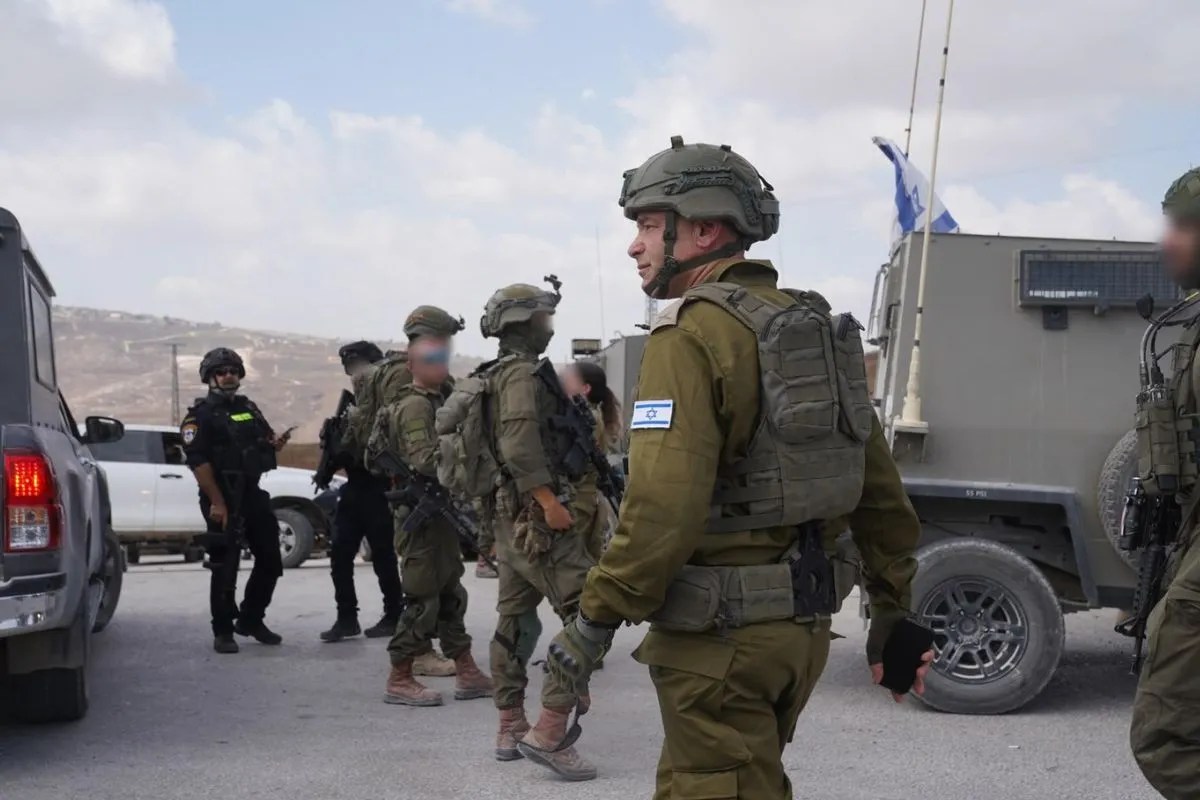
Headlines love a body count because it gives a complex geopolitical stalemate a neat, terrifying punctuation mark. When mainstream news outlets rush to broadcast the latest fatalities along the southern Lebanese boundary, they feed a lazy consensus: that this friction is measured purely in soldiers lost, days elapsed, and tactical skirmishes won or squandered.
That framing is a trap. It misses the structural reality of modern asymmetric deterrence.
Focusing exclusively on tactical casualties treats a chronic structural fracture like a sudden traffic accident. It assumes that every flare-up is a step toward a grand resolution or a catastrophic all-out war, ignoring the permanent grey zone where both states and non-state actors operate indefinitely.
The Myth of the Decisive Clash
We have been conditioned by twentieth-century history to look for fronts, breakthroughs, and decisive battlefields. When two soldiers fall in southern Lebanon, the knee-jerk media reaction is to treat it as a barometer for imminent, massive escalation.
This ignores how deterrence actually functions in the twenty-first century.
Low-intensity attrition is not a prelude to war; frequently, it is the war itself. It is a managed, calculated friction designed to establish boundaries without triggering the very doomsday scenario every desk pundit loves to forecast. When analysts panic over every tactical loss, they misread the signals. Neither side is stumbling blindly toward a total conflagration. Instead, both are meticulously calibrating pressure, testing red lines, and communicating limits through controlled violence.
The Flawed Metrics of Border Reporting
Look at how these incidents are reported. The focus is almost exclusively on the immediate tactical cost: who fired first, who died, and how many miles separate the opposing forces.
This narrow lens ignores the systemic economic, psychological, and strategic equations running underneath the noise.
- Tactical Losses vs. Strategic Objectives: A localized fatality grabs attention, but it rarely shifts the needle on broader strategic postures.
- The Information Loop: Immediate tactical reporting feeds public panic, forcing political leaders into reactive stances rather than long-term calculations.
- The Deterrence Equilibrium: Violence at this scale often acts as a stabilizing valve, releasing built-up pressure so that a full-scale explosion remains unviable.
Unpacking the Regional Status Quo
To understand why traditional reporting fails, look at the architecture of the border region itself. It is not a traditional international boundary guarded by indifferent customs officials. It is a densely mapped, heavily fortified kinetic laboratory.
Every patrol, every mortar round, and every publicized casualty is part of an ongoing dialogue written in ammunition. When a military force takes a casualty in June or any other month, the immediate public assumption is a failure of intelligence or a shift in momentum.
More often, it is simply the statistical probability of high-tension friction finally hitting a node.
Pretending that every tactical event signals a fundamental rewriting of the Middle East map is intellectually lazy. It sells clicks, but it obscures the grinding, monotonous reality of perpetual containment.
Stop treating localized friction as the opening chapter of a predictable apocalypse. Recognize it for what it is: the expensive, bloody, permanent baseline of a region stuck in structural equilibrium.
The real danger is not that the border will suddenly boil over tomorrow. The danger is that we have become so addicted to counting the drops that we refuse to see the storm we are already living inside.