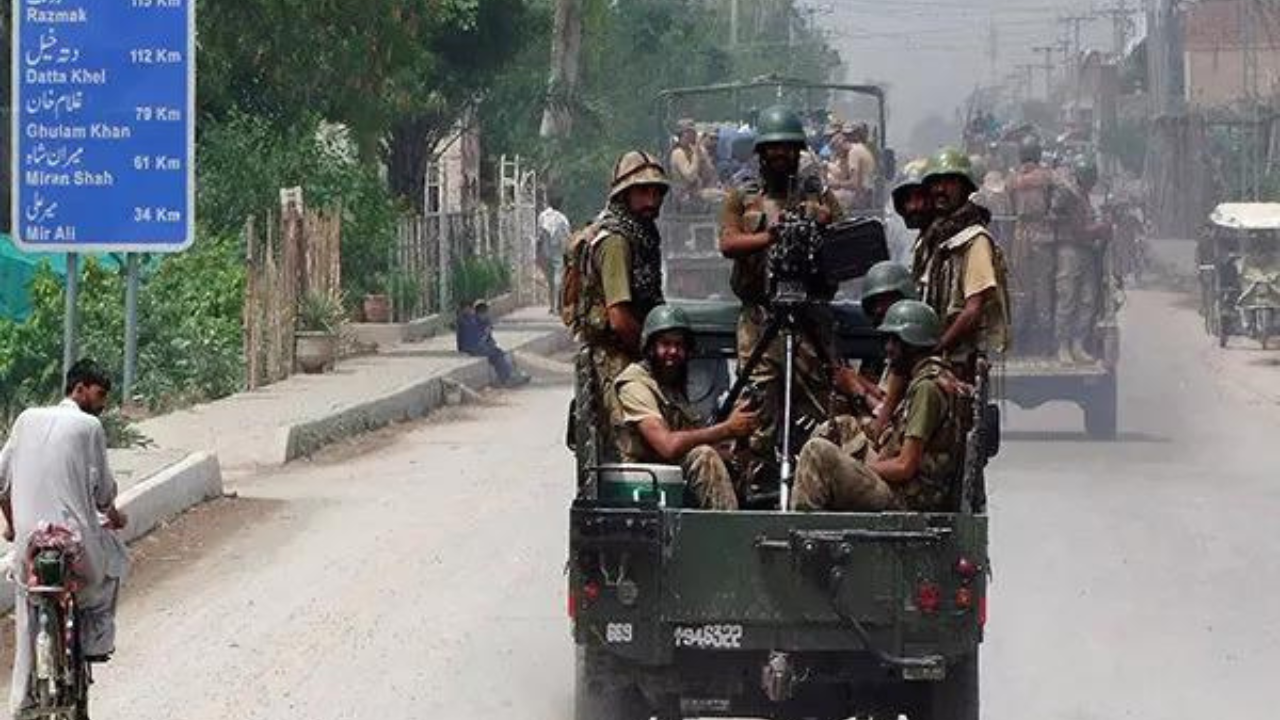
Every time a headline rolls across the wire about security forces wiping out a handful of militants near the western frontier, the security establishment breathes a collective sigh of relief. Another firefight won. Another tactical victory logged into the ledger. It is lazy journalism reporting on lazy strategy, and it blinds everyone to the bleeding wound beneath the bandages. Counting bodies on the ridge does nothing when the entire architecture of border control is built on quicksand.
The standard narrative treats these skirmishes as proof that the system works. militants cross, forces engage, militants fall, peace returns until next Tuesday. This is a comforting illusion designed for press releases. The truth is much harsher. Every kinetic engagement in those rugged hills is a symptom of a deeper, systemic failure of imagination in statecraft.
The Fallacy of the Linear Border
For decades, the central premise of frontier security has relied on nineteenth-century cartography applied to a twenty-first-century tribal reality. State actors look at maps and see a hard boundary. Tribesmen, smugglers, and insurgents look at the same line and see an arbitrary scar dividing families, pastures, and economic lifelines.
When planners talk about sealing the perimeter, they ignore the sheer geography of the region. You cannot fence a vertical desert of jagged peaks and porous mountain passes with barbed
Why Counting Dead Militants Keeps Pakistan Trapped in a Forever War
news
Every time Islamabad announces a successful clearance operation along the Durand Line, the script reads the exact same way. State media trumpets the elimination of a handful of Tehreek-e-Taliban Pakistan fighters, defense analysts nod gravely about border management, and everyone pretends the structural bleeding has stopped. It is political theater masquerading as security strategy.
Counting body bags in the tribal districts is a comforting illusion. It allows the security apparatus to measure tactical output while ignoring strategic failure. The lazy consensus in every mainstream headline treats cross-border violence as a law enforcement problem requiring a heavier hammer. That framing is dead wrong.
The Arithmetic of Attrition is a Trap
For two decades, the tactical playbook has remained identical. Intelligence agencies flag movement, the Frontier Corps or Special Service Group mobilizes, a mountain hideout gets pulverized, and a body count is published. Then, a month later, another convoy gets ambushed in North Waziristan or an outpost gets overrun in Bajaur.
Why? Because insurgencies do not operate on corporate accounting. When you kill seven militants, you have not reduced the insurgent population by seven; you have likely generated fourteen new grievance-driven recruits through collateral damage, structural neglect, and displaced populations. The TTP is not a rigid standing army with a finite recruitment pool. It is an insurgent franchise model deeply embedded in local tribal economies, smuggling networks, and historical alienation.
Treating this as a simple terrorism vector ignores the political economy of the borderlands. The entire frontier zone runs on informal trade, tariff evasion, and state-subsidized smuggling rings. When you militarize a border without integrating its economic lifeblood, you hand the insurgency a permanent supply of disenfranchised young men who have zero economic alternatives outside of illicit transport or militant payrolls.
The Kabul Paradox Nobody Wants to Name
The diplomatic orthodoxy insists that pressuring the interim administration in Kabul will eventually force a crackdown on anti-Pakistan elements sheltering across the border. This is wishful thinking wrapped in diplomatic stationery.
Kabul has zero incentive to spend blood and treasure crushing a movement that shares ideological lineage, historical ties, and familial bonds with their own fighters. Demanding that an ideological sibling act as a mercenary border guard for Islamabad is geopolitical illiteracy. The Afghan Taliban view the TTP not as foreign terrorists, but as veterans of a shared jihad who provided sanctuary and support when the odds were reversed.
Expectations that bilateral communiques or stern warnings will alter this calculus misunderstand the nature of asymmetrical power. Pakistan holds the geography of a pressurized container, but Kabul holds the safety valve. Every time Islamabad tightens the border or deports refugees en masse, it validates the TTP narrative of ethnic and national persecution, driving more recruits straight into the mountains.
Dismantling the Myth of Fencing
Billions of dollars have been poured into fencing the 2,600-kilometer border. It was billed as the ultimate silver bullet to choke off infiltration.
Go talk to the battalion commanders stationed in South Waziristan off the record. They will tell you that a fence in rugged, mountainous terrain is nothing more than a speed bump for people who know every goat trail, smuggling tunnel, and tribal kinship network spanning both sides of the line. Physical barriers only work when backed by legitimate state authority and local consent. When the local population views the state as an extractive, absentee landlord rather than a protector, a steel fence simply becomes a barrier they learn to cut, tunnel around, or bypass entirely through economic corruption.
Insurgencies survive not because their terrain is impossible to seal, but because the local population calculates that the state offers them less protection and prosperity than the alternative. Until the state changes that calculus, more battalions, more drones, and more border fences will only accelerate the fiscal bleeding.
The Real Security Metric
Stop looking at daily casualty reports. They measure tactical noise, not strategic direction.
The only metric that matters is the economic integration and political enfranchisement of the former Federally Administered Tribal Areas. When young men in Bajaur or Khyber have access to formal labor markets, functional courts, predictable property rights, and education systems that do not rely on extremist madrassas for funding, the TTP recruitment pipeline dries up overnight.
As long as the state relies on kinetic hammers to solve structural political failures, every reported victory is just a down payment on tomorrow's ambush.


