The marble floors of the Rayburn House Office Building do not forgive heels at nine o'clock at night. Every footstep clicks like a metronome counting down the hours until the last train leaves Capitol South, while the fluorescent hum of the subterranean tunnels carries the faint, metallic smell of stale coffee and damp wool coats.
For anyone who has spent years working the corridors of Capitol Hill, that sound is the soundtrack of ambition. You arrive in Washington with a bruised suitcase, a degree paid for with compounded interest, and a fierce, almost naive devotion to the machinery of democracy. You learn quickly that the Capitol is not a traditional workplace. It is an ecosystem built on proximity, deference, and an unspoken currency of favors. For an alternative view, read: this related article.
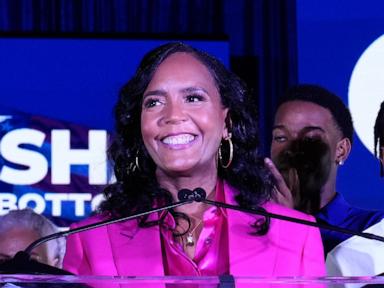
Then, on a crisp Monday in late November 2026, a formal report from the House Committee on Ethics landed on the public docket, shattering one more carefully curated political biography. Representative Jimmy Gomez, a five-term California Democrat who had represented the 34th District since 2017, announced his resignation. He stepped down after the bipartisan panel found substantial evidence that he had made unwelcome sexual advances and engaged in unwanted sexual contact with a House staffer.
To read the standard wire dispatch is to watch a human reckoning get compressed into bureaucratic shorthand. A lawmaker resigns. A committee cites a rule violation. Party leaders issue statements calling the exit appropriate. Similar coverage on this matter has been provided by Associated Press.
The headlines move on within the hour.
Yet buried inside the dry, footnoted pages of the November 23, 2026 Ethics Committee report lies a truth about power on Capitol Hill that rarely survives the news cycle. The woman at the center of the investigation—identified in the filings only as Witness 1—did not even work inside Jimmy Gomez’s personal office. She did not sit on a committee he chaired. On an organizational chart, he was not her boss.
She worked for a House leadership office. And in the peculiar gravity of Congress, as she explained to investigators, members of Congress were her "constituents".
The Architecture of an Invisible Trap
To understand why a staffer outside a lawmaker’s direct chain of command could feel cornered, you have to understand how Washington actually operates. Think of Congress not as a single corporation with a clear human resources department, but as 435 medieval fiefdoms connected by underground hallways and a shared payroll.
If you work in a leadership office, your entire professional value rests on your ability to keep those 435 principals happy. Your job is to smooth friction, answer late-night calls, coordinate floor votes, and never, under any circumstances, become the problem. When a member of Congress approaches you—whether in a crowded reception near the Capitol or in the quiet shadow of an evening adjournment—you are not meeting an equal. You are meeting the customer, the patron, and the ultimate arbiter of whether your career in Washington continues past Tuesday.
The investigation into Gomez did not begin with a formal complaint filed through official channels. Like so many reckonings in Washington, it began with a rumor that escaped the bubble.
In April 2026, amid a turbulent spring on Capitol Hill that had already seen the resignations of Representatives Eric Swalwell and Tony Gonzales following separate misconduct scandals, public reporting surfaced alleging that Gomez had been spotted surreptitiously kissing a much younger congressional staffer back in 2023. Three days after the House Ethics Committee issued a stern public reminder of its zero-tolerance policy on April 20, the panel formally notified Gomez that it had opened an inquiry under Committee Rule 18(a).
What followed was a study in how two people can inhabit the exact same room and walk away with irreconcilable realities.
When Gomez responded through counsel in May 2026, he framed his history through the lens of private indiscretion. He disclosed a past consensual relationship with a senior aide in another member's office, and he acknowledged what he characterized as a single instance of consensual kissing with Witness 1. Even as he stepped down in November—having already lost his re-election bid earlier that autumn—his public apology leaned on the familiar vocabulary of marital failure, asking forgiveness for personal mistakes committed outside his marriage.
The Ethics Committee saw something entirely different.
Two Versions of the Same Room
Consider a hypothetical scenario that mirrors the exact dilemma documented in the panel's findings—not to invent facts, but to feel the weight of what happens in the space between a lawmaker's entitlement and a staffer's survival instinct.
Imagine you are twenty-six years old. You spend fourteen hours a day managing legislative logistics for party leadership. Your phone buzzes at midnight with questions from members whose names appear on cable news every evening. One night, after a long session, a congressman—a man two decades your senior, a fixture on the House Intelligence Committee, someone whose goodwill your own bosses rely upon—steps into your personal space. There is no loud threat. No one brandishes a pink slip. There is only the sudden, suffocating proximity of hands where they were never invited, and the split-second calculation racing behind your eyes: If I push him away hard enough to make a scene, whose career ends tomorrow?
In District of Columbia criminal statutes—standards the Ethics Committee explicitly cited in its report—sexual contact involves touching intimate areas directly or through clothing without permission, and courts have long recognized that a lack of physical resistance resulting from coercion or intimidation does not equal consent. Yet in the hallways of Congress, coercion rarely looks like a movie script. It looks like a smile you force onto your face while backing toward an elevator. It looks like deleting a text thread so nobody asks questions. It looks like rewriting your own resume at two in the morning because you realize you can no longer walk past a certain suite of offices without your stomach tightening into a knot.
Investigators interviewed Witness 1 and found her account credible. Far from a mutual, fleeting lapse in judgment, the panel determined that Gomez had engaged in unwelcome sexual advances and unwanted sexual contact, and that his behavior at multiple points indicated he knew what he was doing was wrong.
More damning still was the aftermath. The committee concluded that Gomez’s conduct triggered a traumatic, ongoing chain of interactions for the aide. Combined with what the panel described as a broader culture of sexual misconduct on Capitol Hill, the ordeal drove her out of government service altogether.
Let that sink in.
He kept his title for three more years. He sat on powerful committees. He cast votes, delivered speeches at rallies against corporate excess, and posed for photographs on the Capitol steps. Meanwhile, the woman whose only offense was showing up to serve the institution packed up her desk and walked away from public life.
The Revolving Door of Capitol Accountability
If Jimmy Gomez’s resignation felt depressingly familiar to anyone watching Washington in 2026, it is because the calendar had already become a ledger of institutional failure.
Earlier in the year, the House had watched two members resign ahead of potential expulsion votes, while another faced formal censure over his treatment of female aides. In May, House leaders had stood before cameras to announce yet another bipartisan push to combat workplace harassment in Congress. Every scandal followed the same choreography: shock, condemnation, a promise of reform, and a quiet sigh of relief when the accused member resigned before the full House had to take a recorded vote on expulsion.
Resignation in Congress is often mistaken by the public for punishment. In reality, it is frequently an exit ramp.
Under the Constitution, the House of Representatives holds the sole authority to police the conduct of its own members. When the Ethics Committee finds substantial evidence of misconduct, it can refer the matter to the full chamber for sanctions ranging from a reprimand or censure to outright expulsion. Yet the moment a member submits a letter of resignation, the House loses its jurisdiction over them as a sitting lawmaker. The floor debate never happens. Colleagues are spared the discomfort of standing at the well of the House to pass judgment on someone they shared flights with on Thursday afternoons.
House Democratic Leader Hakeem Jeffries and his leadership team called the findings on Gomez serious and deeply troubling, stating that his departure was appropriate and insisting that setting a new standard for reform remained an urgent priority. Across the aisle, lawmakers echoed a frustration that staffers have whispered in dive bars along Pennsylvania Avenue for decades: Congress cannot keep responding only after the damage is done and another promising public servant has been driven out the door.
I still remember the first time a veteran Hill chief of staff pulled me aside during my early years covering Washington and offered a piece of advice that sounded cynical then and prophetic now. "Never forget," he said, nodding toward the Capitol dome glowing against a November dusk, "that the people who run this building every day are twenty-five years old, and the people who own it never have to follow the rules they write for everyone else."
What Reforms Still Miss
Why does this pattern keep repeating despite mandatory anti-harassment training, revised congressional accountability laws, and public pledges of zero tolerance?
Because rules written on paper cannot easily dismantle an asymmetry of power baked into the very geometry of representative government.
In a normal workplace, if a vice president corners a junior coordinator in a hallway, human resources operates—at least in theory—under a mandate to protect the company from legal liability and preserve workplace safety. On Capitol Hill, every member of Congress is an independent constitutional officer elected by hundreds of thousands of voters. Nobody can fire them except their constituents every two years, or two-thirds of their peers in an extraordinary vote of expulsion.
That structural immunity warps the air around them. Over time, unchecked deference acts like altitude sickness on the human ego: the higher a lawmaker climbs, the thinner the air of accountability becomes, until basic boundaries start looking like optional etiquette.
For staffers, the calculation remains brutally lopsided. Washington is a small town with a long memory. Being known as the aide who triggered an ethics probe—even when vindicated by a unanimous bipartisan report—carries a quiet stigma when you apply for your next job at a K Street firm, a federal agency, or another congressional office. Witness 1 cooperated with investigators, told the truth, and watched the Ethics Committee validate her credibility in black and white. Yet her victory came years after she had already abandoned the career she came to Washington to build.
Real reform on Capitol Hill will not come from another laminated pamphlet or a thirty-minute online compliance module. It requires changing the incentives before a line is crossed—stripping away the procedural escape hatches that allow members to vanish quietly when caught, establishing independent oversight that does not rely on colleagues policing friends, and creating genuine career protections for the young staffers who keep the legislative branch alive while lawmakers take the credit.
Until then, the burden of courage falls entirely on the people with the least power in the room.
On the evening after the Ethics Committee report was released, the long corridors of the Rayburn Building emptied out just as they always do. Outside, the autumn wind swept dry leaves across Independence Avenue toward the glowing white steps of the Capitol. Somewhere in Washington, a twenty-something staffer locked a desk drawer, slipped a congressional badge into a coat pocket, and stepped out into the cold night air, wondering whether the institution she came to serve was ever built to protect her at all.