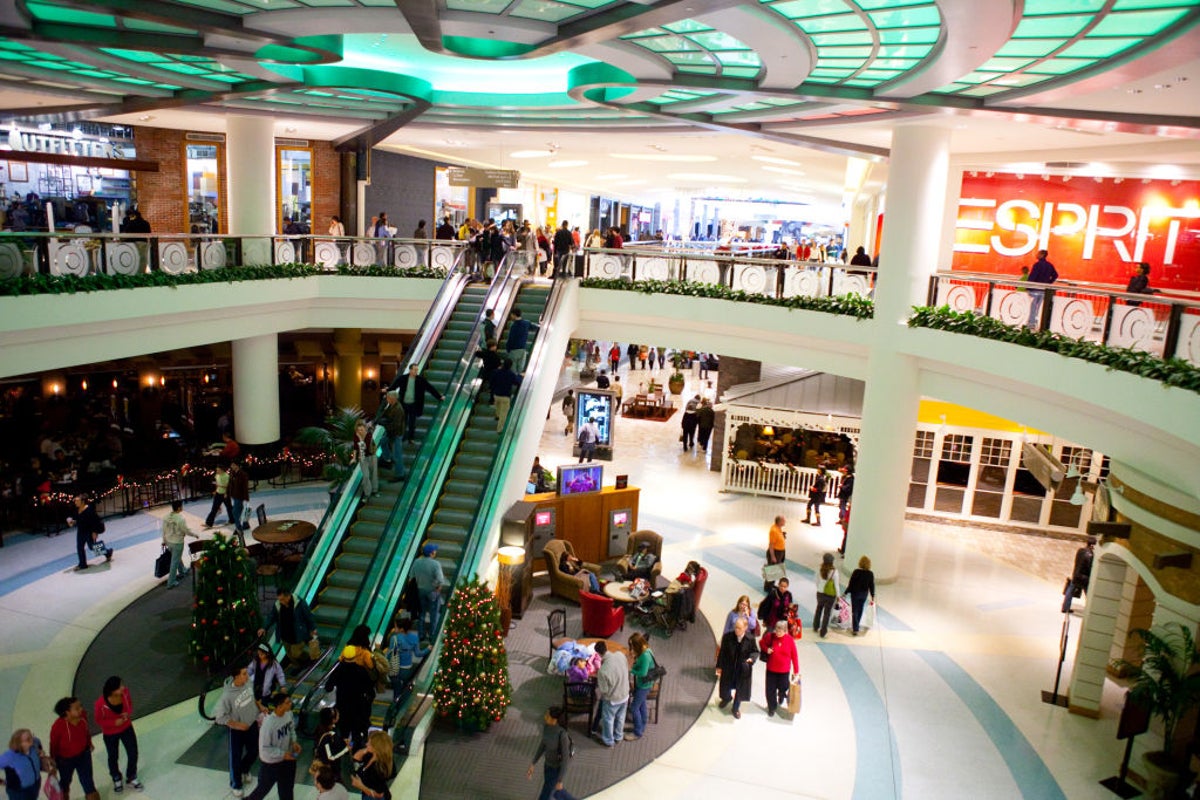
The floor terrazzo remembers every pair of sneakers that ever squeaked across it in 1994.
We called them malls. They were never just buildings. They were climate-controlled ecosystems, neon-lit sanctuaries where teenagers learned the agonizing choreography of eye contact and middle-aged couples walked laps under skylights before buying a pretzel. They smelled of popcorn, artificial cinnamon, floor wax, and the dense, overlapping cloud of forty different department store perfumes drifting out toward the concourse.
Then, the floor started to empty.
Step into a dying suburban shopping center today. The silence hits you first. It is not a peaceful silence. It is an industrial hush, heavy with the ghosts of shuttered Spencer Gifts and vacant Sears anchor lots where the loading docks are permanently bolted shut. The fountains are turned off, their dry concrete basins collecting dust instead of tossed pennies.
Yet, drive ten miles down the interstate to the open-air lifestyle center. Watch the crowd shoulder-to-shoulder outside the Apple store, waiting for a table at the farm-to-table bistro, pushing strollers past artisanal candle kiosks.
Two identical concepts. Two vastly different fates.
How did the temple of American consumerism fracture down the middle?
To understand the split, you have to remember what these spaces were built to replace. Before the enclosed mall became the dominant architecture of commerce, American retail lived on Main Street. Merchants knew your name. Shop doors opened directly to the sidewalk. When developer Victor Gruen sketched the first modern indoor mall in suburban Detroit in the 1950s, his utopian dream was civic, not purely commercial. He wanted to give sprawling postwar suburbs a town square. He wanted a place for art, medical offices, post offices, and community gathering, protected from the biting Midwestern winter.
Capitalism, of course, had other ideas.
The civic elements were stripped away. The town square became a monument to private retail. Department stores anchored each end like feudal lords, pulling traffic back and forth through long, windowless corridors designed specifically to make you forget what time of day it was. There were no clocks. There were no exits except through the cash register.
For decades, it worked brilliantly. By the late twentieth century, American retail real estate was expanding twice as fast as the population. We built too many. We paved over too many cornfields. We assumed that the appetite for buying mass-produced goods inside concrete boxes was an infinite resource.
It was not.
Consider what happens next: the internet arrives. Not with a sudden explosion, but as a slow, quiet erosion. A book bought online instead of at Waldenbooks. A pair of shoes ordered via dial-up instead of hunted down at Foot Locker. Convenience became a silent predator.
As digital storefronts siphoned off the routine, transactional shopping trips—the Tuesday night underwear restock, the bulk toothbrush purchase—the traditional mall lost its baseline gravity. Anchor tenants, weighed down by corporate debt and changing shopper habits, began to pull out. When Sears or Macy leaves a mall, it is not just a vacancy. It is a missing lung. The smaller shops in the inline corridors rely on the foot traffic generated by those behemoths. When the anchors fall, the dominos follow.
Bankruptcy filings pile up in federal court. Real estate investment trusts look at balance sheets dripping in red ink. Entire parcels of prime suburban real estate transform into what industry insiders clinically call "dead malls." Zombies made of steel and drywall.
Except, the story does not end in the graveyard.
While regional indoor malls with tired food courts and crumbling asphalt parking lots are flatlining, upscale mixed-use developments are booming. Why? Because human behavior adapted. We no longer go out just to acquire things. We go out to escape the isolation of our screens.
Walk through a thriving modern lifestyle center on a Saturday afternoon. Notice what people are carrying. Bags are remarkably light. Most people are holding cups of coffee, ice cream cones, or nothing at all. They are walking dogs. They are sitting on wrought-iron benches. They are eating dinner at outdoor patios under strings of Edison bulbs.
The surviving spaces figured out a brutal truth. If you sell only commodities, Amazon will beat you every single time. A warehouse in Ohio can ship a blender to your doorstep in twenty-four hours cheaper than a retail storefront in Ohio can stock it.
Therefore, successful retail real estate stopped selling merchandise and started selling atmosphere. They leaned into experiences that cannot be packed into a cardboard box. They added boutique fitness studios, climbing gyms, rooftop bars, medical clinics, and grocery stores. They tore the roofs off the old corridors, letting the rain and real sunlight back in. They transformed fortress-like commercial real estate back into Gruen's original dream: a civic gathering place, updated for the twenty-first century.
Real estate analytics bear this out. Class A malls—those located in affluent, high-density areas with strong tenant rosters—maintain occupancy rates hovering near ninety-five percent. Meanwhile, Class C and Class D malls bleed out, selling for pennies on the dollar to municipalities looking to turn them into community colleges, industrial fulfillment centers, or senior housing developments.
The market is ruthlessly sorting the exceptional from the obsolete.
Driving past one of these abandoned concrete hulls tonight, the contrast is stark. The parking lot, once home to thousands of idling sedans, is cracked and overgrown with stubborn patches of crabgrass pushing through the seams. The pylon sign out front is missing letters, spelling out a garbled remnant of a brand name that no longer exists.
Inside those dark, sealed walls, the mannequins still stand behind locked security gates, dressed in fashion trends from five years ago, staring into an empty hallway where nobody will ever walk again.
Yet, three miles away, the neon is glowing, the outdoor patios are packed, and the register is ringing. The mall is dead. Long live the neighborhood.