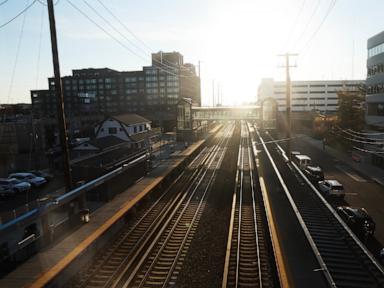
The media is in full-blown panic mode. Television anchors are standing outside train terminals, interviewing exhausted commuters, and framing the shutdown of the country’s largest commuter rail network as an unmitigated economic disaster. They want you to see images of packed highway lanes and crowded bus platforms and conclude that our cities are on the brink of collapse without a heavily subsidized, 19th-century transit model running on life support.
They are missing the entire point.
The standard narrative surrounding public transit strikes is hopelessly lazy. It treats a system shutdown like a natural disaster—an unpredictable tragedy that leaves citizens helpless. The mainstream consensus screams that we must resolve the dispute at all costs, pump more taxpayer money into the system, and get the trains running back on their rigid, outdated schedules.
That view is entirely wrong.
This strike is not a tragedy. It is a stress test. More importantly, it is a forced acceleration toward a decentralized transportation network that our cities desperately need. Keeping these massive, inflexible rail networks running in their current state is not a sign of a healthy city; it is an expensive addiction to an obsolete routine.
The Myth of the Indispensable Rail Network
Every transit strike exposes a dirty secret that transportation officials try desperately to hide: the traditional hub-and-spoke commuter rail model is an archaic relic designed for a workforce that no longer exists.
For decades, the math was simple. You packed tens of thousands of white-collar workers into metal tubes every morning, shot them into a dense urban core, and sucked them back out at 5:00 PM. It was efficient solely because employers forced everyone to sit in the same physical buildings during the exact same hours.
When a strike hits, the immediate reaction is to measure the economic damage based on that old blueprint. But look closely at the data from recent disruptions. The catastrophic, multi-billion-dollar losses predicted by regional chambers of commerce rarely materialize in the numbers. Why? Because the modern economy possesses liquidity that traditional transit advocates refuse to acknowledge.
The Real-Time Adaptation
Within forty-eight hours of a rail shutdown, a fascinating migration occurs. It is not a physical migration, but a digital and operational one.
- The Remote Buffer: Companies that flirted with strict return-to-office mandates suddenly discover that their cloud infrastructure works perfectly fine when their staff is grounded.
- The Micro-Transit Surge: Rideshare networks, regional vanpools, and localized bus routes dynamically adjust pricing and routing to absorb the highest-value trips.
- The Hyper-Local Economy: Suburban town centers experience an immediate spike in economic activity. Money that would have been spent on parking, lunch, and dry cleaning in the downtown core is instead distributed across local neighborhoods.
The traditional rail system is brittle. It requires 100% of its infrastructure to be functional to deliver value. If one signal box fails, or if one union walks out, the entire network dies. By contrast, the decentralized alternatives—ranging from remote work to ad-hoc van networks—are anti-fragile. They adapt to disruption in real time.
Stop Trying to Save the 9-to-5 Transit Monopoly
The fundamental flaw in how we view public transit is that we treat it as a natural monopoly that must be preserved at all costs. Whenever workers strike for higher wages or better benefits, the public debate centers on finding a compromise that restores the status quo.
But the status quo is bankrupt.
I have spent years analyzing urban infrastructure budgets, and the fiscal reality of these massive rail systems is grim. They are black holes for capital. They rely on staggering subsidies just to break even on daily operations, all while carrying a mountain of deferred maintenance debt.
When a strike occurs, it gives us a rare window to look at the balance sheet without the noise of daily operations. It forces us to ask a brutal question: if a system requires billions in public funding but can be neutralized by a single labor dispute, why are we doubling down on it?
The PAA Fallacy: "How will cities survive without commuter rail?"
This is the classic question found across search engines and policy papers alike, and it is entirely the wrong question. It assumes that the survival of the city is tied to the survival of the train.
Cities do not need trains; they need mobility. There is a massive difference.
By forcing a temporary halt to the rail monopoly, a strike clears the field for alternative, private-sector, and municipal mobility solutions to prove their viability. Look at how micro-mobility options and dedicated bus rapid transit (BRT) lanes perform during rail shutdowns. They move people at a fraction of the capital cost, with infinitely more flexibility.
If a private tech company operated with the inefficiency, vulnerability, and massive deficits of a major US commuter rail system, investors would have liquidated it a decade ago. Yet, when it comes to transit, we are told that pouring more money into the same broken machine is our civic duty.
The Dark Side of the Decentralized Shift
To be clear, a sudden transition away from reliance on massive rail networks is not painless. The contrarian view does not ignore the friction; it simply accepts it as the cost of progress.
The immediate downside of a rail strike is felt acutely by lower-wage workers who do not have the luxury of working from home. Service industry staff, hospital workers, and municipal employees bear the brunt of the initial chaos. They face longer commutes and higher costs as alternative networks experience surge capacity.
This is the real problem that needs solving. Instead of spending political capital and tax dollars trying to subsidize a massive, top-heavy rail system that serves affluent suburban commuters, those resources should be redirected.
Imagine a scenario where municipal transit budgets were decoupled from fixed rail lines. Instead of spending $500 million to upgrade a single commuter rail station that serves a few thousand suburban professionals, that money could fund a massive fleet of on-demand, public electric shuttles targeting transit deserts.
The strike forces this conversation into the open. It exposes who the current system actually serves—and who it leaves behind.
The Hard Truth About Transit Labor Disputes
Let’s talk about the labor dynamics without the usual ideological posturing. The union is doing exactly what it is supposed to do: using its maximum leverage to extract the best possible terms for its members. The management is doing exactly what it is supposed to do: trying to contain costs in a system that is already hemorrhaging cash.
The mistake is believing that there is a "win-win" solution at the negotiating table.
Every contract negotiation that ends in a standard compromise simply kicks the can down the road. Management agrees to wage increases they cannot afford without future bailouts, and the union agrees to minor work-rule changes that do nothing to fix the structural inefficiency of the operation. The trains start running again, the media stops caring, and the slow, expensive decline resumes.
A prolonged strike breaks this cycle. It forces a crisis point where the structural flaws can no longer be papered over with temporary funding patches. It forces cities to realize that relying on a single, massive point of failure for regional mobility is a strategic blunder.
The Path Forward is Not on Tracks
The era of the massive, centralized commuter rail network as the backbone of the American city is over. The pandemic started the shift; this strike is merely finishing the job.
We must stop viewing the shutdown of a rail system as a failure of public policy and start viewing it as an exit ramp. The goal should not be a hasty return to the old ways of moving people. The goal should be building a redundant, diverse, and flexible transportation ecosystem that doesn't grind to a halt because of a single contract dispute.
Let the trains sit in the yards a little longer. It is the only way we will ever learn to move forward without them.