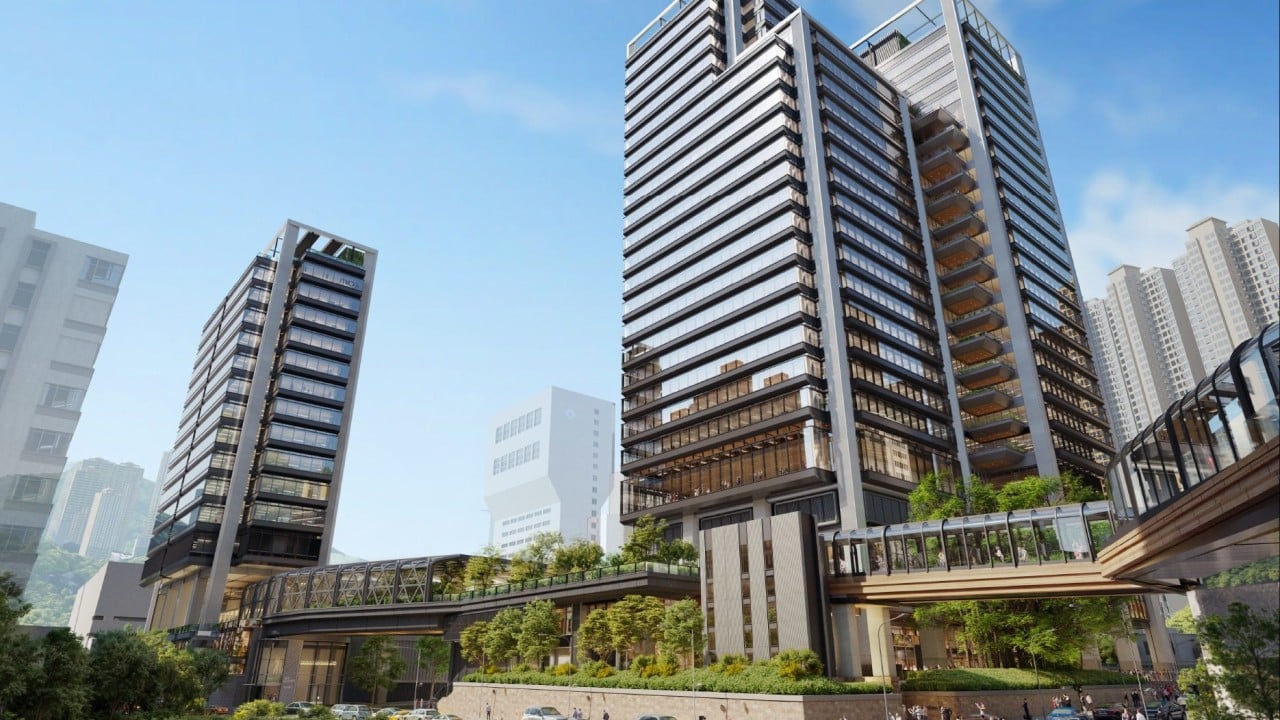
Commercial real estate strategy in secondary submarkets relies on spatial clustering to drive liquidity and sustain rental yields. When institutional landlords capture high-value financial technology tenants, the transaction signals a structural shift in asset absorption rather than a simple leasing agreement. Examining the financial mechanics behind anchor tenant commitments within decentralized urban nodes exposes the variables governing modern portfolio valuation.
The Spatial Economics of Decentralization
Urban commercial corridors face persistent downward pressure on net absorption rates as corporate occupiers demand operational efficiency and decentralized footprint configurations. Traditional central business district cores command valuation premiums based entirely on historical agglomeration economies. However, shifting labor dynamics and cost structures force occupiers to evaluate alternative nodes that offer equivalent infrastructure density without legacy pricing structures.
The strategic migration of digital banking operations toward non-core districts highlights an arbitrage model. Landlords operating within secondary hubs must transition from passive space providers to active ecosystem curators. This requires aligning asset specifications with the precise technical, regulatory, and power redundancy requirements unique to digital-first financial institutions.
- The cost of retrofitting legacy slabs for high-density server configurations directly impacts net operating income.
- Power supply stability and telecommunication redundancy act as non-negotiable threshold variables for digital operators.
- Proximity to consumer-facing retail environments supports brand visibility objectives for digital native firms transitioning into physical channels.
Tenant Diversification and Risk Mitigation
Asset valuation models in commercial real estate depend on Weighted Average Lease Expiry and tenant credit quality. Monocultures centered on traditional financial services or legal practices expose landlords to sector-specific cyclical downturns. Introducing fintech anchors into a localized portfolio changes the risk profile by diversifying the tenant base across distinct economic drivers.
Financial technology operators function as hybrid entities possessing characteristics of both technology firms and regulated financial institutions. Their spatial requirements combine open-plan collaborative environments with high-security server rooms and compliance suites. Landlords who adapt their floor plates to accommodate these configurations capture higher rents per square foot compared to those offering standard cellular offices.
Asset resilience is a direct function of tenant cross-elasticity. When retail, wealth management, and technology intersect within a single micro-location, foot traffic stabilizes, creating a self-reinforcing valuation loop for the underlying real estate.
The portfolio integration mechanism operates through a feedback loop. Digital banking firms generate white-collar employment that directly supports surrounding commercial and retail ecosystems. Landlords who own adjacent mixed-use assets capture secondary yield expansion through increased retail sales turnover rents and higher residential demand nearby.
Asset Revaluation Through Anchor Commitments
Securing a major corporate anchor validates a landlord's capital expenditure program. When an institution commits to a multi-floor headquarters within a decentralized portfolio, the transaction reduces perceived leasing risk across the entire asset cluster. This reduction in risk compresses the capitalization rate applied to the landlord's portfolio valuation.
The transaction mechanics involve several distinct phases of capital allocation:
- Upfront capital expenditure dedicated to base-building infrastructure upgrades, including smart building management systems and enhanced vertical transportation.
- Tenant inducement structuring, balancing fit-out cost contributions against long-term lease commitments and annual escalations.
- Yield curve adjustments reflecting the improved credit profile of the tenant roster over a ten-to-fifteen-year horizon.
Capital Allocation Dynamics
Evaluating the return on invested capital for urban regeneration projects requires tracking net asset value growth against interest rate fluctuations. Landlords with low gearing ratios absorb the initial capital expenditure required for fintech-grade retrofitting without destabilizing balance sheets. Conversely, highly leveraged operators face yield compression if lease-up velocity lags behind debt service schedules.
The structural advantage lies in portfolio scale. Landlords controlling contiguous blocks of commercial space dictate district-level pricing power. By anchoring a major financial brand in a prominent asset, the landlord establishes a pricing ceiling that lifts secondary and tertiary assets within the same geographic footprint.
Deploying capital into intelligent building infrastructure remains the primary vector for defending asset yields against structural obsolescence. The integration of high-speed digital architecture with sustainable building certifications creates an operational moat that deters tenant migration to competing developments. Landlords must price these technological investments directly into initial lease agreements through specialized service charges or stepped rental increments.
Focus capital expenditure on structural power redundancies and telecommunication backbone enhancements rather than cosmetic interior finishes. Restructure lease terms to include index-linked escalation clauses that hedge against inflationary spikes in facility management costs. Execute phased asset repositioning to maintain baseline cash flow across non-impacted floors while upgrading anchor spaces for incoming fintech tenants.