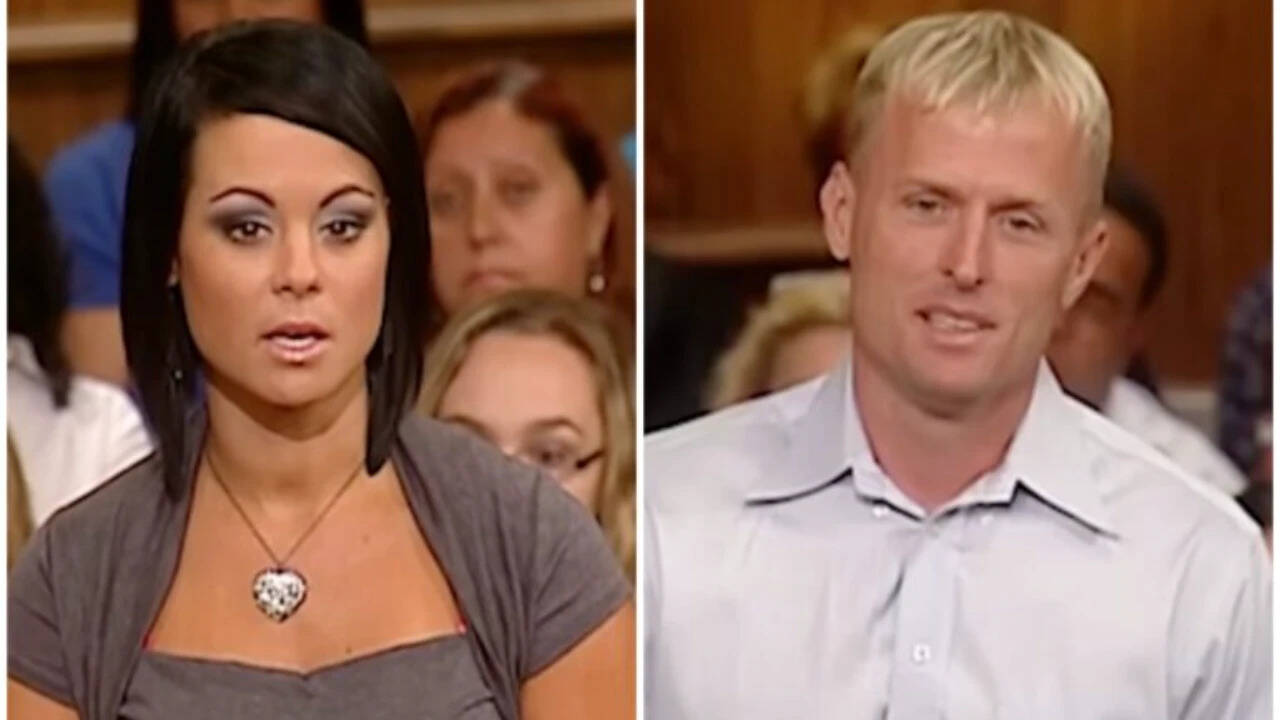
The Escalation Thesis: Why Cold Cases Break Fifteen Years Later
Sensational headlines frame the Michelle Parker disappearance around a dramatic coincidence: a woman vanishing on the exact day her televised engagement ring dispute aired, followed fifteen years later by her former fiancé's arrest for second-degree murder. That narrative captures attention, yet it treats a fifteen-year gap as a mystery rather than an operational timeline. Cold domestic homicide investigations rarely stall from a lack of early suspicion; they stall because digital extraction capabilities, prosecutorial thresholds for "no-body" cases, and investigative bandwidth evolve over time.
In October 2026, Orlando police arrested Dale Smith Jr. on a charge of second-degree murder in connection with Parker's November 17, 2011 disappearance. Parker, then 33 and a mother of three—including twins she shared with Smith—was last seen after dropping the twins off at Smith's home. Her body has never been found. Rather than viewing the case through television irony alone, a rigorous analysis separates verified record facts from investigative hypotheses across four dimensions: pre-incident escalation, evidentiary friction in bodyless homicides, forensic re-evaluation mechanics, and institutional resource allocation.
Deconstructing Competitor Framing Versus Structural Reality
Standard coverage relies on chronological juxtaposition: pre-taped reality television broadcast, child drop-off, disappearance, abandoned vehicle, and a fifteen-year wait ending in an arrest. This structure has two analytical blind spots:
- Conflating broadcast timing with causation: The People's Court episode—centered on a dispute over a $5,000 engagement ring in which Judge Marilyn Milian ruled Parker owed Smith $2,500 for her half—had been recorded prior to November 17, 2011, and aired that same day. Public embarrassment and renewed interpersonal friction may have heightened tension, yet the broadcast date itself is an external scheduling event rather than a direct trigger established in public filings.
- Treating a fifteen-year interval as static inaction: A long gap between prime-suspect status and formal charging often reflects a deliberate evidentiary gap rather than forgotten files. Prosecutors charging second-degree murder without a recovered body face a high burden to prove unlawful death, identity of the perpetrator, and criminal intent beyond a reasonable doubt.
The Three Pillars of Pre-Incident Escalation
In domestic violence and intimate-partner homicide research, lethal outcomes rarely emerge in a vacuum. Risk assessment models—such as the Danger Assessment framework developed by nursing researcher Jacquelyn Campbell—examine patterns of coercive control, prior threats or physical aggression, and acute relationship destabilization. While individual cases vary and no model predicts outcomes with certainty, public reporting around the 46-page arrest affidavit points to three recurring escalation variables:
- Prior conflict and alleged abuse history: Court records show Parker sought a domestic violence injunction against Smith in August 2009, alleging he smashed her truck window during an argument while holding their young daughter. Unsealed affidavit reporting in late 2026 further described a tumultuous relationship marked by controlling behavior and alleged prior relationship abuse.
- Public status friction and custody leverage: Appearance on a nationally syndicated courtroom program over a contested engagement ring introduced public scrutiny alongside private animosity. Text messages cited in reporting from the weeks preceding November 17, 2011, reflected sharp hostility, including messages in which Parker threatened to take custody of the twins. In high-conflict separations, perceived loss of control over children or public standing acts as a major psychological flashpoint.
- Immediate physical proximity and opportunity: Parker was last known to be seen dropping the twins off at Smith's residence on November 17, 2011, before she failed to arrive at her bartending job in Sanford and was reported missing by her sister. Her SUV was located abandoned the next day, and her phone was later recovered from a lake.
Known Facts Versus Investigative Hypotheses
Maintaining a strict boundary between verified facts and investigative theories prevents analytical drift, particularly while criminal proceedings are active and Smith has pleaded not guilty:
- Known record facts: Parker disappeared on November 17, 2011; her vehicle was found abandoned the following day; her remains have not been recovered; Smith was treated as a prime suspect early on, hired counsel after initial voluntary questioning, and was arrested in October 2026 on a second-degree murder charge. Prosecutors have also noted the second-degree charge could be revisited if supported by evidence, while a separate review opened in November 2026 into the 2001 death of Smith's late wife, Shannon Collins-Smith, while Smith was previously jailed.
- Investigative hypotheses and allegations: According to reporting on the unsealed arrest affidavit, investigators suspect Smith fatally choked or strangled Parker during a confrontation and disposed of her body, interpreting earlier photographed scratches and abrasions on Smith as defensive wounds and pointing to digital location and messaging data. Defense counsel has argued Smith maintained his innocence, disputed linking him to a murder, and sought bond. Those allegations remain subject to proof in court.
The Cost Function of Body-Absent Homicide Prosecutions
Charging homicide without a body alters the evidentiary cost function for both law enforcement and prosecutors. In a conventional homicide investigation, physical autopsy findings establish cause and manner of death directly, while scene forensics anchor time and place of fatal injury. When no body is recovered, the state must construct a circumstantial chain strong enough to exclude accidental disappearance, voluntary departure, or third-party involvement.
Three structural bottlenecks typically delay charges in body-absent cases:
- Corpus delicti and causation proof: Defense teams routinely challenge whether death occurred at all, or whether death resulted from an intentional or reckless act rather than an unverified accident. Without remains, forensic pathology cannot confirm strangulation or blunt force trauma directly; prosecutors must rely on behavioral, physical, and digital indicators consistent with lethal violence and concealment.
- Fragmented 2011-era digital telemetry: In 2011, smartphone ecosystems, cloud backups, carrier location precision, and vehicle telematics were far less standardized and less granular than they are in 2026. Data preserved in older case files may only yield higher-resolution analytical value when re-parsed with modern forensic software, cross-referenced tower/location records, and updated analytic workflows.
- Institutional capacity constraints: Homicide units operate under triage pressure. Active cases with fresh leads and living witnesses consume immediate detective hours. Orlando Police Chief Eric D. Smith noted in October 2026 that a decline in violent crime and homicides gave full-time homicide detectives capacity to revisit older evidence alongside renewed investigative focus.
Forensic Re-Examination and Evidentiary Mechanics
How does a decade-and-a-half-old file yield new momentum without a newly discovered corpse? In cold-case practice, breakthroughs rarely come from a single movie-style reveal; they come from re-indexing existing artifacts through superior analytical lenses.
Digital and Device Re-Parsing
Law enforcement statements and reporting on the arrest affidavit highlight advances in digital forensics applied to phones, computers, vehicles, and previously collected records. Mechanically, re-examination works in three stages:
- Re-evaluating legacy extractions: Tools and decoding libraries available in 2026 can parse artifacts, deleted fragments, metadata timestamps, or application logs that legacy extractions missed or formatted poorly.
- Correlating movement and communication timelines: Cross-matching device activity, cell site and location data, and vehicle or account records allows investigators to test alibis and conflicting statements against tight time windows—such as reported location near Lake Conway linked in affidavit reporting to both phones and a vehicle.
- Contextualizing prior interviews and photographs: Re-examining historical photos—including documented scratches and abrasions—alongside re-analyzed communications and witness statements helps determine whether earlier explanations hold up under scrutiny.
Operational Limits and Risks
Even strong digital and circumstantial reconstruction carries real operational limitations:
- Absence of physical remains limits finality: While an arrest and prosecution advance legal accountability, missing remains leave families without physical closure—a point underscored by Parker's mother, Yvonne Stewart, who welcomed the arrest while asking where her daughter is.
- Location data has margins of error: Historical cellular and location records can narrow proximity and movement patterns, but defense attorneys will scrutinize coverage overlap, signal handoffs, and whether device presence proves personal action at a specific second.
- Collateral probes can complicate focus: Opening a review into a decades-old related death—such as the medical examiner review reported in November 2026 regarding Shannon Collins-Smith—can surface additional context, yet investigators must keep evidentiary admissibility and courtroom scope tightly bounded so core charges remain disciplined.
Strategic Play for Cold Case Units and Legal Analysts
For homicide unit commanders auditing long-dormant missing-person and domestic-dispute files, the operational lesson is straightforward: institute mandatory five-year forensic re-indexing cycles whenever violent crime caseloads dip, pairing legacy digital extractions with structured timeline audits of conflicting statements and prior protective orders. Do not wait for an external tip or a cultural anniversary to re-open the digital archive; treat old data dumps as depreciating assets until re-processed under current forensic standards, and pair every cold-case file review with a clear evidentiary matrix separating provable digital timelines from uncorroborated inference before seeking indictment.


