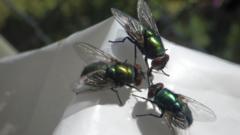
Imagine stepping outside your door to find the air so thick with buzzing insects that you can't inhale without swallowing one. This isn't a scene from a disaster flick. It's the reality for residents in seaside communities like Bridgend in Wales and Mission Beach in California, where sudden, massive swarms of flies have turned idyllic coastal life into a living nightmare. Locals have been forced to eat under mosquito nets, and pubs have stopped serving food entirely because nobody can stomach the sight of hundreds of flies blanketing the tables.
When these outbreaks hit, people instantly look for someone to blame. They point fingers at tourists, attack local waste management, or assume a nearby business is hiding a mountain of rotting garbage. But the truth behind these coastal swarms is rarely that simple.
The Kelp and Climate Dynamic
Most people don't realize that the ocean itself is often the primary breeding ground. You don't need a broken sewage pipe or a neglected dumpster to trigger an infestation when you have miles of coastline doing the work.
When ocean temperatures spike, massive fields of kelp and marine algae die off offshore. This dead organic material washes up on the sand in heavy, rotting piles. To a female fly, a damp, decomposing mound of seaweed under the hot sun is paradise. They lay eggs by the thousands in the damp sand and breaking kelp. Within days, those eggs become maggots, and shortly after, a synchronized wave of millions of adult flies hatches directly on the beach.
When a strong offshore breeze dies down or the weather turns stagnant, these flies don't stay on the shoreline. They move inland. They invade back alleys, patio dining areas, and residential kitchens, overwhelming local infrastructure within 48 hours.
The Infrastructure Breaking Point
Coastal towns are uniquely vulnerable to sudden population surges, and their infrastructure simply isn't built to handle the waste. During peak vacation seasons, a small seaside village of a few thousand residents can easily balloon to triple its size.
Take a look at what happens every weekend in high-density beach rental districts:
- Simultaneous Trash Dumps: Hundreds of short-term tenants check out at the exact same time on Saturday morning, purging all their leftover food into outdoor bins.
- Overfilled Containers: Garbage cans sit overflowing in the summer heat for days.
- The Two-Week Window: A single female housefly can lay over 1,000 eggs in her brief lifespan. If a municipality cuts back from twice-weekly trash collection to bi-weekly collection to save on the budget, it creates a perfect, uninterrupted window for a massive breeding cycle to complete inside those bins.
When you combine tons of hot, exposed food waste with a natural marine hatching event, the population explodes exponentially.
Identifying the Source Before You Spray
If your neighborhood is suddenly swamped, blasting chemical sprays blindly into the air won't solve anything. You have to figure out what type of fly you're dealing with because the remedy depends entirely on the source.
If you see heavy, metallic-colored flies hovering around exterior walls or trash areas, you're likely dealing with blowflies or standard houseflies tracking back to rotting matter or beach kelp. However, if you notice swarms inside an older coastal home during a sudden warm spell—even when everything is spotless—you might be facing cluster flies. These don't breed in garbage or seaweed at all; their larvae parasite earthworms in the soil. In the cooler months, adult cluster flies crawl into wall cavities and attics to hibernate, only to wake up and flood your living space the moment the indoor heating kicks on.
For standard filth flies, your immediate defense requires eliminating the attractant micro-environments. Wash out your empty wheelie bins with an enzyme-based cleaner to strip away the invisible biofilm that flies use to glue their eggs to the plastic. If the source is coming from decaying seaweed on the beach, local civic action is the only real fix; councils must actively manage or bury the beach wrack before the larval cycle finishes.
Stop relying on cheap sticky strips that only catch a fraction of the problem. Keep your property tightly sealed, secure your bin lids with heavy bungee cords to stop scavengers from exposing food waste, and pressure local officials to maintain frequent waste collection schedules during peak summer months.
Swarms of flies in Bridgend
This news report highlights the sheer scale of a sudden fly infestation in a seaside village, showing how locals have to cope with the overwhelming swarm.