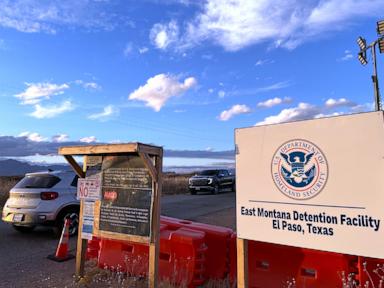
The outrage machine is running at peak capacity. A joint 84-page report from Human Rights Watch and the ACLU has sent shockwaves through the media, detailing horrific accounts of beatings, withheld medical care, and squalid conditions at Camp East Montana—the sprawling, 5,000-capacity ICE detention facility at Fort Bliss in El Paso, Texas.
The immediate, predictable consensus from advocacy groups, progressive politicians, and editorial boards is simple: shut it down. End mass detention. Pull the plug on the whole operation.
It is a comforting, morally pure narrative. It is also dangerously naive.
If you shut down Camp East Montana, the systemic abuse does not stop. It simply gets outsourced to darker, even less regulated corners of the regional justice system. The lazy consensus assumes that closing a massive, high-profile federal facility automatically leads to freedom or humane treatment for its occupants.
In reality, the mechanics of federal immigration policy dictate that the demand for detention beds remains fixed by statutory mandates and executive enforcement quotas. Shutting down a massive central hub merely scatters detainees like dust into a fragmented network of local county jails and small-scale private facilities. These smaller nodes operate with a fraction of the oversight, zero media visibility, and a desperate lack of professional training.
I have spent years analyzing federal procurement, government contracting, and public-sector logistics. I have watched agencies blow billions of dollars on rushed, poorly planned infrastructure transitions. When you force a massive federal bureaucracy to close a primary facility without altering its core enforcement mandates, you do not solve a human rights crisis. You decentralize it.
The Illusion of the "Clean Closure"
To understand why the "shut it down" reflex backfires, we must look at how the Department of Homeland Security actually handles logistics.
When a major facility closes, detainees do not walk out onto the streets of El Paso. They are loaded onto buses and planes. They are redistributed.
Imagine a scenario where 3,000 detainees from Camp East Montana are suddenly dispersed across dozens of municipal and county jails throughout rural Texas, New Mexico, and Louisiana. These local facilities are already struggling with severe budget deficits, crumbling infrastructure, and understaffed guard forces.
In these decentralized environments:
- Oversight disappears entirely. A massive facility at Fort Bliss has a target on its back. It attracts congressional delegations, federal watchdogs, and investigative journalists. A rural county jail housing 40 immigration detainees alongside local criminal defendants receives precisely zero national attention.
- Legal access is severed. Camp East Montana has faced severe criticism for cutting off communication with lawyers. But in a remote municipal jail three hours outside of Lubbock, physical access for legal counsel drops from "difficult" to "logistically impossible."
- Medical standards collapse. ICE is bound by National Detention Standards (NDS), which, despite their flawed execution, mandate specific medical screening protocols. Local county jails operate under varied state standards that are notoriously laxer, particularly regarding chronic conditions and mental health.
The Procurement Trap: Why Contract Flipping Fails
The ACLU and Human Rights Watch report rightly points out that Camp East Montana has been plagued by operational chaos. Earlier this year, ICE replaced the original prime contractor, Acquisition Logistics LLC—a company with a $1.3 billion contract but zero prior experience running a detention facility.
The federal government believed that swapping the contractor would instantly resolve the "49 deficiencies" identified in internal reviews, which ranged from excessive force to broken medical pipelines.
It did not. The abuses persisted.
Why? Because the federal procurement process itself is fundamentally broken. When the government awards massive service contracts, it prioritizes low bids and rapid deployment over operational competency. The transition from one corporate operator to another creates a dangerous vacuum:
- Staffing Churn: Experienced, trained correctional officers leave during transitions. They are replaced by temporary, lower-wage security guards hired through third-party subcontractors.
- Institutional Amnesia: Medical records are lost, security protocols are reset, and accountability chains are broken during the handoff.
- Capital Starvation: New contractors, eager to protect their profit margins after bidding low to win the contract, immediately cut costs on basic necessities—leading to the very shortages of soap, clean water, and edible food documented in the El Paso lawsuit.
The hard truth is that the private prison industry thrives on high-turnover, low-spec operations. Forcing a closure or a rapid contract flip does not punish these corporations; they simply write off the losses, rebrand, and bid on the next decentralized county contract.
The Real Solution: Aggressive Federalization and Strict Liability
If closing the facility is a logistical death sentence for detainees, and swapping contractors is a cosmetic band-aid, what is the actual solution?
We must dismantle the private contracting model entirely and replace it with direct federal operation, backed by strict personal liability for facility administrators.
1. Eliminate the Middleman
Private contractors exist to shield the federal government from direct political and legal liability. If a private guard beats a detainee, the government points to the contractor; the contractor points to the subcontractor.
By fully federalizing the staff at facilities like Camp East Montana—replacing private security guards with civil service employees subject to direct congressional oversight and federal civil rights laws—we eliminate the profit incentive to starve detainees of food and medical care.
2. Implement Personal Civil Liability for Wardens
Currently, qualified immunity shields detention officials from the consequences of systemic neglect. If a warden faced personal, un-indemnified civil liability for failing to maintain basic hygiene standards or ignoring physical abuse under their watch, the culture inside these facilities would shift overnight.
3. Establish Independent, Real-Time Oversight
Instead of relying on retrospective, 84-page NGO reports released months after abuses occur, we need permanent, independent ombudsmen stationed inside every facility with unrestricted, 24/7 access to surveillance footage, medical wings, and detainee communication channels.
The Downside We Must Acknowledge
A truly honest assessment requires admitting the downsides of this contrarian path. Fully federalizing and heavily regulating these facilities will make immigration detention significantly more expensive for taxpayers. It requires a massive influx of federal funding to guarantee constitutional living standards, professional medical staff, and robust oversight structures.
For many, spending more federal tax dollars on the machinery of immigration detention is a non-starter. It feels like rewarding a broken system.
But the alternative—clinging to the idealistic demand that we can simply shut down facilities and wish the administrative realities of border enforcement away—only ensures that the poorest, most vulnerable people in the system will continue to suffer in silence, hidden away in the deep, unmonitored corners of the American interior.