Concrete absorbs memory. Every brownstone stoop in Brooklyn, every narrow tenement hallway in the Bronx, holds the invisible weight of decades: muffled arguments through lath-and-plaster walls, the sharp smell of Sunday gravy, the slow-motion erosion of floorboards beneath generations of footsteps. But in New York City, a building is never just wood and mortar. It is a wager. It is a desperate, grinding bet placed against the relentless, shifting gravity of municipal tax codes, neighborhood transformations, and the eternal hunger of the real estate market.
When that wager fails, the consequences do not arrive with a quiet whisper. They arrive with a battering ram of paperwork, legal notices, and the sudden, disorienting realization that the ground beneath your feet has been signed away by someone sitting behind a mahogany desk across the East River. You might also find this related coverage useful: The Gaza Building Collapse Exposes a Crisis of Bare Hands and Broken Infrastructure.
Consider the recent landscape of municipal property seizures. The city of New York recently agreed to a staggering sixty-million-dollar settlement with the owners of sixty-four properties that had been seized through controversial legal mechanisms. Sixty-four addresses. Sixty-four distinct ecosystems of human lives, debts, unpaid water bills, historical liens, and broken promises, suddenly vacuumed up into the municipal ledger.
To a bureaucrat in a gray suit, it is a line item. A ledger balanced. A correction of a delinquent account. But to the people whose names were on the deeds—some of them multi-generational families who watched their neighborhoods transform from blighted warzones into hyper-gentrified playgrounds—it was an eviction from history. As discussed in detailed reports by The Guardian, the effects are widespread.
To understand why this matters, why a sixty-million-dollar check is merely a bandage on an open fracture, you have to look past the courtroom steps. You have to look at how a city eats its own.
The Mechanics of Loss
Municipal property seizures in New York have long operated in a shadowy legal gray area. Under programs like the Third Party Transfer program—originally designed with noble, bleeding-heart intentions to rescue abandoned, tax-delinquent buildings from predatory slumlords and hand them over to community-focused housing groups—a dangerous precedent was forged.
The mechanism was simple, almost surgical. If a property accumulated enough debt in unpaid property taxes, water charges, or emergency repair liens, the city could step in. It could bypass the traditional foreclosure auction process, designate the property as distressed, and transfer ownership directly to a designated third party. For pennies on the dollar, or sometimes for nothing at all.
Critics argued it was modernization. Supporters called it urban triage.
The people who lost their buildings called it legalized theft.
Imagine owning a multi-family building inherited from your father, a man who worked two shifts in the subway tunnels so you wouldn't have to. You fall behind on water bills during a brutal medical emergency. You miss a few quarters of property taxes while trying to keep the roof from leaking. You are struggling. You are drowning. You assume the city will work with you, slap you with penalties, perhaps place a lien on the property. That is the social contract, after all. A government helps you steady your footing; it does not sweep your legs out from under you.
Instead, a notice arrives. The building is gone. Transferred. Handed over to a developer or a non-profit entity with deep political connections. The equity built over forty years—the literal wealth of a family’s existence—evaporates into thin air.
That is what the sixty-million-dollar settlement attempts to acknowledge. It is an admission, written in millions of dollars of taxpayer money, that the process was flawed. That due process was trampled. That in its rush to clean up the map, the machine crushed the people living inside it.
The Tenants in the Crossfire
Yet, property ownership is only one side of this volatile equation. What happens to the people who never held the deed, the ones who simply paid rent every first of the month to a landlord who may or may not have been paying the city?
For the tenants, the seizure of a building by the city—or the subsequent legal battles over its return—is a psychological earthquake. They wake up one morning to find a new management company sliding notices under their doors. Or worse, they find themselves caught in a tug-of-war between former owners fighting for restitution and a municipal government trying to offload distressed assets.
Take the hypothetical case of Maria, who has lived in a rent-stabilized apartment in Crown Heights for twenty-two years. She knows the squeak of the third step on the landing. She knows which radiator clanks when the winter frost sets in. To Maria, the building is a home. To the city, it is a liability. To a developer, it is an empty canvas waiting for quartz countertops and luxury pricing.
When properties are seized and tossed into the legal blender, tenants become ghosts in their own homes. Maintenance stops. Repairs are ignored while lawyers argue jurisdiction in lower Manhattan courtrooms. The hallway lightbulbs burn out and are not replaced for weeks. The front door lock breaks, leaving the building vulnerable to the elements and the street.
This is the invisible cost of municipal policy. The collateral damage of bureaucratic correction. When the city seizes a building, it takes control of human lives without possessing the institutional empathy required to manage them.
Enter the Revival
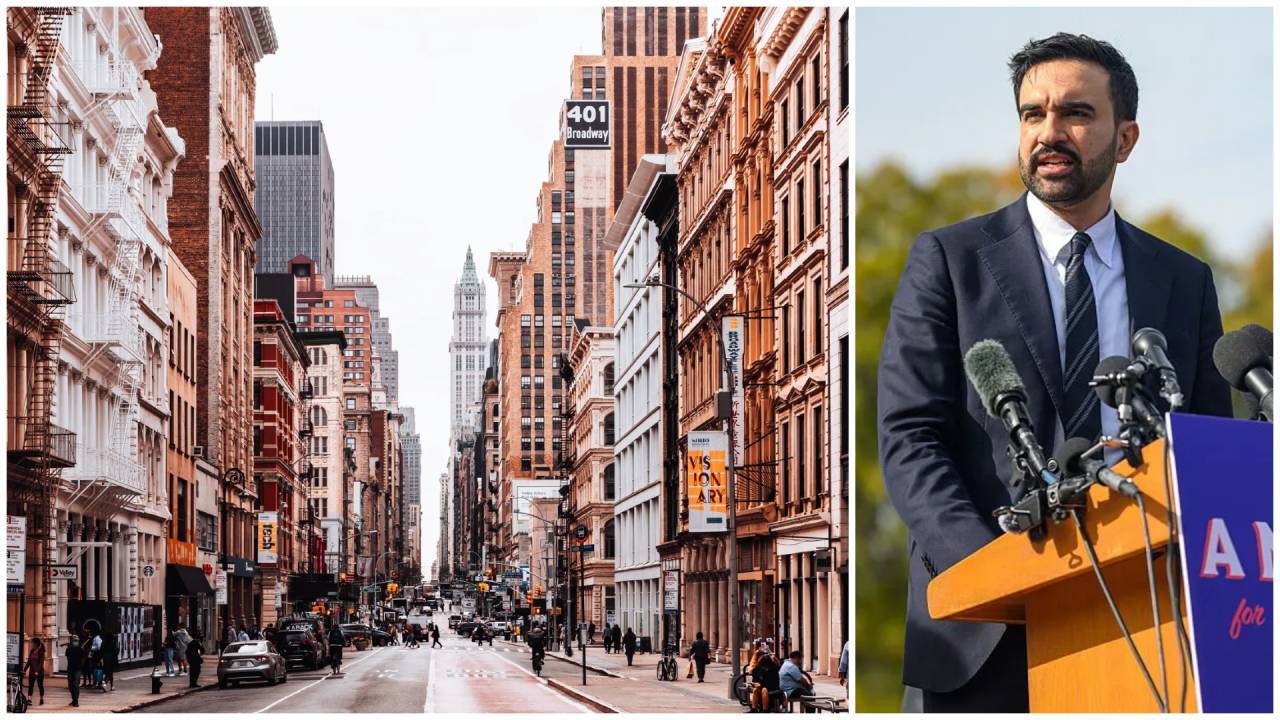
Into this explosive arena steps Zohran Mamdani and a renewed push for progressive housing reform, including proposals to resurrect and reshape tenant-focused purchase mechanisms.
Mamdani, a figure of the democratic socialist wing of New York politics, views the city's housing crisis not as a market failure, but as a moral emergency. His vision involves reviving structures that give tenants and community land trusts the first right of refusal when buildings face distress or foreclosure. The logic is disarmingly simple: if a landlord cannot or will not maintain a building, or if the property is sliding toward municipal seizure, why hand it to a corporate developer? Why not hand it to the people who actually live there?
It is a policy proposal that sends shockwaves through traditional real estate circles. To property owners, it sounds dangerously close to expropriation. It sounds like the state picking winners and losers in the housing market, tilting the scales further away from private enterprise and toward collective ownership.
Yet, the proponents argue the alternative is far worse. Left unchecked, the cycle of distress, seizure, and private-equity acquisition fuels the relentless gentrification machine. It hollows out working-class neighborhoods, turning every block into a speculative asset class where a family’s roof is traded like a cryptocurrency.
The debate over the Tenant Opportunity to Purchase style policies—and the ghosts of the TPT program—forces New York to stare into the mirror and ask a fundamental question: Who owns the city?
Does it belong to the person whose name is stamped on a yellowed parchment in the county clerk's office? Does it belong to the municipal government that levies taxes and paves the asphalt? Or does it belong to the collective heartbeat of the people who sweep the stoops, gossip across fire escapes, and keep the bodega lights burning until two in the morning?
The Weight of a Settlement
A sixty-million-dollar settlement does not answer that question. Settlements rarely do. Settlements are designed to close files, silence litigants, and prevent trials from dragging into the unforgiving light of public discovery. They are financial plasters applied to deep lacerations.
For the sixty-four property owners who fought the city, the payout is a measure of vindication, even if it is a fraction of the generational wealth they lost. Some will use the money to retire upstate. Some will pay off lingering debts. Some will look at the check, look at the sky over Manhattan, and feel only a hollow, lingering bitterness. You cannot buy back forty years of history with a government wire transfer.
Meanwhile, the political machinery churns onward. Lawmakers draft new bills. Activists march on City Hall chanting slogans that echo off limestone facades. Developers sharpen their pencils and calculate profit margins under new regulatory frameworks.
And Maria, back in her Crown Heights apartment, hears the radiator clank. She pulls her wool blanket a little tighter around her shoulders. She does not know the details of the sixty-million-dollar settlement. She does not know the intricate legislative maneuvers surrounding housing trusts and municipal seizures. She only knows that the rent went up again, that the super hasn't fixed the intercom, and that the city outside her window is vast, hungry, and perpetually under construction.
The Unfinished Block
New York is a city built on displacement. Every neighborhood is a palimpsest, written over the erased lives of the people who came before. Dutch farmers replaced by tenement immigrants; industrial loft workers replaced by dot-com hipsters; multi-family brownstones replaced by glass monoliths that pierce the clouds like needles.
The battle over seized properties and the future of tenant trust revivals is just the latest chapter in this eternal turf war. It is a war fought not with muskets, but with tax liens, foreclosure notices, emergency repair orders, and ballot initiatives.
When the dust settles from the latest legal battles, the concrete remains. The buildings stand, silent witnesses to human ambition and municipal indifference.
Consider the street corner where it all happens. A pigeon pecks at a discarded wrapper near a cracked curb. A yellow cab honks its horn with casual, rhythmic violence. A child runs down the sidewalk, their laughter bouncing off the brick walls of a building that has changed hands three times in a decade, its deed traded like a poker chip in a game where the house always wins.
The city takes. The city settles. The city plans its next move.
And somewhere inside, behind a peeling front door with a sticky lock, a kettle begins to whistle on a worn-out stove, cutting through the noise of the metropolis with a sharp, piercing sound that demands to be heard.