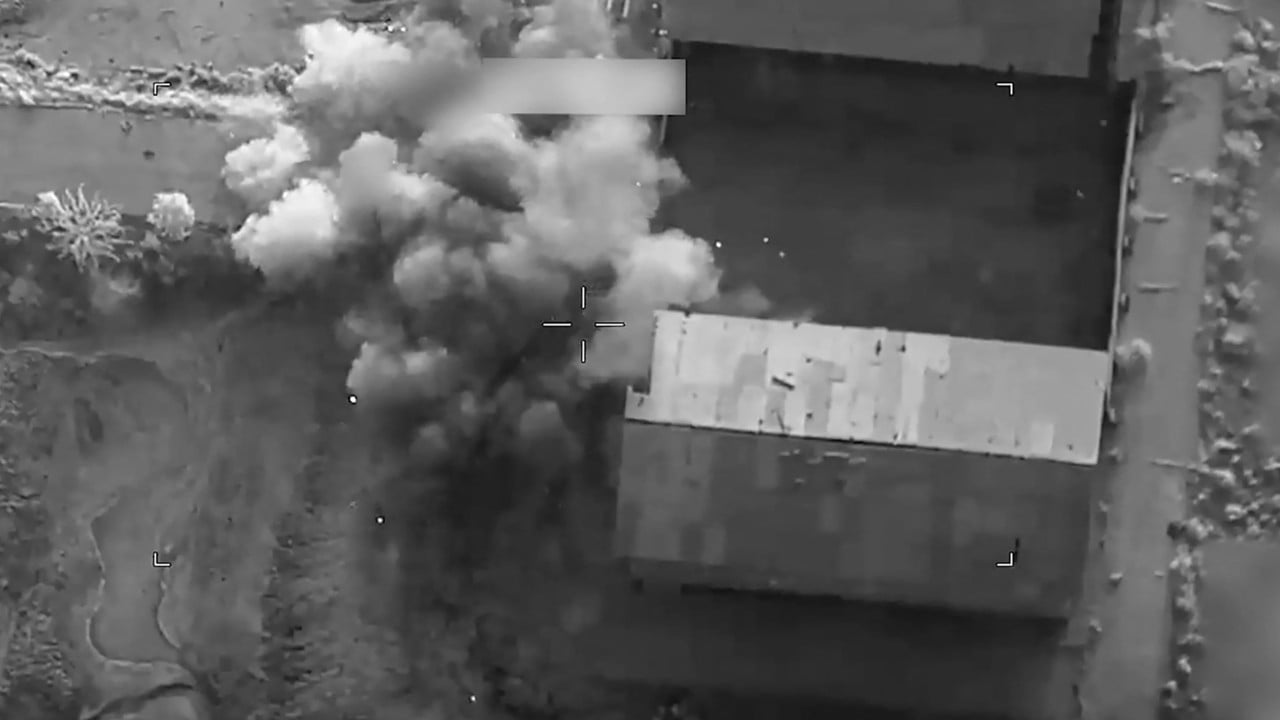
The collapse of the temporary US-Iran memorandum of understanding has shifted the conflict in the Persian Gulf from a localized proxy war to a kinetic trade blockade where commercial shipping is directly targeted. The disabling of the Curaçao-flagged tanker M/T Belma by a US Hellfire missile strike near Kharg Island—Iran's primary crude export hub—reveals a significant change in maritime enforcement. Under the newly reinstated US naval blockade, merchant vessels are no longer merely collateral damage; they have become the primary points of friction.
By deconstructing the strategic mechanics of this escalation, we can map how the militarization of the Strait of Hormuz alters global energy supply chains, changes maritime insurance structures, and forces a re-evaluation of sovereign trade protection.
The Strategic Architecture of Chokepoint Warfare
The Strait of Hormuz is a geographic bottleneck where approximately 20% of global petroleum and liquefied natural gas (LNG) passes during peacetime. When trade flows are restricted, both state and non-state actors must balance the economic cost of disruption against their geopolitical objectives. This dynamic operates across three primary strategic pillars:
1. Kinetic Enforcement and Interdiction
The physical disruption of maritime transit relies on a clear escalation ladder. The strike on the M/T Belma's smokestack is a precise application of non-lethal, mission-disabling force. Rather than sinking the vessel—which would cause severe environmental damage and permanently block shipping lanes—US Central Command (Centcom) targeted the propulsion system. This tactical action establishes a clear operational precedent: non-compliance with the blockade will result in immediate physical immobilization.
2. The Economics of Maritime Risk and Insurance
Merchant shipping is governed by a strict cost-benefit model. The primary deterrent to operating in a contested corridor is not always physical danger, but the escalation of insurance premiums:
- War Risk Surcharges: Insurers calculate risk based on regional incident density. The resumption of hostilites immediately triggers a reclassification of the Persian Gulf as a high-risk area, raising insurance premiums to cost-prohibitive levels.
- The Flag of Convenience Arbitrage: Many vessels operate under open registries (such as Curaçao or Panama) to minimize regulatory costs. However, these registries cannot provide military protection, leaving vessels vulnerable unless supported by a sovereign navy.
3. Alternative Maritime Routing and Infrastructure
Sovereign states facing a blockade must adapt by shifting logistics to alternative pathways. This trade-off is illustrated in the table below:
| Corridor / Route | Strategic Status | Logistical Trade-offs |
|---|---|---|
| Strait of Hormuz | Severely restricted | Shortest path for Gulf oil, but highly vulnerable to Iranian cruise missiles and US interdiction. |
| East-West Pipeline (Saudi Arabia) | Partially active | Bypasses Hormuz to Red Sea ports, but bottlenecked by maximum throughput limits. |
| Gwadar / Pakistani Ports | Safe harbor seeking | Iranian tankers (such as the Rani and the Amil) seek safe anchorage to avoid US naval assets. |
Escalation Dynamics: The Tit-for-Tat Cost Function
The current conflict operates as a high-stakes game theory model where each offensive action is met with an asymmetrical response designed to shift the economic burden of the war.
                  [US Air Strikes on Iranian Military Infrastructure]
                                         │
                                         ▼
                 [Iran Retaliates with Cruise Missiles in the Strait]
                                         │
                                         ▼
                 [US Reimposes Blockade & Disables Non-Compliant Ships]
                                         │
                                         ▼
            [Iran Escalates Asymmetric Attacks & Threatens the Red Sea]
The US Containment Strategy
The US objective is to impose an absolute economic embargo on Iranian energy exports while keeping the Strait of Hormuz open for cooperative commercial traffic. This strategy relies on high-frequency, targeted air strikes against Iranian military assets in coastal hubs like Bandar Abbas, Bushehr, and Chabahar. By degrading the Islamic Revolutionary Guard Corps (IRGC) coastal defense networks, the US aims to secure the shipping lanes for compliant international trade.
The Iranian Counter-Blockade
Because Iran cannot match the blue-water naval power of the US, it employs asymmetric denial strategies. This is achieved by deploying anti-ship cruise missiles and loitering munitions to target vulnerable commercial ships, such as the recent cruise missile strikes on the UAE-associated tankers Mombasa and Al Bahiyah.
Tehran’s strategic goal is to raise the shipping risk profile so high that international maritime operators choose to self-blockade, effectively cutting off Gulf oil exports and triggering a global energy shock.
Global Systemic Fallout and Structural Bottlenecks
The breakdown of the June ceasefire has immediately impacted international energy markets and maritime logistics, exposing critical structural vulnerabilities.
The Energy Price Shock
With the Strait of Hormuz largely closed, Brent crude prices surged, demonstrating the market's sensitivity to physical volume disruptions. If the blockade persists, the loss of Middle Eastern crude supply will force Asian and European refiners to seek more expensive, logistically complex alternatives from West Africa and the Americas.
Strategic Redirection and Sovereign Shelters
The search for safe harbors by tankers carrying Iranian crude—such as those heading toward Pakistani territorial waters—reveals the limits of US enforcement. While US naval assets can control international waters, sovereign maritime boundaries offer a legal and physical shield. This dynamic creates a fragmented shipping system where non-aligned states can act as logistical hubs for restricted oil, weakening the overall impact of the blockade.
The Expansion of the Conflict Zone
Iran’s recent threats to target the Red Sea gateway (the Bab al-Mandab Strait) indicate a shift in strategy. If the US successfully closes the Persian Gulf to Iranian oil, Tehran is highly likely to expand the conflict area to other vital maritime chokepoints, forcing Western militaries to spread their naval assets across multiple operational theaters.
Tactical Advisory for Maritime Operators
For global shipping firms, commodity traders, and maritime insurers, the reinstatement of the US blockade requires immediate operational changes:
- De-risk Transits Through Private Convoy Arrangements: Commercial operators should no longer rely on general freedom of navigation. Transit through the Gulf of Oman and the Strait of Hormuz must be coordinated with regional maritime security coalitions or conducted under direct military escort.
- Implement Strict Route Compliance protocols: To prevent misidentification and targeted interdiction by US or allied forces, vessels must strictly adhere to approved transit lanes and maintain active Automatic Identification System (AIS) transponders. Any deviation risks being interpreted as an attempt to run the blockade, as occurred with the M/T Belma.
- Prepare Contingency Logistics for Red Sea Transit: With Iran threatening to expand its maritime interdictions, logistics planners must prepare alternative shipping routes around the Cape of Good Hope. While this adds 10 to 14 days to transit times, it eliminates the high risk of hull loss or cargo seizure in the Middle East.