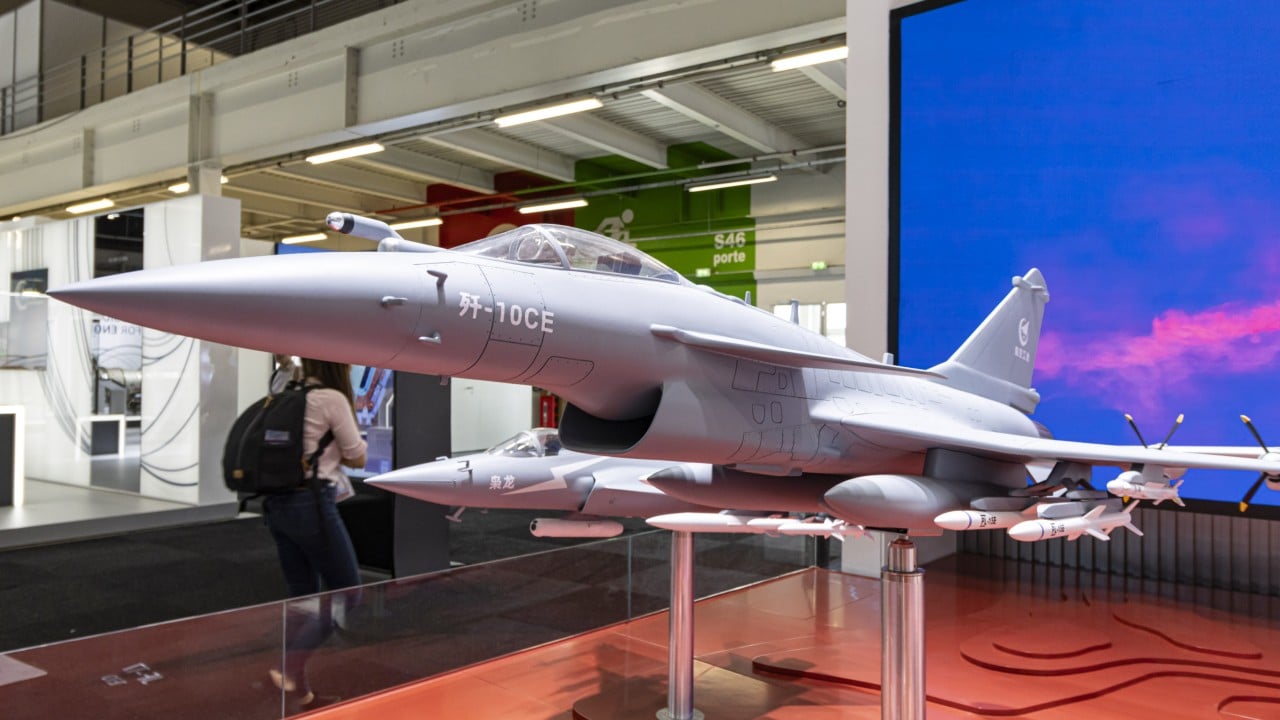
For years, the Chengdu J-10CE suffered from a strange paradox. It was an exceptionally capable 4.5-generation multirole fighter on paper, featuring active electronically scanned array (AESA) radar, advanced infrared missiles, and a nimble airframe. Yet, outside of Pakistan, nobody was buying it. Western air forces wouldn't touch it, traditional Russian clients stuck to Moscow's aging inventory, and countries looking for an affordable alternative often leaned toward the Swedish Gripen or tried-and-true F-16s.
The aircraft had foreign buyers, sure, but it didn't have a true market.
That calculation is shifting. Recent developments across Central Asia and South Asia show that Beijing's export machine is finding its footing. To understand why the J-10CE is finally capturing attention, you have to look pastWhy the Chengdu J 10CE Struggles to Find Global Buyers
technology
Military aviation export markets are brutal. If you aren't Lockheed Martin, Dassault, or the sprawling Russian state export apparatus, winning foreign contracts takes more than just building a capable airframe. Take the Chengdu J 10CE. It's a genuinely formidable 4.5-generation fighter jet. It boasts an active electronically scanned array radar, advanced electronic warfare suites, and compatibility with modern Chinese beyond-visual-range missiles like the PL-15E. Yet, despite landing a major win with Pakistan, the aircraft struggles to capture a broader global market footprint.
You hear defense analysts talk about performance metrics all day long. They compare thrust-to-weight ratios, radar detection ranges, and payload capacities. But real-world arms sales don't work like a spec sheet comparison on a defense blog. They are political marriages. They involve decades of logistics chains, pilot training programs, diplomatic leverage, and financing deals that can bankrupt a mid-tier nation. That's why having an export variant like the J 10CE on paper doesn't automatically translate to a booming order book.
The Pakistan Success Story and Why It's an Outlier
Pakistan didn't buy the J 10CE on a whim. Islamabad needed a direct counter to India's acquisition of French Rafale jets, and Washington wasn't exactly rushing to supply advanced F-16 blocks due to shifting geopolitical alignments and congressional friction. Pakistan already operated a massive fleet of Chinese-origin hardware, including the JF-17 Thunder, which made integrating the J 10CE an operational breeze. Ground crews knew the tools, pilots understood the tactical doctrines, and supply lines were already pointing east.
This deal proved the aircraft works. The batch of 25 jets delivered to the Pakistan Air Force showed that Beijing could manufacture, deliver, and operationalize a modern multirole fighter on a tight timeline. Pakistan even showcased the jets in exercises, proving their combat readiness.
So why hasn't this success spawned a dozen more contracts across the Middle East, Africa, or Southeast Asia? Because most nations aren't Pakistan. They don't have that deep institutional familiarity with Chinese military ecosystems, and many are caught in complex security architectures tied tightly to Western or Russian defense standards.
The Engine Dilemma and Supply Chain Realities
Let's address the propulsion elephant in the room. For years, the Achilles' heel of Chinese fighter jet exports was the engine. Early variants of Chinese tactical aircraft relied heavily on Russian-built Saturn AL-31 engines. Moscow was historically protective of its aerospace technology and notoriously touchy about re-exporting its hardware to third-party clients without explicit permission. If you buy a fighter jet powered by a restricted engine, you face severe hurdles if you ever want to resell it, modify it, or source spare parts independently.
China has made massive strides here by fielding the domestic WS-10 series engines, specifically the WS-10B and its variants. These power plants offer respectable thrust and reliability compared to older generations.
Even so, international buyers remain cautious. Jet engines require thousands of hours of depot-level maintenance, high-precision metallurgy, and a predictable supply of replacement components. When a country buys American or European, they buy into a multi-decade logistical safety net. When they buy Chinese advanced hardware, they are betting that the domestic supply chain will remain uninterrupted, affordable, and politically stable over a thirty-year service life. For cash-strapped militaries or nations balancing ties with multiple superpowers, that's a terrifying gamble.
Geopolitical Friction and Financing Hurdles
Selling fighter jets is basically high-stakes banking disguised as national defense. Western defense giants often grease the wheels with complex financing packages, technology transfer agreements, and offset deals that let local factories build parts of the plane.
China's defense industry operates differently. While Beijing can offer competitive unit costs that drastically undercut Western rivals like Lockheed or Eurofighter, financing terms can sometimes be rigid. More importantly, buying a J 10CE sends an unmistakable political signal.
Nations in the Middle East or Southeast Asia often practice strategic hedging. They might buy air defense systems from one country, naval frigates from another, and fighter jets from a third to avoid becoming overly dependent on a single superpower. If a country buys a squadron of J 10CE fighters, they invite intense scrutiny from Washington. For countries with existing security pacts with the United States, the diplomatic blowback and the risk of triggering sanctions under laws like CAATSA can outweigh the tactical benefits of a cheaper airframe.
The Shadow of the F 35 and Domestic Competition
Another brutal market reality is the crowded nature of the 4.5-generation fighter segment. The J 10CE competes against heavy hitters like the Lockheed Martin F-16 Block 70, the Dassault Rafale, the Saab Gripen, and modernized versions of the Sukhoi Su-35.
While the J 10CE often wins on pure unit price and radar capability against older F-16s, it runs into a psychological barrier. Many air forces are saving their pennies to leap straight into the fifth-generation era with the F-35 Lightning II, or they are waiting to see how regional stealth programs mature. Why invest billions in a new single-engine logistics tail for a 4.5-generation platform if your regional rivals are already acquiring stealth aircraft?
Furthermore, China's own defense sector competes against itself. The lighter, co-developed JF-17 Block 3 offers a much cheaper entry point for budget-constrained air forces that want modern glass cockpits, advanced helmets, and AESA radars without paying the heavy price tag of a dedicated medium-weight interceptor like the J-10. Meanwhile, heavier twin-engine options or stealth concepts loom on the horizon. The J 10CE occupies an awkward middle ground: too expensive for budget buyers who prefer the JF-17, and too politically charged for nations tethered to Western military standards.
What Needs to Change
If Beijing wants the J 10CE to transition from having foreign buyers to dominating a true global market, the playbook has to evolve. It requires offering unprecedented industrial offsets, ironclad guarantees on engine parts availability, and creative financing structures that neutralize the financial risk for developing nations.
Until those pieces fall into place, the J 10CE remains an exceptional machine trapped in a geopolitical holding pattern. It proves China can build world-class tactical aviation, but winning wars in the global arms market requires more than just a good jet. It requires an empire of logistics and trust that takes generations to build.


