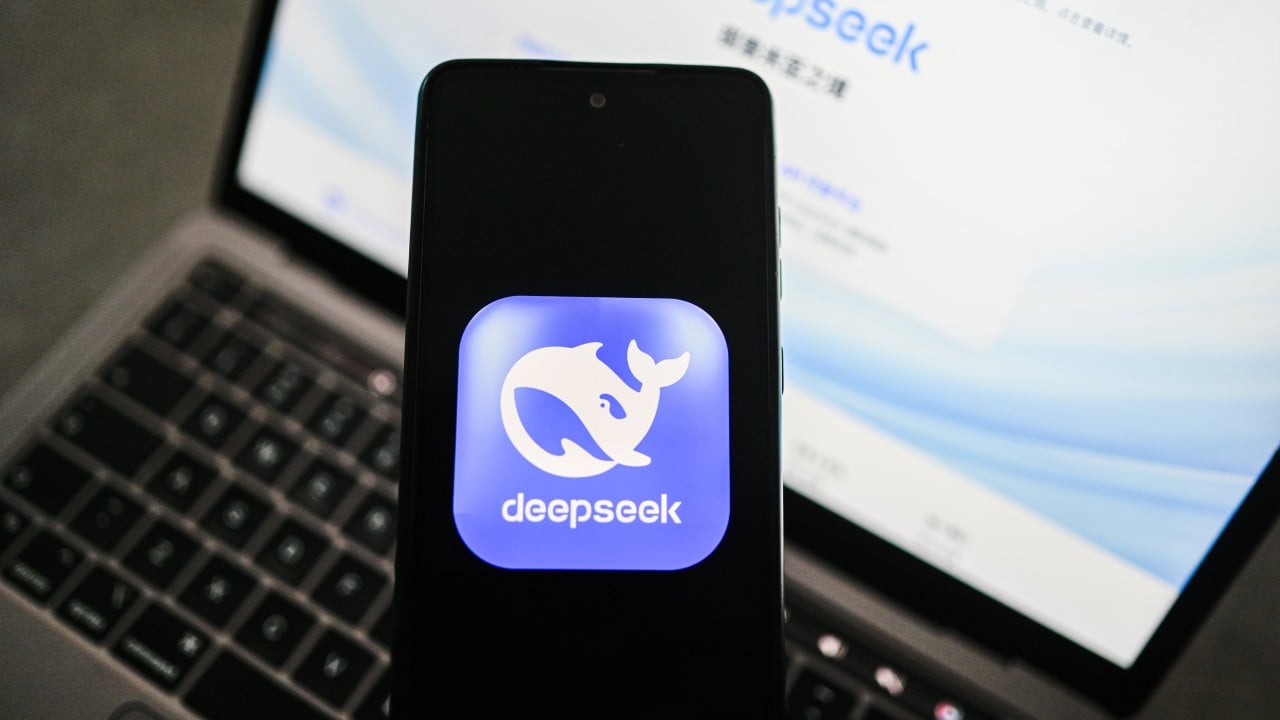
Washington’s attempt to starve China of artificial intelligence by cutting off its high-end chips is hitting a wall of math and electricity. While the U.S. focused on the physical borders of hardware, Beijing pivoted to the invisible export of tokens—the atomic units of AI processing. By converting its massive domestic energy reserves into cheap, globally accessible API calls, China is effectively bypassing sanctions and industrializing AI services at a price point Western firms cannot match.
The strategy is simple but devastating. You cannot easily smuggle a thousand NVIDIA H100s, but you can effortlessly export trillions of tokens generated by them. As of April 2026, Chinese models like DeepSeek-V3, Alibaba’s Qwen, and MiniMax M2.5 have claimed over 60% of the token volume on major global developer platforms. This isn't just a technical achievement; it is a commodity war where the weapon is a fraction of a cent.
The Electricity Arbitrage
To understand the token surge, you have to look at the power grid, not the motherboard. A token is essentially a derivative of electricity. China’s National Data Administration recently reported that daily token consumption has exploded to 140 trillion, a staggering thousand-fold increase in just two years.
The economic logic is cold. Raw electricity exported from China might fetch 0.5 yuan per kilowatt-hour. When that same energy is fed into a server rack to generate AI tokens for global developers, its value increases by up to 22 times. This is value-added manufacturing for the digital age. By leveraging low-cost renewable energy in its western provinces, China has created a vertically integrated supply chain of "compute-as-a-service" that makes American AI look like a luxury boutique.
While Microsoft and OpenAI face mounting delays in data center construction due to power shortages and permitting hell, Chinese firms are "token maxxing." They are flooding the market with high-performance, low-latency API access, forcing a race to the bottom in pricing.
Architecture as an Act of Defiance
The U.S. chip bans were designed to create a "compute ceiling." The theory was that without the latest silicon, Chinese models would remain stagnant. That theory was wrong.
Chinese labs have refined Mixture-of-Experts (MoE) architectures to a point of extreme efficiency. Instead of activating every parameter for every prompt, these models only use a fraction of their neural "muscles" at any given time. This allows them to wring frontier-level performance out of older or domestic hardware like the Ascend 910C.
- DeepSeek-V3: Reported to have trained with significantly fewer resources than Western peers by using "joint design" optimizations that blend hardware and algorithm.
- Moonshot AI: Developed hybrid attention mechanisms that handle context lengths of 1 million tokens while slashing memory costs.
- Distillation: The practice of using top-tier Western models to "teach" smaller Chinese models has become a standard, if controversial, pipeline.
This architectural shift turns a hardware disadvantage into a software edge. If you can't have the fastest engine, you build a lighter car. The result is a Chinese AI ecosystem that is leaner, meaner, and far more profitable at lower price points.
The Open Source Trojan Horse
The most potent weapon in this "token export" strategy is the aggressive embrace of open source. Unlike the guarded, proprietary "black boxes" of San Francisco, companies like Alibaba and Zhipu are releasing model weights and source code freely.
This isn't out of the goodness of their hearts. It is a play for ubiquity. When a developer in Berlin or Bangalore builds an app on a Qwen backbone, they are locked into that ecosystem. By the time they scale to enterprise level, the "token debt" is already owed to Chinese infrastructure. This creates a feedback loop: more users lead to better data, which leads to more efficient models, which leads to even cheaper tokens.
The Security Blind Spot
There is a catch, and it is a significant one. An API request from an American firm to a Chinese data center means data is physically flowing through Beijing. While this doesn't bother an independent dev building a weather app, it is a non-starter for high-security enterprise or government work.
However, the "AI Tigers"—mid-tier Chinese firms like MiniMax and Zhipu—aren't chasing the Pentagon's business. They are chasing the millions of apps, agents, and automated workflows that make up the bulk of the global internet. In that space, price and speed win every time.
The Silicon Curtain is Leaking
The U.S. House of Representatives recently passed the Remote Access Security Act to close the "cloud loophole," but enforcement is a ghost chase. Tracing whether a specific token request originates from a shell company or a layered proxy is a technical nightmare that the Department of Commerce is ill-equipped to handle.
Furthermore, reports of a $3 billion shadow economy in smuggled hardware suggest that the physical blockade is more of a sieve. Between smuggled H100s and the massive efficiency gains in domestic software, the "gap" between Silicon Valley and Beijing has shrunk from years to months.
The hard truth is that AI dominance isn't going to be won by the person with the most chips; it’s going to be won by the person who can deliver the most intelligence for the least amount of money. Right now, China is winning the price war, one trillion tokens at a time. The era of Western compute exceptionalism is over, replaced by a global market where intelligence is a commodity as cheap and invisible as the electricity that powers it.


