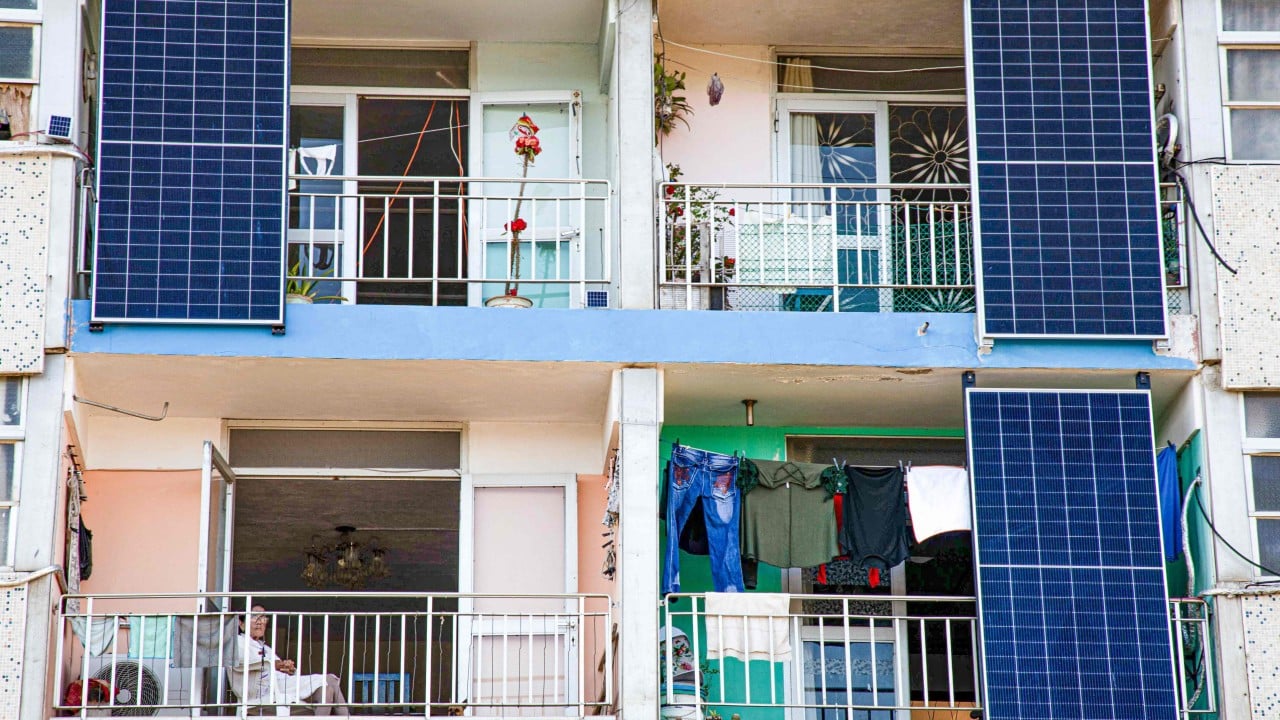
The prevailing narrative in global energy circles is as predictable as it is lazy. It suggests that because China manufactures 80% of the world’s solar panels and controls the vast majority of the lithium processing chain, they have already won the "energy transition."
This is a fundamental misunderstanding of how power—both electrical and geopolitical—actually functions.
Dominating a supply chain for commoditized hardware is not the same as winning a race for energy supremacy. In reality, China is currently sprinting toward a massive, depreciating asset trap while the West prepares to leapfrog the very technology China is currently overproducing. We are witnessing the world's largest industrial "sunk cost fallacy" play out in real-time.
The Manufacturing Trap
The "China is winning" crowd points to scale. They see 400 gigawatts of solar capacity being installed and assume it equals energy security. It doesn't.
Manufacturing solar panels is a race to the bottom. It is a high-volume, low-margin business that relies on massive state subsidies and cheap, coal-fired electricity to produce hardware that loses value the moment it leaves the factory. By flooding the market with cheap silicon, China has effectively destroyed the profit margins of its own champions.
Long-term energy dominance comes from intellectual property and system integration, not from being the world’s lowest-cost glass and aluminum stamper. While Beijing spends billions propping up factories that produce 20%-efficient P-type cells, Western R&D is quietly shifting toward perovskite-silicon tandems and next-generation geothermal.
If you own the factory but someone else owns the patent that makes your factory obsolete, you haven't won. You’ve just built a very expensive monument to last year’s technology.
The Grid Crisis Nobody Talks About
The competitor articles love to mention "installed capacity." They rarely mention "curtailment."
Installing a gigawatt of wind in Inner Mongolia is useless if the grid cannot move that power to Shanghai. China’s grid is a rigid, top-down relic struggling to handle the intermittent nature of renewables. In many provinces, "green" energy is simply dumped—wasted because the infrastructure can’t absorb the surge.
Real energy security requires a flexible, decentralized smart grid. China’s centralized political structure is antithetical to the kind of "bottom-up" energy internet required for a true transition. They are trying to force a 21st-century energy source into a 1950s-style command-and-control power grid. It is an engineering nightmare that no amount of solar panel exports can fix.
The Lithium Myth
We are told China "controls" the battery market because they dominate refining. This is a temporary bottleneck, not a permanent throne.
History shows that whenever a single entity creates a stranglehold on a vital commodity, the rest of the world finds a substitute. We are already seeing the pivot toward sodium-ion batteries, which use abundant salt instead of scarce lithium. We are seeing the rise of LFP (Lithium Iron Phosphate) which removes cobalt—another "choke point"—from the equation entirely.
China has bet the house on the current chemical makeup of batteries. They have invested hundreds of billions into an infrastructure designed specifically for lithium-ion. As the West scales solid-state batteries and alternative chemistries, China’s massive refining complexes risk becoming the "coal plants" of 2040: expensive, dirty, and unnecessary.
The Hidden Carbon Cost
There is a glaring irony that the "green" energy world refuses to acknowledge. China’s dominance in renewables is powered by the very thing those renewables are meant to replace: coal.
To produce high-purity polysilicon, you need immense amounts of heat and constant power. In Xinjiang and other provinces, that power comes from cheap, dirty coal. When you buy a "green" solar panel from China, you are essentially importing "embedded coal" from the Chinese interior.
As carbon border adjustment mechanisms (CBAM) gain traction in Europe and eventually North America, the "price advantage" of Chinese renewables will evaporate. Once you price in the carbon emitted during the manufacturing of the panel, the Chinese "reward" for their energy shock looks more like a massive financial liability.
Strategic Fragility vs. Tactical Strength
True energy independence isn't about who makes the most stuff. It's about who can sustain their economy when the "stuff" stops moving.
China is more energy-vulnerable today than it was twenty years ago. They are the world's largest importer of oil and gas. Their "green" transition hasn't actually reduced their fossil fuel consumption; it has merely added a layer of renewable complexity on top of an ever-growing coal base.
The Western strategy—though slower and messier—is focused on reducing total energy intensity and developing high-margin tech. The U.S. and Europe are playing a game of technological leapfrog. China is playing a game of industrial saturation.
The Numbers the "Optimists" Ignore
Look at the debt-to-equity ratios of major Chinese solar firms. Many are walking zombies, kept alive only by local government guarantees. This isn't a "race for rewards"; it's a desperate attempt to keep the lights on in factories that employ millions.
- Average Margin on Solar Modules: Dropped from 15% to nearly 0% in some segments over the last 36 months.
- Grid Curtailment Rates: In some western Chinese provinces, up to 10-15% of renewable energy is never used.
- Debt Load: The top five Chinese solar manufacturers carry a combined debt load exceeding $50 billion.
The Real Winner
The real winner of the energy shock won't be the country that exports the most panels. It will be the country that masters long-duration energy storage (LDES) and small modular reactors (SMRs).
Nuclear power remains the only scalable, carbon-free baseload energy source that can actually replace coal. While China builds coal plants and solar farms simultaneously, the West is finally—belatedly—remembering how to build reactors.
If you want to know who is winning, don't look at shipping manifests. Look at where the PhDs are going. The talent is moving toward fusion, toward deep-crust geothermal, and toward hydrogen systems that don't rely on Chinese-made membranes.
The "Green Race" isn't a sprint. It's an endurance match where the person who runs the fastest at the start usually collapses halfway through. China is currently sprinting. They are burning through capital, environment, and diplomatic goodwill to secure a lead in a technology that is already becoming a commodity.
The energy shock hasn't "heated up the race for renewables" for China. It has exposed their desperation. They aren't reaping rewards; they are trying to outrun an inevitable economic correction.
Stop looking at the volume of panels. Start looking at the viability of the business model. If you can’t make money without a state subsidy, you haven’t built an industry. You’ve built a charity.
The West shouldn't be trying to beat China at making cheap solar panels. We should be thanking them for subsidizing our energy transition while we build the technology that will eventually make their factories irrelevant.
Don't compete for the past. Ignore the "installed capacity" vanity metrics. The transition is about the system, not the hardware. And the system is still up for grabs.