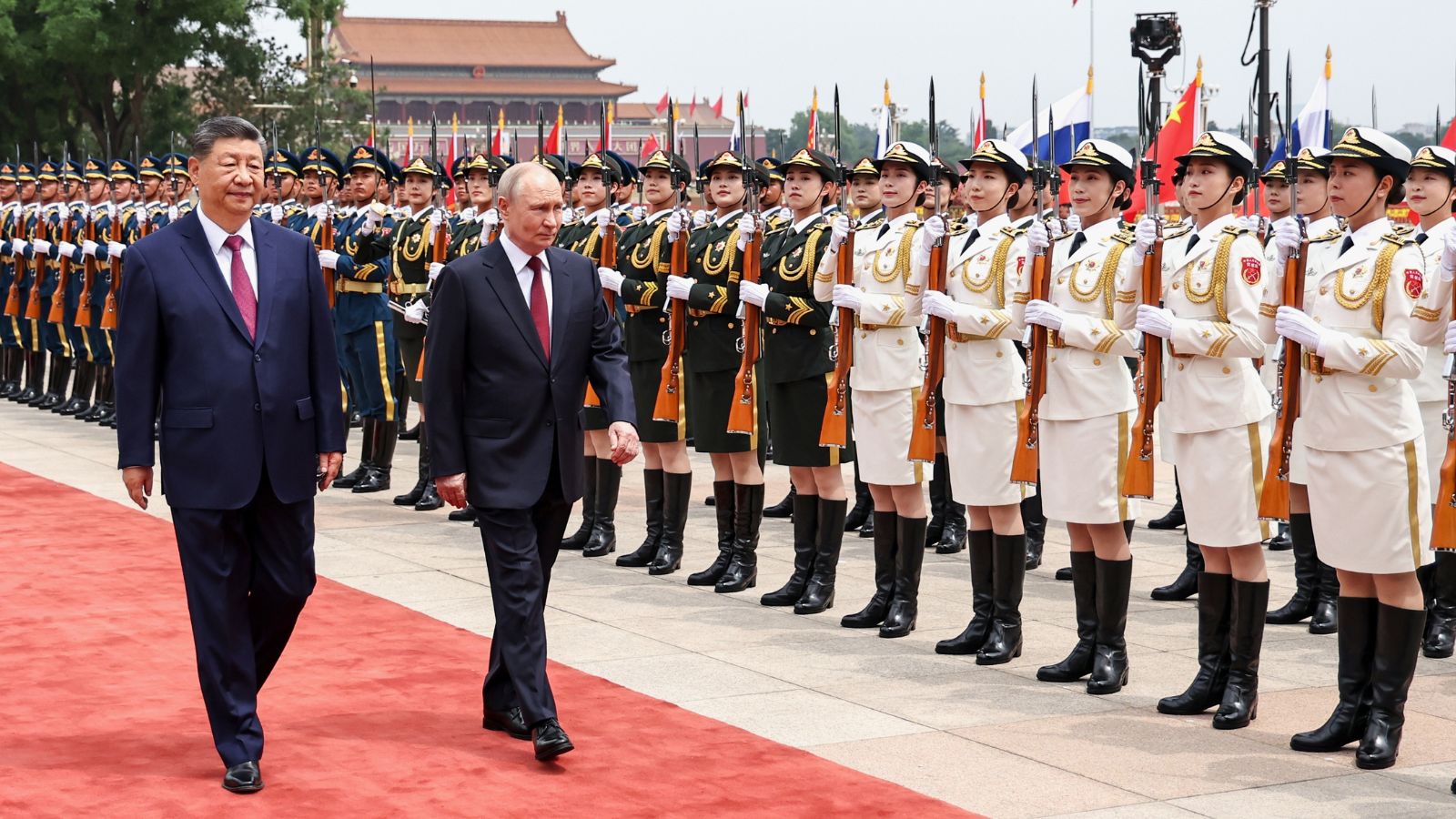
The global foreign policy establishment is falling over itself to analyze the latest diplomatic theater out of Beijing. Xi Jinping sits across from Vladimir Putin, looks into the television cameras, and declares further Middle East hostilities "inadvisable." The mainstream press swallows it whole. They paint China as the responsible global adult, desperately trying to broker peace, stabilize energy markets, and prevent the US-Iran war from spiraling into global chaos.
It is a comforting narrative. It is also entirely wrong.
When Xi calls a ceasefire in the Gulf an "utmost urgency," he is playing a double game. The lazy consensus assumes Beijing fears a prolonged American military campaign against Tehran because it threatens oil shipments through the Strait of Hormuz. In reality, a protracted, bleeding, resource-draining American war in the Middle East is the greatest strategic gift Washington could hand to China.
The Illusion of the Benevolent Peacemaker
Strip away the diplomatic boilerplate about the "law of the jungle" and look at the structural reality. I have watched Western analysts misread Chinese strategic intent for two decades, consistently mistaking Beijing’s rhetorical preference for stability with an actual desire to help the United States solve its security dilemmas.
China does not want to solve this.
Consider the timing. President Donald Trump just left Beijing after a highly choreographed state visit, boasting about multi-billion-dollar jet orders and trade extensions. Days later, Putin arrives with a massive delegation of energy barons and defense planners. By positioning itself as the literal intersection where rival empires must come to brief the king, Beijing secures an immense psychological and diplomatic leverage point.
But the real leverage is kinetic, and it is happening in the skies over Iran.
The recent Congressional Research Service report detailing the fallout of Operation Epic Fury leaked a devastating metric: at least 42 US aircraft, including advanced platforms like the F-35A, F-15E Strike Eagles, and critical KC-135 tankers, were lost or damaged in a single phase of strikes.
For every expensive American precision missile dropped on an Iranian air defense site, and for every carrier strike group tied down in the Arabian Sea, the Western defense architecture undergoes a process of compounding attrition.
[US Military Focus] --------> Heavily Diverted to Middle East (Iran)
                                      |
                                      v
                             [Sustained Attrition]
                         (42+ Aircraft Lost/Damaged)
                                      |
                                      v
[Indo-Pacific Theater] <----- Depleted Resources & Strategic Vacuum
Every airframe warped by high-tempo combat operations in the Middle East is an airframe that cannot patrol the Taiwan Strait or the South China Sea. Xi's public statements are not a rescue mission for global markets; they are a classic diplomatic hedge. He gets to look like the stabilizing global statesman while watching his primary geopolitical rival willingly enter a secondary theater meat grinder.
Why Energy Disruption Benefits the Sino-Russian Axis
The conventional financial press insists that China’s dependence on Middle Eastern crude means it will do anything to stop a blockade of the Strait of Hormuz. This ignores the massive structural realignment that has occurred since Western sanctions attempted to isolate Moscow.
Putin did not fly to Beijing just to drink tea and exchange pleasantries. He explicitly reminded the world that Russia remains a "reliable energy supplier" amid the Middle East crisis.
When Persian Gulf supply lines choke, who wins?
- Russia watches the spot price of Urals crude skyrocket, instantly replenishing its sanctions-hit treasury.
- China leverages its position as Russia’s primary economic lifeline to secure deeply discounted, overland, sanctions-proof oil and gas pipeline deliveries via Siberia.
A war that shuts down the Persian Gulf forces the rest of the world to pay astronomical premiums for energy, while China guarantees its own industrial machinery keeps humming via secure Russian land routes.
Imagine a scenario where the US successfully enforces a complete maritime blockade around Iran. The immediate result is an immediate contraction of global supply, hitting European and East Asian allies of the US far harder than it hits Beijing. China has spent the last five years building up massive strategic petroleum reserves and diversifying away from vulnerable maritime chokepoints. They are prepared to weather a supply shock that would break western domestic economies.
The Great Strategic Miscalculation
The mainstream foreign policy community frequently asks: How can China protect its investments in the Middle East if war breaks out?
The question itself is fundamentally flawed. It assumes China views its Belt and Road infrastructure or its regional diplomatic capital as assets that require military protection. They do not. China views these investments as transactional tools to secure raw resources and political alignment.
If those assets are disrupted by American bombs or Iranian retaliatory ballistic strikes, the blame falls squarely on Washington. Beijing reaps the diplomatic windfall of presenting itself to the Global South as the non-interventionist partner that builds bridges, while the United States is cast as the destructive hegemon that burns them down.
The downside to this contrarian reality is obvious: real economic friction. Shipping rates spike. Insurance premiums for maritime trade double. China’s export-driven economy does take a nominal hit in the short term. But geostrategic competition is not an exercise in quarterly profit optimization; it is a game of relative endurance. Xi Jinping is betting that China can tolerate economic discomfort far longer than a politically fractured United States can tolerate a grinding, multi-year conflict with a highly capable regional power like Iran.
While the Senate debates war powers and the Pentagon revises its aircraft loss assumptions from Operation Epic Fury, Beijing is playing a game of systemic exhaustion. They will continue to issue public statements calling for peace, signing ceremonial trade deals with American delegations, and reaffirming "unprecedented" ties with Russian energy suppliers.
Do not mistake the theater for the strategy. The longer the United States keeps its eyes, its carriers, and its bleeding-edge military hardware fixed on Tehran, the faster the balance of power shifts permanently in the Indo-Pacific. Stop listening to what Beijing says at the podium. Watch what they gain from the chaos.