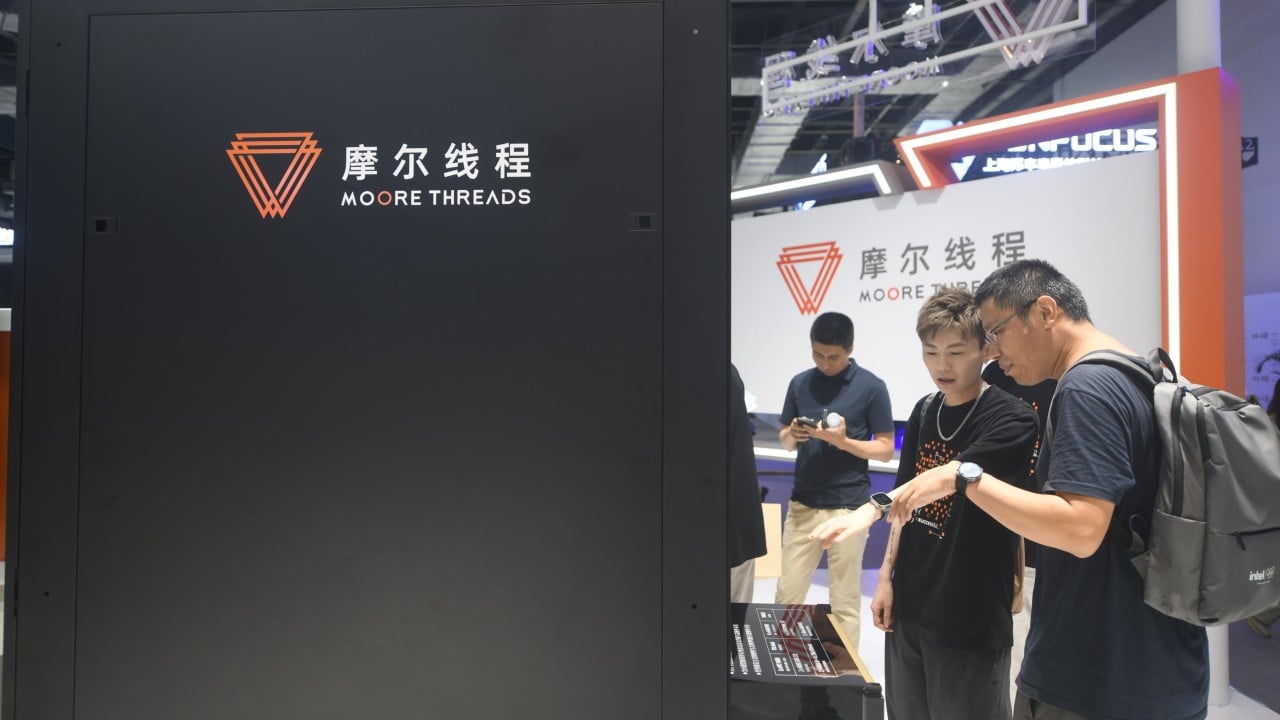
Chinese semiconductor firms are currently funneling a higher percentage of their revenue into research and development than their American counterparts. While major US firms like Intel or Nvidia often hover between 15% and 20% R&D-to-revenue ratios, several top-tier Chinese players have pushed past the 25% mark, with some specialty logic and memory firms hitting 30%. This isn't a sign of superior wealth; it is an act of desperate survival. Beijing is forcing a massive capital rotation to bridge a decade-wide technology gap while Washington tightens the screws on high-end tool exports.
The raw numbers tell a story of forced evolution. SMIC, Loongson, and various NAND flash contenders are not spending because they want to—they are spending because they have to reinvent the wheel. When a Western firm buys an ASML lithography machine, the R&D is baked into the purchase price. When a Chinese firm is blocked from buying that same machine, they must spend billions trying to build a domestic version from scratch. This creates an "R&D tax" that inflates their spending ratios without necessarily yielding immediate parity in chip performance.
The Brutal Math of Decoupling
The financial optics suggest a China that is out-innovating the West through sheer grit. That is a simplified narrative. In reality, the high R&D-to-revenue ratios seen in Shanghai and Shenzhen are a byproduct of a shrinking revenue base and an expanding existential threat. When US sanctions hit a company’s ability to sell globally, their revenue drops. If they maintain or increase their R&D budget using state subsidies, the ratio naturally skyrockets.
We are seeing a massive shift from market-driven innovation to state-mandated survival. In the US, R&D is calculated based on a return on investment (ROI). If a project doesn't promise a clear path to a 50% margin, it gets cut. In China, the "ROI" is national security. The government provides the floor through "Big Fund" investments and local tax breaks, allowing these companies to operate at R&D intensities that would bankrupt a publicly traded American firm answerable to Wall Street.
This creates a distorted competitive environment. While US firms are busy buying back shares to keep stock prices high, Chinese firms are buying physicists. They are hiring engineers from Taiwan, South Korea, and the US, often doubling or tripling their previous salaries. This "brain drain" R&D is expensive and inefficient, yet it builds a foundation of institutional knowledge that cannot be easily erased by a new round of export controls.
The Hidden Inefficiency of Replicating Known Tech
A significant portion of this R&D spending is dedicated to "catch-up" engineering. In the semiconductor world, there is a massive difference between pioneering a new frontier and trying to replicate a 5nm process node without the proper tools. The latter is significantly more expensive because you are fighting the laws of physics with one hand tied behind your back.
Chinese firms are currently pouring billions into:
- Electronic Design Automation (EDA) tools: Trying to replace Cadence and Synopsys.
- Lithography: Attempting to bypass the DUV and EUV monopolies held by the Netherlands and Japan.
- Advanced Packaging: Using Chiplet technology to stack older, less efficient chips to mimic the performance of high-end Western processors.
This is why the R&D ratios are so high. It costs more to build a counterfeit version of a high-tech tool than it does to buy the original. However, this struggle is creating a generation of engineers who understand the "guts" of the machinery better than those who simply operate Western tools.
The Strategy of Good Enough
The West often scoffs at Chinese chips because they remain two or three generations behind the "bleeding edge." This arrogance misses the point. You do not need a 3nm Blackwell-class GPU to run a smart city, a missile guidance system, or an electric vehicle fleet.
By pouring revenue into R&D for 28nm and 14nm processes—the "mature" nodes—China is securing the foundation of the global economy. Most of the chips in your car, your microwave, and your industrial power grid do not need to be cutting-edge. They need to be cheap and available. While the US focuses on the "moonshots" of AI compute, China is spending its R&D dollars to own the everyday silicon.
The danger for the US is not that China will suddenly produce a chip faster than Nvidia's latest offering. The danger is that China will become entirely self-sufficient in the 90% of the market that actually keeps the world running. Once a domestic supply chain is established, those R&D ratios will likely normalize, but the Western firms that used to supply those parts will find themselves locked out of the world’s largest semiconductor market forever.
Subsidies Are the New Venture Capital
In Silicon Valley, venture capital seeks the next big software flip. In China, the state is acting as a permanent venture capitalist for hardware. This allows Chinese chipmakers to ignore the quarterly earnings pressure that haunts CEOs in the US. When SMIC reports a R&D ratio that would make an Intel shareholder faint, the Chinese market cheers because it signifies "patriotism" and "progress."
This creates a massive divergence in how "success" is measured. A US firm is successful if it increases dividends. A Chinese firm is successful if it replaces a foreign component with a domestic one. This mission-driven R&D is immune to the usual market cycles. Even when the global chip market slumps, the spending in China continues unabated because the goal is not profit—it is the removal of the "chokepoint."
The Talent War Is the Real Battlefield
The most expensive part of R&D isn't the silicon or the chemicals; it's the people. China's high spending ratios are largely driven by a massive, aggressive recruitment campaign. They are not just training new graduates; they are poaching the architects of the modern world.
For decades, the US was the ultimate destination for the world’s best minds. That flow has slowed, and in some cases, reversed. The R&D spend in China is being used to build "Golden Parachutes" for veteran engineers from TSMC and Samsung who are nearing retirement. These veterans bring with them thirty years of "tribal knowledge"—the small, unwritten tricks of the trade that make a fabrication plant actually work.
No amount of US legislation can stop the transfer of what is inside a human brain. By outspending the US in R&D-to-revenue, China is essentially buying a shortcut through the decades of trial and error that the West went through.
The Architecture Pivot
We are also seeing a heavy investment in RISC-V. Because the US can restrict access to ARM and x86 architectures, China has identified RISC-V—an open-source instruction set—as their path to freedom. This requires a complete rewrite of software stacks and compiler optimizations. It is a monumental task that requires thousands of engineers and billions in R&D.
If China succeeds in making RISC-V a global standard for IoT and automotive, the US export controls on ARM will become irrelevant. The high R&D spend today is a down payment on an ecosystem where the US no longer holds the keys to the kingdom.
The Fallacy of the Spending Gap
Many analysts look at the total dollar amount and point out that the US still outspends China in absolute terms. This is true, but it is a lagging indicator. R&D efficiency in China is often higher because of lower labor costs. A million dollars in R&D in Shanghai buys more engineering hours than a million dollars in San Jose.
Furthermore, the US R&D spend is concentrated in a few giants like Apple, Nvidia, and Google. China’s spend is spread across hundreds of specialized mid-cap firms, each working on a specific niche of the supply chain. They are building a web, while the US is building a few very tall pillars. If one pillar falls, the system shakes. If a few strands of a web break, the web remains.
The current trajectory suggests a world with two entirely different tech stacks. One will be high-margin, ultra-fast, and Western-led. The other will be state-subsidized, rugged, ubiquitous, and Chinese-led. The high R&D ratios we see today are the sound of the world splitting in two.
Western firms are currently trapped in a cycle of needing to please shareholders who want high margins and low R&D risk. Meanwhile, their competitors across the Pacific are operating on a war footing, treating every yuan of revenue as a bullet in a long-term conflict. The US cannot "win" this by simply adding more companies to a blacklist. Innovation is a function of pressure, and the US has placed the Chinese semiconductor industry under the highest pressure in industrial history.
They are reacting exactly as any veteran analyst should have expected: by burning every cent they have to ensure they never need a Western chip again. The era of globalized silicon is over. The era of the "fortress foundry" has begun.
Focusing on the ratio of spending is a distraction. The real story is the relocation of the center of gravity for manufacturing knowledge. If the current spending trend continues for another five years, the question won't be whether China can catch up to the West. The question will be whether the West can still compete in a world where it no longer controls the baseline technology of the 21st century.