The Mirage of the Kinetic Quick Fix
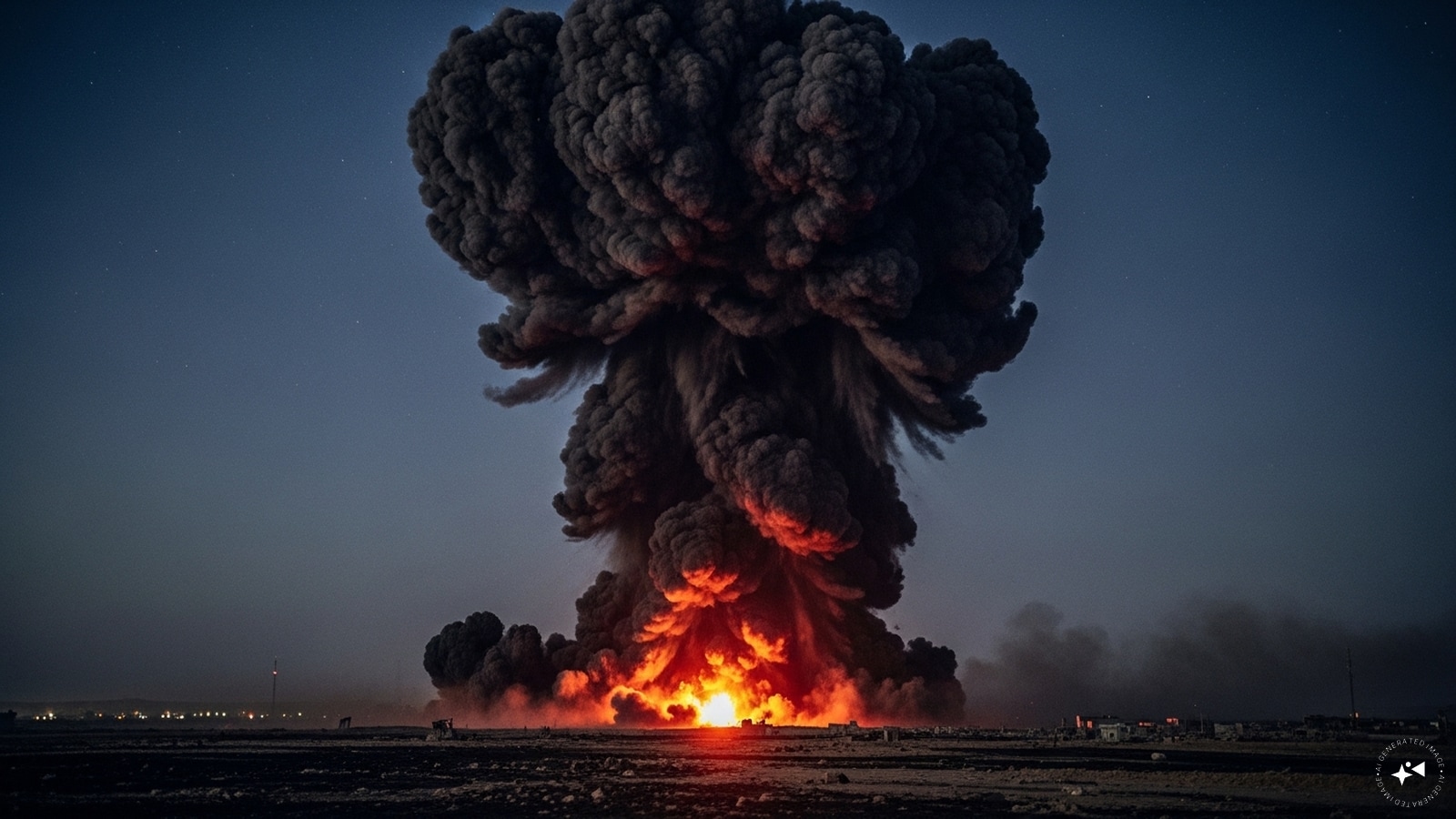
The defense establishment loves a good explosion. It looks great on satellite feeds, fits neatly into a briefing slide, and gives analysts a fleeting sense of progress. When news broke that US airstrikes targeted a critical surveillance tower at Iran’s Chabahar port, the foreign policy consensus did what it always does: it cheered a tactical victory.
They told you this "decisive action" disrupted Tehran’s intelligence apparatus. They claimed it restored deterrence in the Gulf of Oman.
They are dead wrong.
Chabahar is not just another coastal outpost; it is a highly complex, multi-layered geopolitical node. Believing that toppling a physical lattice tower "blinds" Iran or cripples its surveillance capabilities is the equivalent of trying to shut down the internet by smashing a single Wi-Fi router with a hammer. It is a simplistic, outdated approach to 21st-century hybrid warfare.
The truth is far more uncomfortable. This strike did not degrade Iran's posture; it exposed the limits of Western kinetic policy, alienated critical regional partners, and ignored the reality of modern sensor networks.
The Distributed Network Fallacy
Let us dismantle the core technical misunderstanding that dominates current reporting on this strike. Mainstream outlets portray a "surveillance tower" as a singular, irreplaceable brain center.
I spent years analyzing electronic warfare and maritime surveillance architecture. Here is how modern coastal intelligence actually works.
A surveillance tower is merely a highly visible platform for sensors. It hosts radar arrays, electro-optical cameras, and signals intelligence (SIGINT) capture devices. But the tower itself is just dumb steel. The actual intelligence-gathering capacity of a nation like Iran does not live in a single structure. It is distributed across a highly resilient, redundant network:
- Commercial off-the-shelf (COTS) marine radars mounted on local fishing dhows and commercial vessels.
- Mobile shore-based radar units disguised as standard shipping containers that can be deployed anywhere along the coast within minutes.
- Low-cost uncrewed aerial vehicles (UAVs) that loiter overhead, feeding data directly back to command centers located miles inland.
- Passive SIGINT sensors that do not emit signals (making them incredibly hard to locate and destroy) hidden on civilian infrastructure.
[Traditional Mindset]
Target Tower ---> Network Down (Failure)

[Modern Reality]
Target Tower ---> Data Reroutes to Mobile Nodes & UAVs ---> Operations Uninterrupted (Resilience)
When you blow up a tower, you do not blind the adversary. You force them to pivot to their redundant, harder-to-target mobile nodes. You actually make your own tracking job harder because you exchange a fixed, predictable target for a dozen fluid, hidden ones.
Chabahar is Not a Normal Iranian Port
The biggest analytical failure of the current coverage is treating Chabahar like it is Bandar Abbas or any other standard Iranian military hub. It is not.
Chabahar is Iran’s only oceanic port, lying outside the volatile Persian Gulf. More importantly, it is the crown jewel of an delicate, multi-party diplomatic tightrope.
Historically, India has invested hundreds of millions of dollars into developing Chabahar’s Shahid Beheshti terminal. For New Delhi, this port is a vital bypass to Pakistan, offering a direct transit route to Afghanistan and Central Asia. The United States has spent the last decade trying to court India as a key counterweight to China in the Indo-Pacific.
By dropping bombs on Chabahar’s infrastructure, the US did not just target Iranian intelligence; it sent a shockwave of instability through India's strategic investments.
"You cannot build a regional alliance against one adversary while casually blowing up the economic transit corridors of your closest partners."
When we ignore the economic and diplomatic geography of our targets, we trade long-term coalition building for short-term tactical theater. China, watching this play out, is more than happy to step in as the "stable" partner for regional infrastructure development, offering its own security guarantees where Western policy relies on airstrikes.
Why Kinetic Deterrence Keeps Failing
Let’s address the elephant in the room: deterrence. The prevailing narrative claims that kinetic strikes force Iran to recalculate its risk tolerance.
Look at the data from the last decade of asymmetric conflict in the Middle East. Kinetic strikes against proxy warehouses, radar sites, and command structures have consistently failed to alter Tehran’s strategic calculus. Why? Because asymmetrical adversaries operate on a completely different cost-benefit curve.
For a Western military, a cruise missile or a precision-guided bomb costs anywhere from $100,000 to over $1 million. The platform delivering it costs tens of millions.
For Iran, the cost of replacing a steel tower and some off-the-shelf radar equipment is negligible. They do not need to match Western military spend; they just need to ensure that their cost to adapt is lower than our cost to attack.
Imagine a scenario where a $1.5 million missile is used to destroy a $50,000 sensor package. That is not winning. That is strategic bankruptcy. Every time we deploy high-end kinetic assets to destroy low-end, easily replaceable targets, we suffer an asymmetric economic defeat.
Dismantling the "People Also Ask" Assumptions
To truly understand how flawed the public discourse is around this event, we need to look at the questions people are asking and expose the faulty premises behind them.
"Did the airstrike stop Iran's ability to track shipping?"
No. Iran’s maritime domain awareness does not rely on a single vantage point. The Strait of Hormuz and the Gulf of Oman are tracked via a dense web of shore-based visual observers, cheap commercial AIS (Automatic Identification System) receivers, and small patrol boats. Disabling a tower at Chabahar is a localized speed bump, not a system-wide blackout.
"Will this action make the shipping lanes safer?"
In the short term, it does the exact opposite. It escalates tension and incentivizes asymmetric retaliation. When direct state-level assets are hit, states do not typically back down; they pivot to deniable, grey-zone tactics. Expect an increase in GPS spoofing, cyber attacks on port logistics, and the deployment of limpet mines by unattributable actors.
"Should the US target more ports to contain Iran?"
This is the most dangerous question of all. Escalating to a campaign against port infrastructure threatens global trade, spikes insurance premiums for civilian tankers, and alienates neutral trading nations. It plays directly into the hands of those who want to see the international rules-based maritime order fracture.
The Real Way to Blind a Port
If blowing up steel structures is a losing game, how do you actually degrade an adversary's maritime surveillance capability?
You do not use explosives. You use the electromagnetic spectrum and the financial system.
1. High-Duty Cycle Electronic Attack
Instead of destroying the physical sensor, you degrade its utility. Targeted, persistent electronic jamming and cyber operations can inject false targets into Iranian radar screens, feed corrupt data to their command centers, and render their SIGINT collection useless. A jammed radar is far more frustrating than a destroyed one; a destroyed radar is replaced, while a jammed radar forces the operator to waste time troubleshooting a system they think is still working.
2. Supply Chain Interdiction
The advanced thermal cameras, high-frequency radars, and signal processors on those towers are not manufactured in Iran. They are smuggled through shell companies and complex global supply chains. Real degradation looks like aggressive, relentless enforcement of export controls and the dismantling of the front companies that procure these dual-use technologies. It is tedious, unglamorous work, but it is infinitely more permanent than a bomb.
3. Diplomatic Leverage
Instead of unilateral kinetic action that blindside allies, leverage the shared interest of regional partners. Work with India and other stakeholders to implement strict security protocols at shared facilities. Force a choice between international investment and host-nation military exploitation.
The Hard Reality
We have fallen into a comfortable trap where we mistake kinetic activity for strategic progress. We celebrate the collapse of a steel tower because it is visible, measurable, and simple to understand.
But war is not a checklist of demolished structures.
As long as we continue to prioritize tactical spectacles over structural, asymmetric, and economic realities, we will continue to spend millions to achieve nothing more than a temporary pause in our adversary's operations. The tower at Chabahar will be rebuilt, or its functions will be absorbed by a dozen smaller, invisible nodes. The US will have one less million-dollar missile in its inventory, and the geopolitical board will remain completely unchanged.