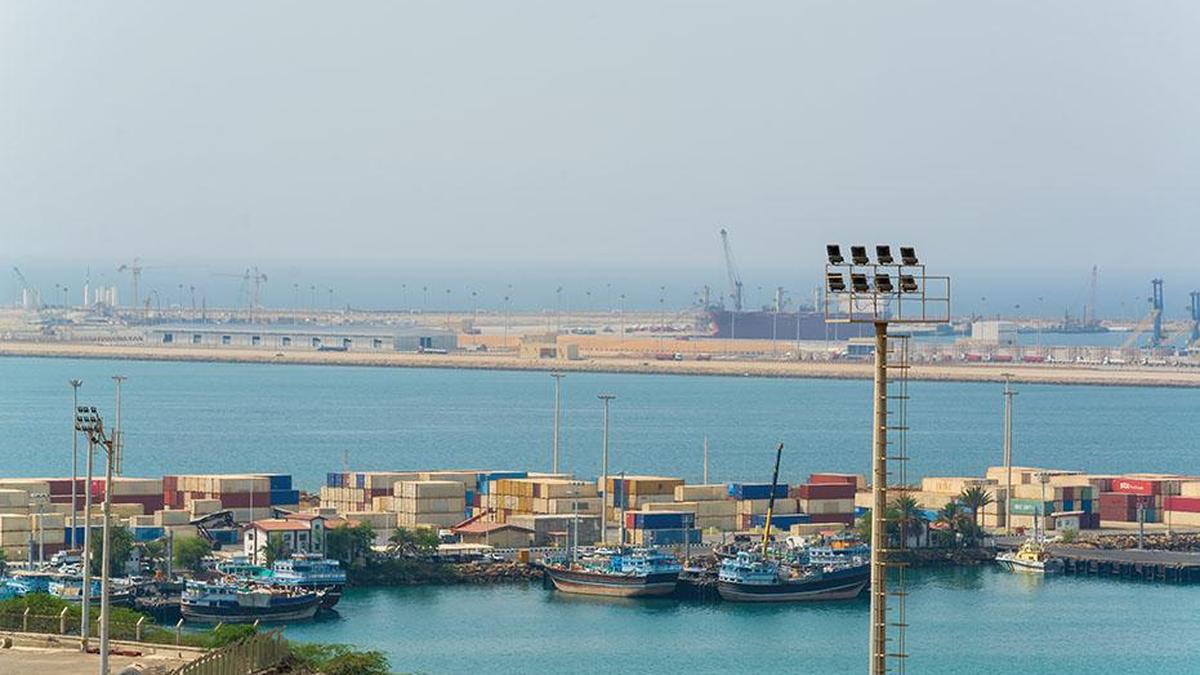
The geopolitical commentariat is currently mourning a ghost. With the expiration of the U.S. sanctions waiver on Iran’s Chabahar port this April 26, the usual suspects are out in force, lamenting the "end of a dream" and the collapse of a 23-year-old connectivity project. They are mourning a project that was already a fossil.
The consensus view—that Chabahar was India’s "golden gateway" to Central Asia and a vital check on China’s Gwadar—is a comfortable lie. It’s a geopolitical security blanket. In reality, the end of this waiver isn't a diplomatic failure; it’s a long-overdue mercy killing.
The Myth of the Strategic Gateway
For two decades, the narrative has been that India needed Chabahar to bypass Pakistan. We’ve heard it a thousand times: "Connectivity is destiny." But let's look at the actual physics of trade.
Building a port is easy. Building the infrastructure to make that port relevant is where the "Chabahar dream" hit a wall of hard reality. To move goods from Chabahar to Kabul or Tashkent, you need more than just a pier. You need a functional rail link to Zahedan, a stable Afghanistan, and a partner in Tehran that isn't constantly pivoting toward Beijing whenever the wind blows.
India has spent years tip-toeing around U.S. sanctions, operating under a "carve-out" that was always precarious. This "waiver-to-waiver" existence prevented any serious institutional investor from touching the project. You can't build a 50-year logistics hub on a 90-day permission slip. I’ve watched firms flush millions into feasibility studies for "Special Economic Zones" in the region that were never going to see a single brick because no bank would clear the transactions.
Why Gwadar Was Never the Real Threat
The "Chabahar vs. Gwadar" rivalry is the most overrated narrative in modern maritime strategy. Analysts love to point at the map and draw arrows, pretending it’s a game of Risk.
Gwadar, for all its Chinese funding, is struggling for the same reason Chabahar is: the "hinterland" is a mess. Connectivity projects fail when the destination is poorer than the point of origin. China’s "Belt and Road" is currently drowning in debt restructuring. If Beijing, with its bottomless pockets and total disregard for democratic consensus, can’t make a deep-water port in a restive province profitable, why did anyone think New Delhi could do it with one hand tied behind its back by the Treasury Department?
Chabahar wasn't a "check" on China. It was a distraction.
The Logistics of a Pipe Dream
Let’s talk numbers. The International North-South Transport Corridor (INSTC) is frequently cited as the backbone of this strategy. The promise: a 40% reduction in time and a 30% reduction in costs compared to the Suez Canal route.
On paper, the math is beautiful. In practice, it’s a nightmare of multimodal friction.
- The Trans-shipment Penalty: Every time you move a container from a ship to a truck, and then a truck to a train, you add cost, time, and "leakage" (the polite industry term for bribes and theft).
- The Gauge Problem: Russia and Central Asia use a different rail gauge than Iran. That means every single container has to be lifted and moved to a new chassis at the border.
- The Insurance Void: No Tier-1 maritime insurer will touch cargo moving through Iranian state-owned facilities without massive premiums—if they cover it at all.
When you factor in these "invisible" costs, the Suez Canal—even with its recent volatility—remains the king of efficiency. The "lazy consensus" ignores the friction. Real trade follows the path of least resistance, not the path of most patriotic fervor.
The Russia-Iran Axis is a Sunk Cost
The panic over the April 26 waiver expiration assumes that India needs this route to trade with Russia. This is a fundamental misunderstanding of the current energy market. India is already buying record amounts of Russian crude. How? Through the sea.
The "shadow fleet" and standard maritime routes are handling the volume just fine. We don't need a rickety railway through the Iranian desert to move oil. The INSTC was a solution looking for a problem. By letting the waiver expire, the U.S. is forcing India to stop throwing good money after bad.
Middle East 2.0: The Real Connectivity
If you want to see where the money is actually moving, look at the India-Middle East-Europe Economic Corridor (IMEC). This is the project that actually scares the status quo.
Unlike Chabahar, IMEC involves partners with actual capital: the UAE and Saudi Arabia. It bypasses the volatility of the Iranian plateau and plugs directly into the Mediterranean. While the "strategic thinkers" are crying over a dusty port in Sistan-Baluchestan, the real players are busy integrating the port of Haifa with the rail networks of the Arabian Peninsula.
The Sanctions Trap as a Shield
There is a dirty secret in Indian diplomatic circles: the U.S. sanctions were a convenient excuse for the slow progress.
Whenever Tehran complained about the lack of investment, New Delhi could point toward Washington and shrug. "Our hands are tied." Now that the waiver is gone, the charade is over. India can finally stop pretending that Chabahar is a top priority.
This isn't a loss of "strategic autonomy." It’s a strategic pivot. Autonomy doesn't mean the right to stay invested in a failing asset; it means the wisdom to walk away when the variables change.
The Hard Truth About Central Asia
We have been sold the idea that Central Asia is a "landlocked prize" waiting for Indian goods. It’s time for a reality check. Total trade between India and the five Central Asian republics is a rounding error compared to India’s trade with the EU or the US.
Uzbekistan and Kazakhstan are increasingly looking toward the Middle Corridor (through the Caucasus and Turkey) or back toward Russia. They aren't waiting for a port in Iran to save them. They are pragmatic. They see the same "red tape and sanctions" mess that we do.
Stop Trying to Save Chabahar
The expiration of the waiver is a gift. It allows India to:
- De-risk its energy strategy: Shift focus to more stable, multi-aligned maritime routes.
- Stop the capital drain: Redirect the billions earmarked for Iranian rail into domestic port infrastructure like Vizhinjam or Vadhavan.
- Call the bluff: If Iran wants the port to work, let them fund it with the Chinese yuan they’ve been accumulating.
The 23-year-old project isn't dying because of a date on a U.S. calendar. It’s dying because it belongs to a world that no longer exists—a world where we believed geography could be conquered by sheer willpower, regardless of the underlying economics.
Stop looking for the "gateway." The gate was locked from the inside years ago.
Invest in the routes that actually move the needle. The era of romanticized "Silk Road" connectivity is over. The era of cold, hard, sanctions-compliant efficiency is here. Accept it.
Walk away from the pier. The ship has already sailed.