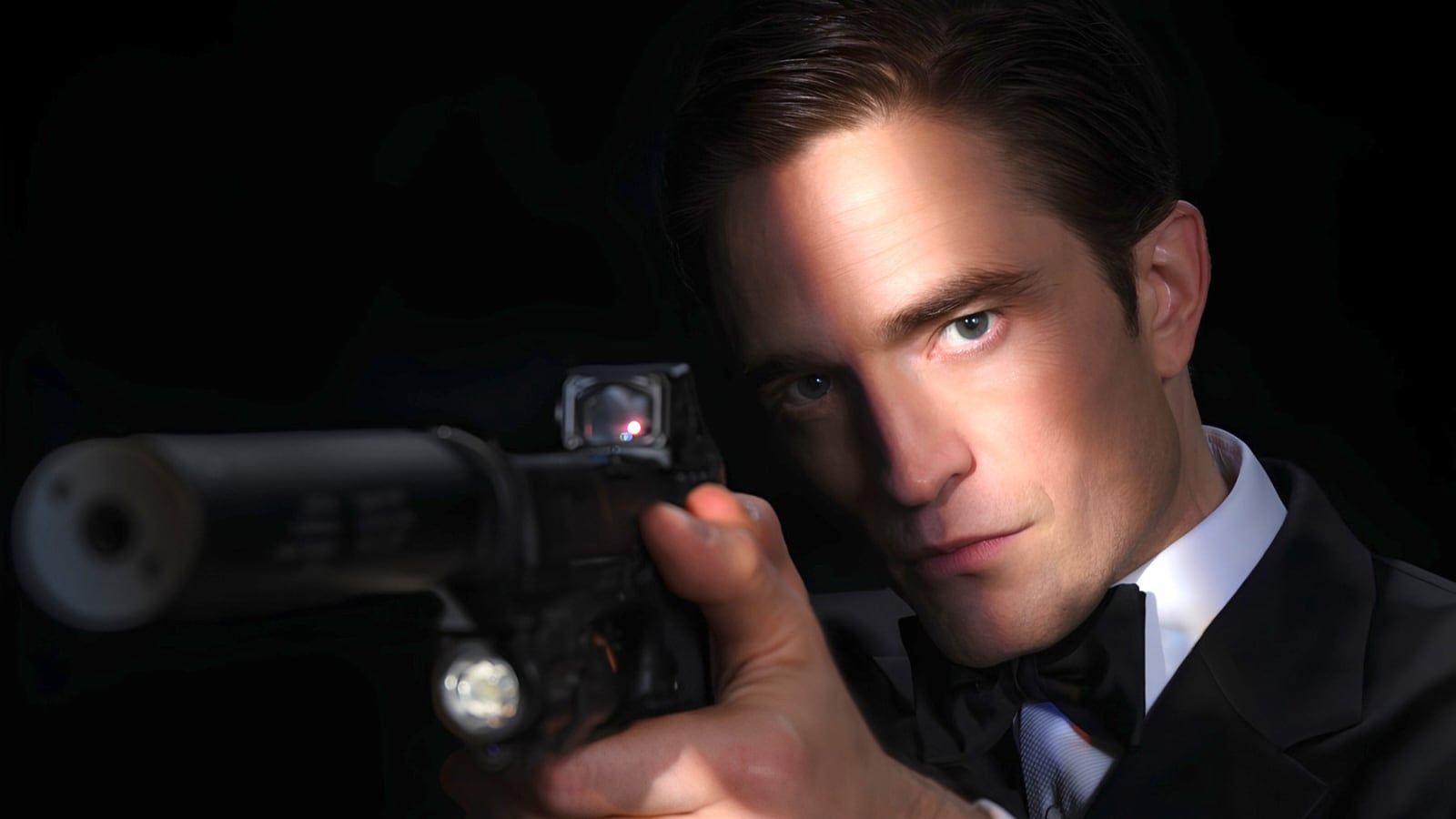
Rumors and headlines claiming Robert Pattinson has been named as the new James Bond circulate constantly across entertainment media, yet Eon Productions and Amazon MGM Studios have made no official casting announcement. When analyzing the industry mechanics behind the persistent buzz surrounding Robert Pattinson as the new James Bond, one thing becomes immediately clear. The speculation is not just fan-driven noise; it reflects a massive, high-stakes shift in how Hollywood studios manage billion-dollar intellectual property after a major corporate acquisition.
If you have covered studio politics for more than twenty years, you learn to separate press-release theater from boardroom reality. Every time a legacy franchise goes dormant after a definitive character exit, the rumor mill fires up to test public sentiment. Daniel Craig walked away from the tuxedo after No Time to Die in 2021, leaving producers Barbara Broccoli and Michael G. Wilson with the most difficult succession problem in modern cinema. Layer on Amazon's 8.5 billion dollar purchase of MGM in 2022, and the stakes for who wears the Omega watch next extend far beyond simple box-office receipts.
The Anatomy of a Franchise Rumor
Entertainment blogs thrive on declarative headlines. A single betting-odds shift in London or a casual remark from a publicist quickly mutates into a viral assertion that Robert Pattinson has signed a multi-picture deal. In reality, Eon Productions operates with notorious secrecy and deliberate slowness. Historically, the producers do not cast an actor and then look for a story. They determine the tonal direction of the next era first, lock down a director or a script treatment, and then select the performer who fits that specific creative architecture.
Pattinson's name keeps resurfacing because he checks boxes that rarely align in a single actor. He is British, stands over six feet tall, possesses the classical jawline expected of Ian Fleming's creation, and carries immediate global name recognition. More importantly, he has spent the last decade systematically dismantling his early teen-idol reputation through relentless, uncompromising artistic choices.
From Sparkles to Shadows
To understand why executives view Pattinson as a viable 007, look at his post-Twilight trajectory. Most actors who headline a five-film young-adult phenomenon either coast on nostalgia or vanish into direct-to-video obscurity. Pattinson went the opposite route. He worked with auteurs like David Cronenberg, Claire Denis, and the Safdie brothers, deliberately taking unglamorous, neurotic, and physically demanding roles in Good Time and The Lighthouse.
By the time Matt Reeves cast him in The Batman, Pattinson had rebuilt his credibility from the ground up. That 2022 film grossed over 770 million dollars worldwide, proving he could anchor a massive studio tentpole without sacrificing the brooding, eccentric edge that made him compelling in independent cinema. For a studio looking to reboot James Bond without simply repeating Daniel Craig's bruised, hyper-masculine formula, Pattinson represents an intriguing middle ground. He brings art-house prestige alongside proven blockbuster bankability.
The Corporate Tug of War Behind 007
The silence surrounding the official Bond casting is directly tied to the complex ownership structure governing the character. Unlike Marvel or Star Wars, where a single corporate parent holds absolute creative and financial control, James Bond is governed by a joint venture. Amazon MGM Studios owns the distribution rights and finances the films, while Eon Productions—controlled by the Broccoli family—retains ironclad creative approval over everything from script changes to casting and release windows.
This arrangement creates inherent friction. Amazon wants content velocity. Tech-backed studios measure success through ecosystem engagement, subscriber retention, and cross-platform synergy—or rather, the seamless integration of film, television, and merchandise. Eon Productions operates on an artisanal timeline, treating each Bond installment as a singular theatrical event spaced three to five years apart.
Why Age and Commitment Matter
Barbara Broccoli has stated publicly on multiple occasions that casting James Bond is a ten-to-twelve-year commitment. You are not hiring an actor for one movie; you are asking a performer to surrender a decade of their prime creative years to a single role, complete with grueling global press tours and brutal physical training.
Consider the timeline math. Robert Pattinson was born in May 1986. If Eon Productions were to announce him today, pre-production, principal photography, and post-production would push the release of his first outing well into 2028 or 2029. By that point, Pattinson would be in his early forties. If the studio expects a four- or five-film arc spaced three years apart, he would be pushing fifty-five by the time his final film hit theaters.
While Roger Moore played the role into his late fifties, modern action cinema demands a physicality that punishes older performers. Daniel Craig suffered torn labrums, knee injuries, and a broken ankle during his tenure, openly admitting the physical toll nearly broke him. Casting an actor already in his forties compresses the franchise's runway before cameras even roll.
The Batman Conflict and Franchise Fatigue
Even if the age math worked effortlessly, Hollywood scheduling logistics present a massive roadblock. Pattinson is already locked into one of the most valuable intellectual properties on the planet. Warner Bros. Discovery has heavily invested in Matt Reeves's Gotham universe, with The Batman Part II and potential follow-ups occupying massive blocks of Pattinson's calendar.
Studios rarely allow their marquee leads to headline two competing action franchises simultaneously. The insurance liabilities alone are staggering. If Pattinson were to sustain an injury performing a stunt for MI6, production on a multi-hundred-million-dollar Batman sequel would grind to a halt, costing Warner Bros. tens of millions in holding fees and lost release slots.
Beyond insurance, there is the issue of audience saturation. Both Bruce Wayne and James Bond are wealthy, orphaned, emotionally guarded men who rely on custom-tailored suits, high-tech gadgets, and violent competence to impose order on a chaotic world. Having the same actor play both roles concurrently blurs the distinct brand identity of each character. Audiences do not want to watch Batman order a Vesper martini, nor do they want James Bond brooding in a rain-soaked alleyway.
What Eon Productions Actually Looks For
Historically, Eon Productions avoids casting actors who are already massive global superstars at the moment of hiring. Look at the track record across sixty years of cinema:
- Sean Connery was a relatively unknown Scottish actor with a background in bodybuilding and minor television roles before Dr. No.
- George Lazenby was a male model with zero feature-film acting credits prior to On Her Majesty's Secret Service.
- Roger Moore was famous on television for The Saint, not as a box-office film draw.
- Timothy Dalton was a respected stage and classical actor who had turned down the role earlier in his career.
- Pierce Brosnan was known primarily for the detective series Remington Steele, which famously delayed his Bond debut by nearly a decade.
- Daniel Craig was a critically acclaimed character actor in films like Layer Cake and Munich, widely mocked by the British tabloid press as "James Blond" when his casting was announced in 2005.
The pattern is unmistakable. The producers prefer an actor who is recognizable enough to pass a screen test with authority, yet blank enough as a public canvas that the audience accepts him completely as James Bond. When you cast an A-list juggernaut like Robert Pattinson, the audience brings twenty years of baggage—Edward Cullen, Cedric Diggory, Bruce Wayne—into the theater. The suspension of disbelief becomes exponentially harder to achieve.
The Financial Reality of the Deal
There is also the blunt matter of upfront salary. A relatively unknown actor like Aaron Taylor-Johnson, Callum Turner, or Theo James can be signed to a multi-picture contract for a modest initial fee, with backend bonuses tied to box-office performance. The studio keeps production budgets focused on practical stunts, exotic locations, and high-end cinematography.
Hiring Robert Pattinson requires an A-list paycheck from day one, likely north of fifteen to twenty million dollars per film plus first-dollar gross participation. When production budgets for modern Bond films already routinely exceed 250 million dollars before global marketing costs, adding massive above-the-line talent fees squeezes profit margins in a theatrical marketplace that remains volatile.
The Case for Why Pattinson Could Still Happen
Dismissing the Pattinson rumors entirely would be a mistake, because Hollywood rules bend when a property faces an existential identity crisis. James Bond is currently at a creative crossroads. For sixty years, the character functioned as a Cold War fantasy of British imperial relevance and unchecked masculine indulgence. Daniel Craig's era deconstructed that mythos, turning Bond into a tragic, mortal relic who ultimately sacrificed himself to save his family.
You cannot simply hit a reset button and go back to lighthearted quips and invisible cars without giving audiences whiplash. At the same time, repeating Craig's gritty, trauma-driven realism feels redundant.
This is where Pattinson offers a genuinely radical solution. As an actor, he excels at playing men who are slightly detached from reality, masking deep vulnerability or unsettling intensity behind a veneer of polished charm. A Pattinson-led Bond would not be a bruising street fighter like Craig, nor a winking playboy like Moore. He would likely lean closer to Ian Fleming's original literary creation—a cold, slightly neurotic government assassin who relies on intellect, psychological manipulation, and sudden, clinical violence.
Furthermore, his involvement would instantly attract top-tier directing talent. Directors like Christopher Nolan, Denis Villeneuve, and Edward Berger have all been linked to the franchise in industry whispers. Nolan, who directed Pattinson in Tenet and praised his work ethic extensively, has long expressed a desire to direct a Bond film under the right creative conditions. If securing a visionary filmmaker requires pairing him with an actor of Pattinson's caliber, Eon Productions might gladly tear up its historical playbook.
How to Read the Next Wave of Casting News
Until Eon Productions and Amazon MGM Studios issue a formal press release or host a televised photocall at Pinewood Studios, every headline declaring a new James Bond should be treated with skepticism. Public relations firms routinely plant casting rumors to gauge social media reaction, inflate an actor's asking price during negotiations for entirely different projects, or keep a dormant franchise trending in search algorithms.
Watch the production pipeline rather than the gossip columns. Before a new Bond actor is ever named, the studio must announce a screenwriter and a director. Those two hires will tell you everything you need to know about the next decade of 007. If they hire a traditional action journeyman, expect a safe, conventional choice in his early thirties who can carry the torch for fifteen years. If they hire a bold, idiosyncratic auteur, the door swings wide open for a transformative star like Robert Pattinson.
Until a script exists and a camera crew is booked at Pinewood, James Bond remains unemployed, and the tuxedo stays in the closet.