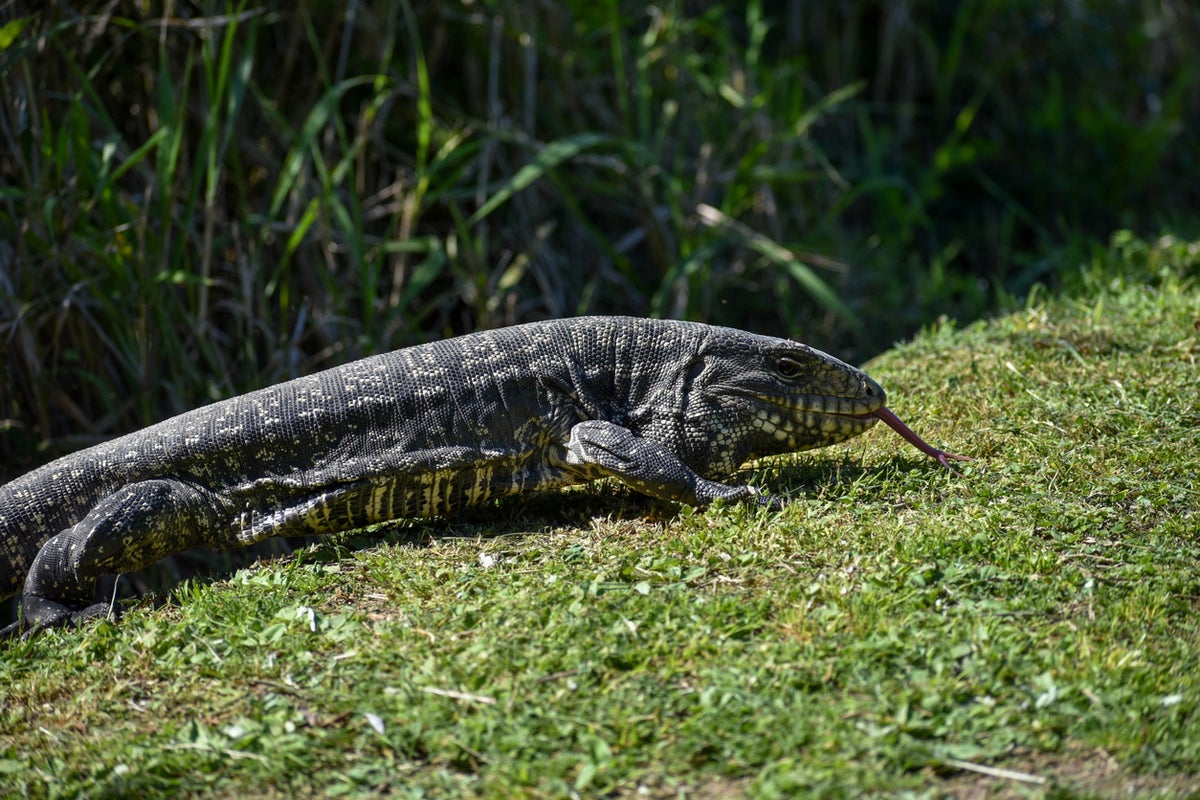
Imagine stepping onto your back porch in the morning only to see a prehistoric, speckled monster the size of a small dog casually chewing through a nest of wild turkey eggs. It sounds like a bad sci-fi flick. But if you live in southeast Georgia, it is becoming a startling reality.
The Argentine black and white tegu is officially establishing its territory in the Peach State. Wildlife biologists are not just worried; they are actively calling on residents to dispatch these creatures on sight. This isn't an overreaction or media hype. It is a calculated, urgent response to a highly resilient apex predator that threatens to disrupt local ecosystems and compromise public health.
If you think this is just a local nuisance for a couple of rural counties, you are missing the bigger picture. These lizards are tough, smart, and built to survive climates that would kill off other tropical invaders. Here is what is actually happening on the ground and what you need to do if you cross paths with one.
The Scaly Invader Overrunning Georgia Ecosystems
The Georgia Department of Natural Resources (DNR) has confirmed that wild populations of the Argentine black and white tegu (Salvator merianae) are thriving in Toombs and Tattnall counties. These lizards are not your average garden variety geckos. They routinely grow up to four feet long and can easily top ten pounds.
They got here the exact same way most invasive reptiles do: the exotic pet trade. People buy a cute, neon-green striped hatchling, realize a few years later that they have a massive, powerful carnivore that lives for twenty years, and foolishly release it into the wild.
Unlike the Burmese pythons making headlines in the tropical Florida Everglades, tegus possesses a physiological trait that makes them far more dangerous to the American South. They are highly cold-tolerant. Tegus utilize a process called seasonal brumation. They retreat into underground burrows, slow their metabolism, and survive freezing winter temperatures that would easily kill other tropical reptiles. This means their potential to expand past southern Georgia and creep further north into the Carolinas or Alabama is exceptionally high.
Why the Tegu is an Ecological Disaster
The real issue isn't just that they look intimidating. It is their voracious, indiscriminate diet. Tegus are generalist feeders. They will eat almost anything they can fit into their powerful jaws, but they have a destructive preference for eggs.
- Threat to Protected Species: Tegus specialize in raiding the ground nests of American alligators and gopher tortoises. The gopher tortoise is a protected keystone species in Georgia; their deep burrows provide shelter for hundreds of other native animals. Tegus don't just steal their eggs; they will squeeze into the burrows and consume the hatchlings.
- Decimating Game Birds: Local populations of bobwhite quail, wild turkeys, and whip-poor-wills are sitting ducks. A single female tegu can easily wipe out entire generations of ground-nesting birds in a single season.
- Agricultural Damage: Tegus are notorious for breaking into chicken coops to steal eggs and young chicks, causing direct economic damage to local farmers.
The Hidden Health Risk: Salmonella and Parasites
Beyond the physical destruction of wildlife, these giant lizards pose a silent biological threat. Research from organizations like the U.S. Geological Survey (USGS) confirms that tegus are frequent carriers of Salmonella.
Because these reptiles frequently forage through agricultural fields, livestock pastures, and residential gardens, their feces can easily contaminate local soil and crops. This introduces a tangible risk of foodborne illness outbreaks right in your backyard. Furthermore, biologists tracking the species have expressed growing concern that tegus are introducing exotic parasites to native wildlife populations that have absolutely no natural immunity to them.
The Summer Population Explosion
The timing of this warning isn't accidental. Female tegus reach maturity quickly and can lay up to 35 eggs in a single annual clutch. Biologists from Georgia Southern University, who are actively studying euthanized specimens, note that these eggs typically hatch during June and July.
Right now, a new generation of juvenile tegus is emerging. While hatchlings start out at a modest six to eight inches long with bright green heads, they grow rapidly. Because they lack natural predators in the North American wild, their survival rate is staggeringly high. If left unchecked, a minor localized infestation will turn into an irreversible regional crisis.
What You Need to Do Right Now
Georgia wildlife laws are clear: Argentine black and white tegus are classified as an invasive "wild animal" species. They enjoy zero legal protections. If you encounter one on your private property, you are legally permitted—and actively encouraged—to trap or humanely kill it year-round.
If you live in or near the affected southeastern Georgia counties, implement these immediate steps to safeguard your home:
Clear Your Property of Cover
Tegus love hiding places. Clear away heavy brush piles, dense overgrown vegetation, and low-hanging debris. Fill in any random holes or abandoned animal burrows around your yard or foundation to deny them easy winter shelter.
Bring Pet Food Indoors
Do not leave bowls of dog or cat food outside on the porch. The scent of processed pet food is an open invitation to a hungry tegu, bringing a large, potentially aggressive lizard right to your doorstep.
Document and Report Every Sighting
If you spot a tegu—whether it is alive, trapped, or dead on the side of the road—take a clear photo if possible and note the precise GPS coordinates. Report the sighting immediately to the Georgia DNR wildlife resources division. Early detection data is the most valuable tool state biologists have to map out and halt the spread of this invasion.
On public lands, such as state Wildlife Management Areas (WMAs), you cannot legally set traps, but hunters can legally take tegus using firearms that are permitted for whatever hunting season is currently active. Don't wait around for someone else to clear out these pests. Keep your eyes open, protect your backyard, and report what you see.
For a closer look at what these creatures look like moving through the wild and how field teams are managing the crisis, check out this Georgia DNR Tegu Warning and Trapping Overview. This video gives a realistic look at their actual size, behavior, and the precise counties where trapping efforts are currently focused.