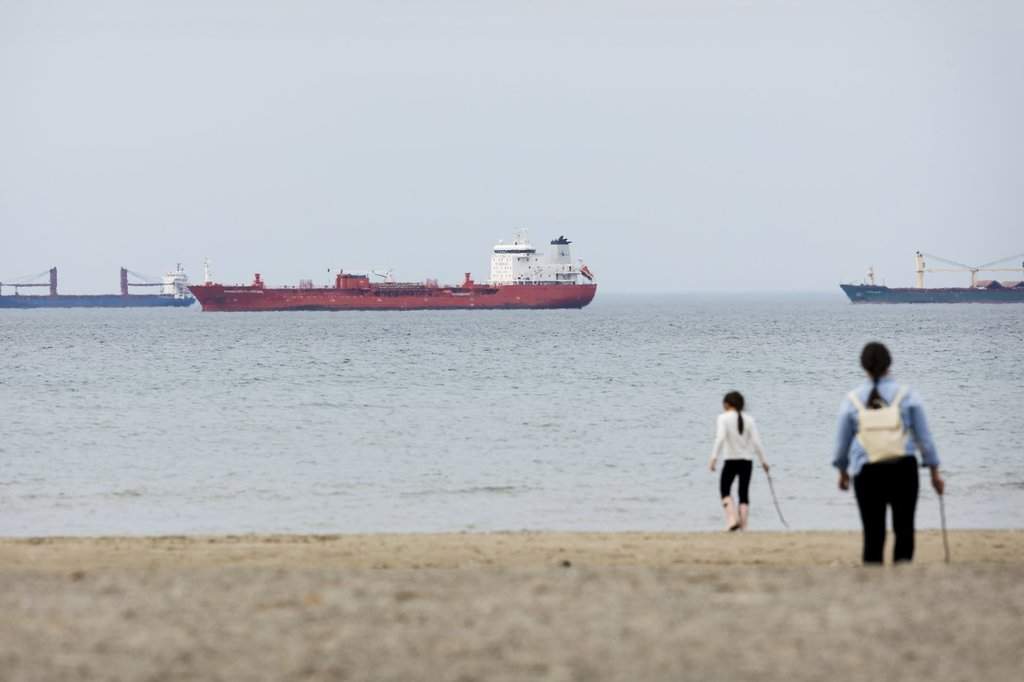
Two thousand two hundred people arriving on small wooden boats in just 48 hours isn't a normal weekend on any coastline. Yet for the Canary Islands, sudden spikes like this have become a recurring shock to a reception system that was never designed to absorb thousands of arrivals overnight.
When regional authorities in the Canary Islands urge the Spanish central government for immediate action, they're reacting to a hard logistical reality. The archipelago sits roughly 100 kilometers off the coast of southern Morocco and Western Sahara, making it the frontline of Europe's Atlantic migration route. While headlines often treat each 48-hour surge as an isolated emergency, the pressure building across islands like El Hierro, Tenerife, and Gran Canaria stems from structural bottlenecks that Madrid and Brussels have struggled to fix for years. Read more on a connected issue: this related article.
What Happens When 2,200 People Arrive in 48 Hours
Numbers on a screen don't capture what happens at a small port like La Restinga on El Hierro when multiple cayucos—long, open wooden fishing boats—pull in back-to-back. El Hierro has a permanent population of around 11,000 people. When hundreds or thousands of exhausted, dehydrated passengers arrive over two days, local emergency responders, Red Cross volunteers, and maritime rescue crews from Salvamento Marítimo are immediately stretched to their limits.
First comes triage on the dock. Medical teams check for hypothermia, severe dehydration, chemical burns from fuel mixed with seawater, and injuries sustained during days at sea. Police carry out initial identification and registration before transferring adults to temporary emergency holding centers and placing unaccompanied minors under the care of the regional Canary Islands government. More journalism by Associated Press explores similar views on the subject.
That division of responsibility is where the political friction explodes. Under Spanish law, the central government in Madrid manages adult asylum seekers and border enforcement, while regional autonomous communities hold legal guardianship over unaccompanied minors. When thousands of people arrive in a single weekend, local shelters fill up within hours. Regional officials end up housing teenagers in makeshift facilities, sports halls, and temporary tents because transferring them to mainland Spain requires political agreements with other regional governments that frequently stall.
Why the Atlantic Route Keeps Surging
To understand why the Canary Islands government keeps demanding urgent federal intervention, you have to look at why smugglers and migrants increasingly favor the Atlantic crossing over the Mediterranean.
- Tighter controls in the Mediterranean: Increased patrols and bilateral agreements across the central and western Mediterranean have pushed smuggling networks southward toward departure points in Mauritania, Senegal, and the coast of Western Sahara.
- Regional instability in the Sahel: Political upheaval, conflict, and economic collapse in countries like Mali, Burkina Faso, and Niger have displaced millions of people, feeding a steady flow of migrants toward West African Atlantic ports.
- Seasonal weather windows: Calm ocean swells—often occurring in late summer and autumn—create brief periods where open wooden boats can attempt the dangerous multi-day crossing without immediately capsizing.
The Atlantic route is also one of the deadliest migration corridors on earth. Unlike the narrow Strait of Gibraltar, where boats travel roughly 14 kilometers, a cayuco departing from Mauritania or Senegal faces open ocean distances exceeding 1,000 kilometers. Strong currents can push vessels off course into the empty Atlantic, meaning that for every 2,200 people rescued near the islands, an unknown number never make it to shore.
The Legal and Political Deadlock in Madrid
Whenever a 48-hour surge hits the news, officials from the Canary Islands regional government call on Madrid to activate emergency solidarity mechanisms. Their core demand is straightforward: mandatory relocation of unaccompanied minors to other regions across mainland Spain so the islands aren't left carrying the entire humanitarian load alone.
So far, relocation has relied largely on voluntary quotas negotiated between Spain's central ministries and the 17 autonomous communities. In practice, voluntary agreements move slowly. Regional governments on the mainland often argue they lack available shelter beds, funding, or social workers, leaving thousands of minors bottlenecked in the Canary Islands long after the initial rescue boats have been cleared from the docks.
Changing that system requires reforming Spain's immigration law to make inter-regional transfers automatic once a territory's reception capacity exceeds a specific threshold. That reform has repeatedly run into partisan gridlock in the Spanish parliament, turning a pressing humanitarian and logistical problem into a protracted political standoff.
What Most Coverage Misses About Island Reception Capacity
People reading about a 48-hour arrival spike from mainland Europe often assume the islands simply need more police boats or larger detention camps. Having followed European border policy closely, I can tell you that framing misses how island geography actually works.
You can't easily drive overflow detainees or asylum seekers to a neighboring province when you're on a volcanic island in the middle of the Atlantic. Every transfer requires commercial flights, chartered planes, or naval vessels. Every supply shipment—from camp beds to medical kits—has to cross water. And unlike major metropolitan hubs in Madrid or Barcelona, smaller islands like El Hierro or Lanzarote don't have deep pools of specialized legal interpreters, pediatric doctors, or social workers sitting on standby.
There's also an economic balancing act that regional leaders rarely ignore. Tourism accounts for roughly a third of the Canary Islands' GDP. Local officials walk a tightrope between sounding the alarm loudly enough to force action from Madrid and Brussels, while reassuring international visitors that holiday resorts remain safe, functional, and unaffected by port operations.
Europe's External Border Dilemma
The Canary Islands aren't just a Spanish regional issue; they represent the southwestern external border of the European Union. Under the EU Pact on Migration and Asylum, member states agreed in principle to stronger border screening procedures and a solidarity mechanism allowing countries either to accept relocated migrants or contribute financially to frontline states.
Yet implementation lags far behind sudden operational emergencies. When 2,200 people land over two days, EU border agency Frontex can deploy extra officers for debriefing and fingerprinting, and Brussels can release emergency funds. Neither measure empties overcrowded youth shelters on Tenerife tomorrow morning.
Spain has also pursued preventative diplomacy in West Africa, signing bilateral cooperation agreements and funding development projects in Mauritania and Senegal to curb departures before boats leave the beach. While joint patrols and intelligence sharing occasionally disrupt smuggling rings, economic desperation and conflict in the Sahel mean enforcement alone rarely stops departures for long.
How to Follow and Verify Developments on the Atlantic Route
If you're tracking this crisis—whether for policy analysis, journalism, or general awareness—relying solely on viral social media clips or single-day headlines will give you a distorted picture. Arrival numbers fluctuate wildly based on ocean swells and patrol schedules.
- Check official bi-weekly Ministry of the Interior reports: Spain's Ministerio del Interior publishes regular statistical breakdowns comparing year-to-date sea arrivals in the Canary Islands against the previous year. Look at multi-month trends rather than isolated 48-hour spikes.
- Follow Salvamento Marítimo updates: Spain's maritime rescue service posts verified operational summaries of search-and-rescue interventions, giving accurate counts of rescued vessels and port disembarkations without political spin.
- Monitor UNHCR and IOM Mediterranean and Atlantic briefings: Both the UN Refugee Agency and the International Organization for Migration track broader regional displacement across West Africa, helping explain why departure hubs shift between Morocco, Western Sahara, Mauritania, and Senegal.
- Watch parliamentary votes on Article 35 of Spain's Immigration Law: The real turning point for the Canary Islands won't be a new patrol boat—it will be whether lawmakers in Madrid pass binding rules requiring mainland regions to share responsibility for unaccompanied minors.
Until Madrid, regional leaders, and EU institutions replace ad-hoc emergency appeals with automatic capacity-sharing rules, every calm spell in the Atlantic will inevitably trigger the exact same urgent warnings from the Canary Islands.