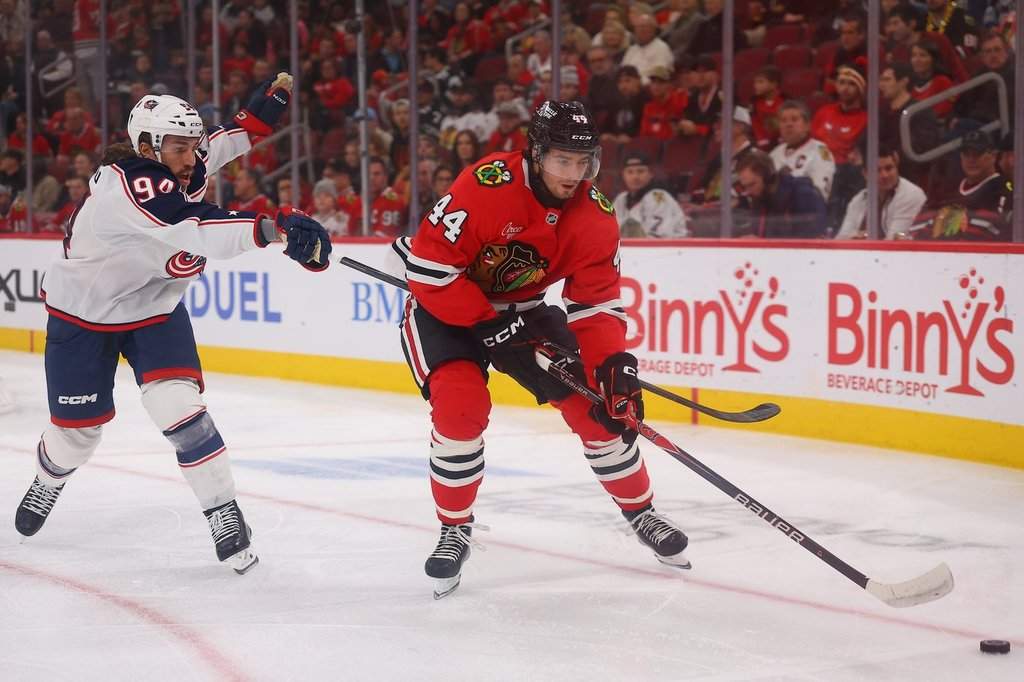
"Wow" moments do not win Premier League titles. Highlight reels do not survive ninety minutes against a disciplined low block. And a teenager beating a tired full-back on the touchline does not make Rio Ngumoha a Liverpool savior.
Every time a club prys a prized academy prospect out of a rival's youth system, football media reaches for the same tired script. A burst of acceleration. A cheeky step-over. A clip that loops cleanly on social feeds. Within hours, the lazy consensus declares the club has uncovered an instant difference-maker who tilts big matches on his own. In similar news, read about: Numerical Advantage Mechanics in Football: Why Ten-Man Collapses Happen.
That reading gets the entire sport backward.
Calling Ngumoha a ready-made decisive force at Liverpool confuses novelty with repeatable value. Football at the top level is an economy of spatial control, decision speed under fatigue, and structural discipline. A flashy dribble can pop a crowd in minute seventy-eight. It can also trigger a counterattack that costs two points in minute eighty-four if the spacing behind it is sloppy. Sky Sports has also covered this fascinating topic in great detail.
Let's strip away the hype, dismantle the flawed questions fans keep asking about Ngumoha, and look at what actually happens when a raw wide talent steps into a title-contending environment.
The "Wow" Trap That Ruins Young Wingers
Watch enough youth and senior football and you start spotting the same pattern. Clubs and pundits fall in love with isolation moments. A winger takes a touch past his marker, shifts weight, and leaves grass behind him. Everyone claps.
Now look closer at what happens two seconds later.
In elite club football, ball progression is not a solo stunt. It is a coordinated sequence where midfielders occupy counter-pressing lanes, full-backs either overlap to pin defenders or invert to protect central rest defense, and attackers time runs into specific zones. When a young attacker relies heavily on low-percentage take-ons, two things happen:
- Possession volatility spikes. Losing the ball high up the pitch is tolerable when your team is set in a compact press. Losing it while overcommitted on the flank forces midfielders into high-speed recovery sprints that drain legs by the final quarter of matches.
- Predictability creeps in. Senior defenders in the Premier League do not panic the way under-18 defenders do. They read hip angle, delay their lunge, funnel the ball toward crowded touchlines, and wait for the young player to force a shot or pass into traffic.
I have watched recruitment departments and coaching staffs burn real money and patience chasing "electric" wide forwards who looked untouchable in clips and invisible when games tightened up. You see it across top-flight clubs every cycle: a prospect arrives with huge fanfare, delivers a handful of viral touches, and then stalls because off-ball timing, weak-foot release angles, and defensive tracking take years to wire into instinct.
That is not an insult to Ngumoha's talent. It is a sober look at how high the bar sits once you leave youth football behind.
You Are Asking the Wrong Question About Ngumoha
Most fans and commentators frame the conversation around a single binary: Is Ngumoha good enough to start or impact big games right now?
Wrong question.
The real question is: What specific tactical problem can Ngumoha solve without breaking Liverpool's structure?
Think about how elite coaches deploy squad pieces rather than crowning instant stars. Even when a manager builds a relentless, possession-heavy or transition-sharp system—whether you study the tactical demands championed by figures like Jürgen Klopp during Liverpool's heavy-metal years or the controlled positional principles associated with Pep Guardiola—every minute on the pitch has a cost. If a player adds flair but subtracts control, the net effect on match state has to be weighed carefully.
Imagine a scenario where Liverpool are locked in a stalemate at 1-1 at Anfield in the seventieth minute against a deep, compact back five. The opponent has ceded the ball and packed the penalty area. In that moment, a pure footrace in space rarely exists. What matters is tight-space combination play, sharp back-post delivery, composure in the half-space, and discipline when the other team clears long to their outlet striker.
If Ngumoha enters that scenario, his value comes from 1v1 box-edge disruption and willingness to attack seams without over-complicating the final ball—not from playing Hollywood football for its own sake. Put him in a different scenario—say, protecting a narrow one-goal lead away from home where game management is king—and the calculus flips entirely. Suddenly, keeping the ball safely and holding shape matters far more than beating a man near the corner flag.
Treating a developing teenager as an all-weather match-winner ignores how squad roles actually work at an elite club.
Dismantling the "People Also Ask" Myths Around Ngumoha
Whenever a young player generates buzz, search bars fill up with the same predictable questions. Most of them start from shaky assumptions.
"Is Ngumoha already ready to be a regular starter for Liverpool?"
No—and framing readiness as "starter or bust" is one of the worst habits in modern football coverage.
Starting in top-flight competition is not just about peak ability over twenty minutes. It is about consistency across thirty-eight league fixtures, cup ties, and European nights, while absorbing physical contact and tactical instructions every single week. A young winger can offer genuine spark off the bench without being ready to carry ninety-minute starting responsibility. Pushing a teenager into heavy starting minutes before his body and decision-making are ready often leads to muscle strains, dips in confidence, or stalled development.
"Does signing a top young prospect automatically upgrade the squad?"
Not on day one.
Acquiring a high-upside teenager upgrades optionality and long-term depth, not immediate title odds. Real squad upgrades in elite football usually come from proven performers in their prime or carefully vetted additions who fit established patterns seamlessly. A teenager is an investment in future ceiling. Confusing a future asset with a finished product sets unrealistic expectations that hurt the player the moment his first rough patch arrives.
"What matters more for a young winger: flair or end product?"
Neither works alone, yet decision quality beats both over a full season.
Fans obsess over goals and assists on one side and dribbles on the other. In reality, a winger who makes the simple, high-percentage pass when two defenders swarm him—and saves the dribble for the moment a defender is isolated off-balance—creates far more sustainable danger than one who dribbles into dead ends. End product grows out of repeatable habits: head up before receiving, clean first touch, smart movement across the line, and calm execution inside the box.
The Nuance Most Analysts Miss: System Fit vs. Raw Ceiling
Here is the real tension that gets glossed over when people talk about Ngumoha at Liverpool.
Great clubs need contrasts in their forward line. If every attacker plays safe, square passes and waits for rehearsed patterns, a team can become too methodical against set defenses. Having a wide player who looks at a defender and thinks, I can beat you right now, adds genuine unpredictability.
Yet unpredictability without anchor points turns into chaos.
To see the distinction clearly, compare how a "wow" moment reads on social media versus how it grades in a serious match review:
| Evaluation Lens | Social Clip Mindset | Senior Match Reality |
|---|---|---|
| Primary Metric | Did he beat his man cleanly? | Did the move advance the team into a high-value zone? |
| Risk Tolerance | Rewards bold attempts every touch | Weighs turnover cost against transition exposure |
| Off-Ball Role | Often ignored once the ball moves | Critical for pressing triggers, spacing, and box runs |
| Time Horizon | Instant verdict after one cameo | Measured across minutes, matchups, and physical durability |
Notice how neither column requires pretending Ngumoha lacks talent. High-level scouts and coaches—from data-driven recruitment minds like Michael Edwards to seasoned dressing-room leaders across English football—know that raw athletic and technical traits are the starting line, not the finish line. You cannot coach explosive footwork or fearless drive out of thin air, which is why top clubs fight for teenagers with those traits. Still, traits only become points on the table when paired with spatial awareness and maturity.
Why My Contrarian Take Has Real Blind Spots
Being the contrarian in the room feels sharp, right up until the moment a teenager tears up the script.
There is a real risk in over-correcting against hype. Every so often, a young player bypasses the normal timeline because his fearlessness, physical profile, or timing translates faster than expected. When a player has genuine momentum and confidence, overly cautious skepticism can understate how quickly a dynamic wide threat can force his way into late-game moments.
There is also the fact that momentum itself is a tactical lever. An opposing full-back who knows a teenager behind him can attack space at full tilt has to think twice before bombing forward. Even if the winger does not score or assist on every surge, the threat alone alters defensive positioning.
Admitting those blind spots does not weaken the argument. It keeps the analysis honest. Football punishes dogma—whether that dogma says "he is already a superstar" or "teenagers can never swing big matches."
What Liverpool and Fans Should Actually Do Next
If you want to evaluate Ngumoha properly—and if you care about how young talent actually succeeds at a club with Liverpool's demands—stop grading him like a finished marquee signing.
- Track his off-ball habits, not just his highlights. Watch what he does when he does not have the ball. Does he press at the right angle? Does he hold width to stretch a back four, or drift inside into crowded lanes? Does he track back when his full-back steps up?
- Judge him by match state. Compare his impact when Liverpool are chasing a goal against a packed box versus when they are playing on the front foot with space to run into. Context explains half of what looks like brilliance or struggle.
- Give him protected minutes with clear instructions. If you are managing his path, give him defined roles—stretch the pitch, attack the back post, take smart 1v1s in safe zones—rather than asking him to carry the creative burden of the entire attack.
- Ignore premature labels. Neither crown him a savior after a bright cameo nor write him off after a quiet twenty-minute spell. Development at this level is a stair-step climb, not a straight line.
Wait for the heavy fixtures in spring, when legs are heavy, spaces shrink to nothing, and every lost ball hurts. That is where hype evaporates and real players show what they are built of.