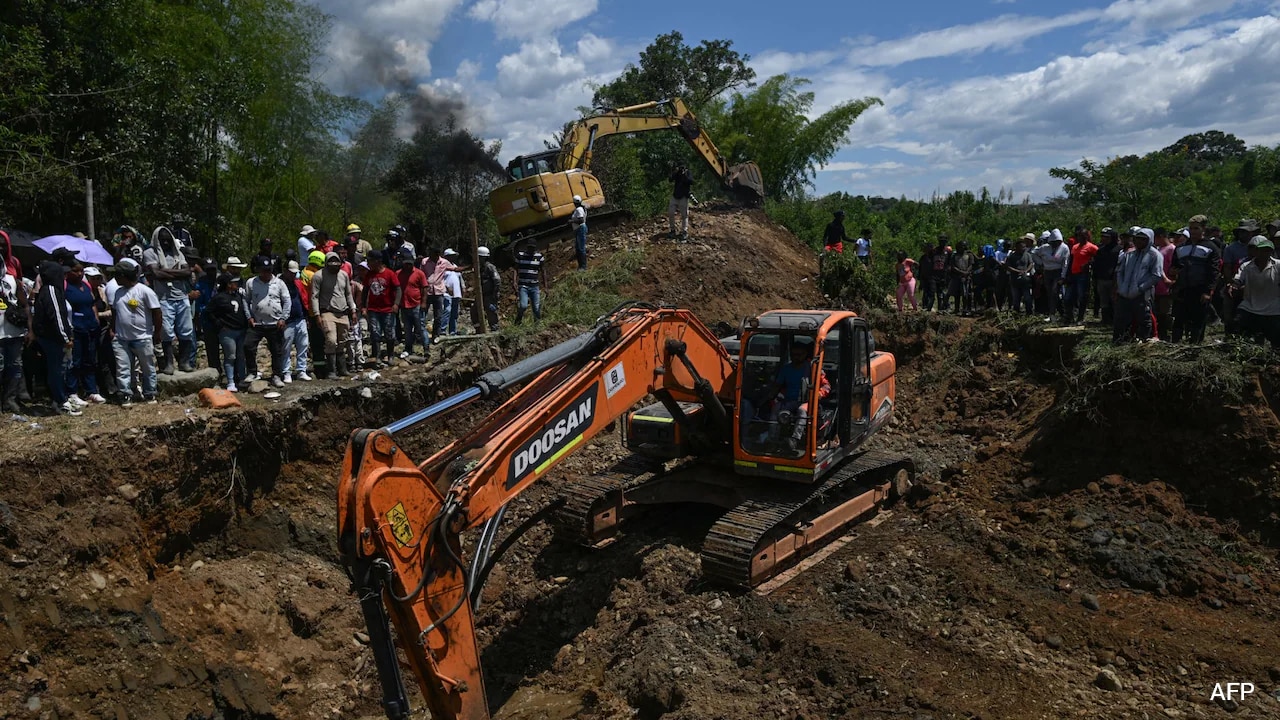
Gravity killed those fourteen miners. Bureaucracy buried them.
Every time a fatal slope failure hits an unlicensed dig in the Andes, standard coverage follows the exact same script. Grief-stricken quotes from local officials. A passing nod to tropical rain. A solemn demand for stricter policing of illegal gold mining in Colombia.
That consensus is lazy. Worse, it is analytically dishonest.
When fourteen people die under tons of saturated earth at an illegal gold mine in Colombia, labeling the tragedy a "landslide at an illegal mine" treats two distinct failures as a single moral label. One failure is geotechnical. The other is institutional. Confusing the two guarantees that the next hillside gives way with the exact same body count.
I have spent years working around rock mechanics, slope instrumentation, and mining governance across Latin America and other high-relief jurisdictions. I have watched operators and regulators blow millions of dollars on paper compliance, confiscated excavators, and press briefings while ignoring basic pore-water pressure, undercut toes, and unengineered benches. And I have watched small-scale diggers risk their lives inside unstable cuts because the legal path to a title takes years of paperwork, capital, and political friction that nobody holding a shovel can afford.
The Lazy Consensus Around Illegal Gold Mining in Colombia
Standard reporting treats "illegal" as a complete explanation. If a pit lacks a permit, the story ends at criminality. Bad actors broke the law, nature pushed back, fourteen miners died.
Case closed. Nothing left to examine except law enforcement budgets.
That framing misses how slope failures actually work in steep, weathered tropical terrain. A hillside does not collapse because a piece of paper is missing. A slope fails when shear stress exceeds shear strength along a slip surface.
In Colombian gold belts—from the rugged slopes of Antioquia and Caldas to alluvial and hillside workings across the country—saprolite, deeply weathered volcanic or metamorphic rock, and colluvium sit on steep gradients soaked by intense seasonal rainfall. Add a sharp excavation cut at the toe of the slope without benching, drainage, or retention, and you alter both geometry and groundwater flow.
Rain infiltrates open fractures and loose overburden. Pore-water pressure rises inside the soil or rock mass. Effective normal stress drops. Friction between particles weakens. Once driving forces outrun resisting forces, the mass moves—often fast, often without warning.
Calling a slope failure an "illegal mining tragedy" skips the physics entirely. It turns a predictable geotechnical mechanism into a crime blotter item. And when a headline reduces fourteen deaths to a crackdown story, readers walk away thinking the main problem is rogue miners rather than unaddressed slope mechanics and broken permitting pathways.
Why "Illegal" and "Informal" Are Not the Same Thing
Before arguing about enforcement or engineering, we need clean definitions. Conflating every unlicensed operation with violent transnational syndicates is one of the costliest habits in mining commentary.
Artisanal and small-scale mining (ASM) refers to manual or low-mechanization extraction carried out by individuals, families, or small cooperatives, typically characterized by low capital investment and limited technical engineering. Illegal mining is a legal status: operating without valid authorization, concessions, environmental licenses, or compliance with applicable state rules.
Not every unlicensed dig is run by armed criminal networks. Many sit in a gray zone of informality—miners working ancestral or known gold-bearing ground while stuck in slow, costly, or overlapping formalization queues. At the same time, armed groups and criminal organizations do extort, finance, or control high-value extraction in vulnerable corridors.
Lumping a local crew cutting an over-steepened bank with an industrial-scale syndicate under a single "illegal" tag blurs both risk and responsibility. You cannot fix slope stability with a press release if you cannot even separate an under-resourced crew digging a hazardous bench from a criminal enterprise running heavy machinery.
What People Usually Ask About These Fatalities
When a disaster like this breaks, search feeds fill up with predictable questions. Most of them start from a shaky premise.
"Why do miners keep working in dangerous, illegal pits after deadly landslides?"
Because hunger is immediate and abstract risk feels negotiable until the ground moves.
Ask that question from a safe chair and it sounds irrational. Stand in a region with scarce formal jobs, high gold prices, and a family budget measured week to week, and the calculus looks very different. When an ounce of gold commands high global value and local alternatives pay pennies or nothing at all, workers discount low-frequency catastrophes—especially when warning signs like minor raveling, dripping water, or tension cracks are treated as routine noise rather than precursors to collapse.
People rarely walk into a pit thinking, "Today I will get buried." They walk in thinking, "If I don't pull ore today, we don't eat this week." Ignoring that economic pressure makes human behavior look like madness instead of survival math.
"Would stricter raids and seizing equipment stop illegal gold mining landslides?"
Raiding a site without changing ground conditions or economic alternatives mostly moves the hazard around.
I have seen enforcement sweeps confiscate pumps, crushers, and excavators only for workers to return days later—often digging narrower, more chaotic, and even less stable workings out of sight. Heavy-handed raids can actually increase short-term danger if crews rush extraction ahead of anticipated enforcement or abandon basic drainage and cut geometry in favor of speed.
Enforcement has a role when armed groups or severe environmental and life-safety violations are present. Pretending raids alone solve slope instability is wishful thinking. You cannot arrest a slip plane.
"Can illegal gold mines in Colombia be made completely safe overnight?"
No. Anyone promising overnight safety on steep, weathered tropical slopes is selling fiction.
Slope engineering requires site investigation, proper slope angles and bench heights, surface water diversion, groundwater control, and ongoing monitoring. Even engineered mines experience failures when extreme rainfall or unexpected geology intervenes. Expecting instant perfection from cash-strapped, unpermitted workings is not a policy plan; it is a way to guarantee failure and blame the victims when it happens.
The Nuance Every Headline Misses
Here is the contrarian truth that makes both hardcore enforcement hawks and romanticizing advocates uncomfortable: formalization without basic geotechnical competence still buries people, and enforcement without viable legal pathways still pushes people into unstable ground.
Think of it as a two-leg stool. Pull either leg out, and it tips.
Imagine a scenario where a mining cooperative finally gets a formal permit after three years of waiting, yet nobody checks the slope angle, diverts upslope runoff, or manages groundwater buildup during heavy rain. The mine is now "legal" on paper. The hillside still does not care about the stamp. Paper legality does not add shear strength to saturated soil.
Now flip it. Imagine a scenario where authorities shut down every unlicensed dig overnight without creating fast, affordable avenues to legalize or transition livelihoods. The number of permitted pits drops. The need for income does not. Informal diggers either scatter into harder-to-reach slopes or get pulled deeper into illicit networks that operate outside state oversight altogether.
Geotechnical pioneers like Karl Terzaghi laid the groundwork for soil mechanics and effective stress decades ago, and modern slope engineering frameworks—such as guidance associated with organizations like the International Society for Rock Mechanics and Rock Engineering (ISRM) and large-scale mining slope guidelines—have spent generations refining how water pressure, rock structure, and cut geometry govern stability. Yet basic principles like keeping surface water out of tension cracks, avoiding unsupported vertical or over-steepened cuts, and watching for seepage or toe bulging remain rare in small-scale digs.
That gap between engineering reality and ground-level practice is where fourteen miners end up dead.
Actionable Moves That Actually Cut Risk
If the goal is fewer dead miners rather than louder headlines, stop treating every hillside collapse as a simple morality play and start attacking the mechanics and bottlenecks that produce it.
- Separate criminal enforcement from technical risk triage. Direct state and security force against armed groups, environmental crimes, and severe imminent hazards, while building practical technical outreach for small-scale miners willing to enter formalization. Confusing a cartel operation with a local cooperative wastes scarce enforcement capacity.
- Fix the permitting bottleneck before lecturing on legality. Slow, labyrinthine titling and environmental approvals punish good-faith operators and keep miners outside the system. Streamlined, tiered pathways for small-scale operations—paired with clear minimum safety rules—bring more activity into view where risks can actually be managed.
- Prioritize water management and cut geometry first. You do not need million-dollar radar systems to spot obvious slope hazards. Diverting surface runoff away from crest cracks, avoiding steep undercut toes, limiting unsupported vertical faces, and evacuating when seepage spikes or ground cracks open address the most common triggers of shallow and translational failures.
- Train crews to read ground precursors, not just ore grades. Miners spend hours reading veins and panning concentrates. Teach them to treat sudden muddy seepage, new ground cracks above the crest, popping or sloughing rock, and heavy rainstorms as hard stop-work triggers.
- Measure outcomes by prevented fatalities, not just seized machines. Counting confiscated equipment is easy to photograph. Tracking formalization rates, basic safety adoption, and reduced incidents is harder—and far more honest.
The Honest Downside of Taking This Stance
This approach carries real trade-offs, and pretending otherwise would undercut credibility.
First, distinguishing informal miners from criminal actors can be misread by critics as going soft on illegality or minimizing the destructive footprint of gold mining on rivers, forests, and communities. In regions where illicit armed groups exploit mining revenues, nuance requires precision—not naivety.
Second, practical risk reduction and gradual formalization take years of unglamorous institutional work. They do not deliver the instant political satisfaction of a dramatic raid or a neat villain-versus-victim narrative. Some critics will argue that working with small-scale miners legitimizes dangerous or environmentally damaging practices unless strict boundaries are enforced.
Those risks are real. Ignoring the physics and economics of hillside collapses is worse.
Fourteen lives lost at an illegal gold mine in Colombia should force a harder look at why unstable slopes and broken institutions keep colliding—and what changes tomorrow morning to keep the next hillside standing.