Insurance companies have seen every trick in the book, or so they thought until four residents in Southern California decided to test the limits of credulity. If you’ve seen the headlines about a bear trashing luxury cars in the Lake Arrowhead area, you’re looking at one of the most bizarre and poorly executed fraud attempts in recent memory. It wasn't a wild animal looking for a snack. It was a person in a store-bought bear suit.
This wasn't just a prank gone wrong. It was a calculated, albeit clumsy, attempt to squeeze over $140,000 out of insurance providers. Operation Bear Claw, as the California Department of Insurance dubbed it, reveals exactly how far some people will go to game the system and why they almost always get caught.
The Mystery of the Shaggy Vandal
In early 2024, an insurance company received a claim involving a 2010 Rolls-Royce Ghost. The owners provided video footage that supposedly showed a bear entering the vehicle and shredding the interior. To the untrained eye—or perhaps someone who hasn't seen a bear in real life—the grainy nighttime footage looked plausible enough to start the process.
But insurance adjusters are paid to be professional skeptics. When they looked at the footage, things started feeling off. Bears don't move with the stiff, upright gait of a human wearing a furry jumpsuit. Bears don't open doors with the calculated precision of someone looking for a latch. The "bear" in the video looked remarkably like a mascot from a budget sporting event.
The red flags didn't stop there. Investigators soon discovered that the same group of individuals had filed similar claims with other insurance companies. Two other luxury vehicles, a 2014 Mercedes G63 AMG and a 2022 Mercedes E350, had also been "attacked" by a bear on the exact same night in the same location. The odds of a single bear going on a luxury-car-only rampage are essentially zero.
How Investigators Cracked the Costume Case
You can’t just tell a claimant their bear looks fake. You need proof. The California Department of Insurance (CDI) brought in a biologist from the California Department of Fish and Wildlife to examine the videos. The expert's conclusion was immediate and blunt. This was clearly a human in a suit.
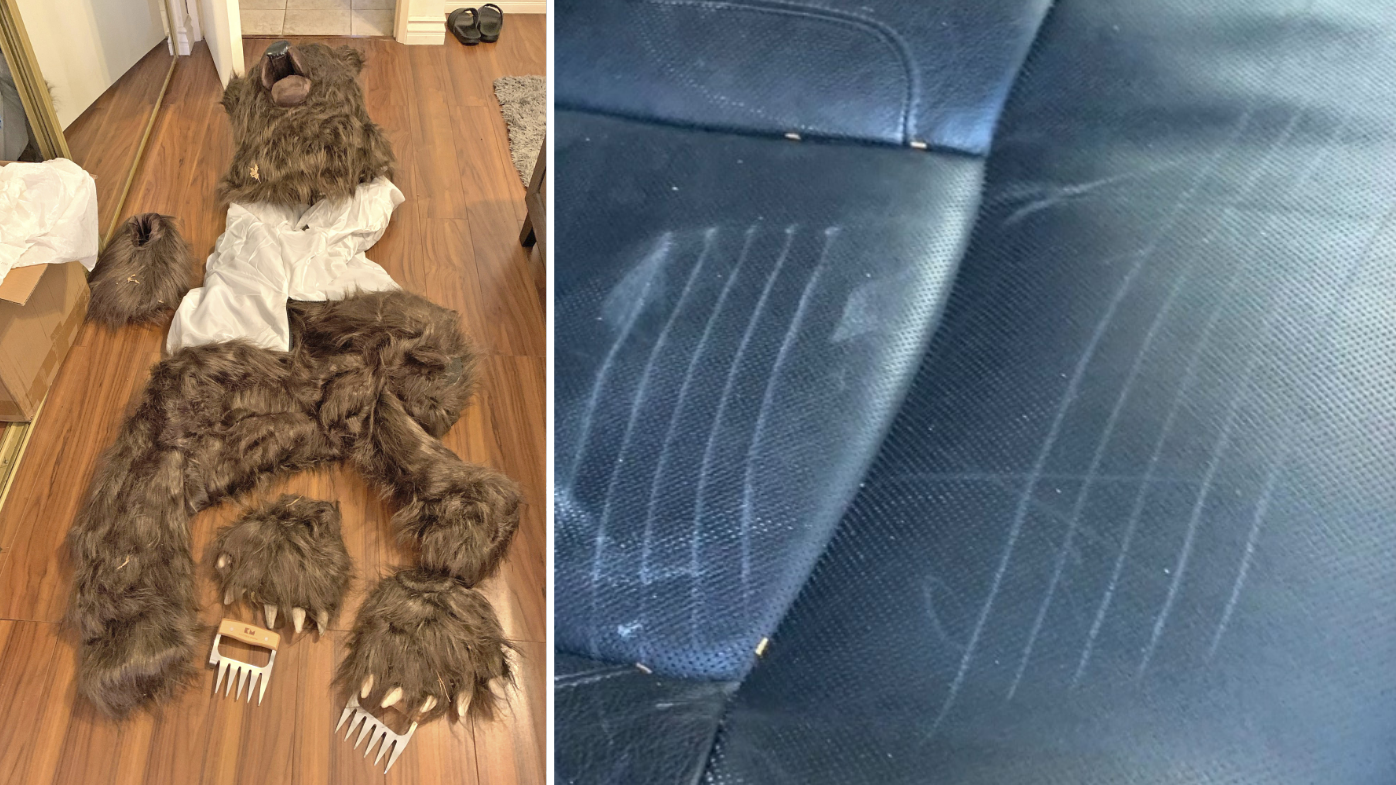
Biology doesn't lie. Real bear claws leave specific patterns. They have immense power and weight behind them. The damage in these cars looked more like it was done with a kitchen tool or a hand-held rake. Once the biological evidence was stacked against them, the CDI obtained a search warrant for the suspects' home.
During the search, they found exactly what they expected. A full-bodied bear costume, complete with furry paws and metal claws designed to mimic animal damage. It’s the kind of thing you’d buy at a Halloween pop-up shop, not something that would fool a wildlife expert for a second.
Why This Fraud Scheme Failed So Fast
Fraudsters often think they're smarter than the system. They rely on the volume of claims a company handles, hoping their "small" $140k theft will slip through the cracks. They're wrong.
Most people don't realize that insurance companies use sophisticated AI and cross-industry databases to flag suspicious patterns. When the same group of names appeared across multiple claims for "bear damage," the system didn't just flag it—it screamed. If you're planning on committing fraud, don't do it with a 2010 Rolls-Royce. Those cars get extra scrutiny because the parts are insanely expensive and the owners are expected to have them in secure locations.
The suspects, Ruben Tamrazian, Ararat Chirkinian, Vahe Muradkhanyan, and Alfiya Zuckerman, now face conspiracy and insurance fraud charges. They tried to turn a costume into a six-figure payday. Instead, they turned themselves into a national punchline.
The Real Cost of Insurance Fraud
You might think "who cares if a big insurance company loses some money?" That's a naive take. Fraud isn't a victimless crime. It’s a direct tax on every person who pays for car insurance.
According to the National Anti-Fraud Council, insurance fraud costs the average American family between $400 and $700 per year in increased premiums. Every time someone tries to fake a bear attack or a "slip and fall," your monthly bill goes up. Companies have to hire more investigators, pay for more data analysis, and pass those costs onto you.
California is a particular hotspot for these schemes. The state's Department of Insurance investigates thousands of cases annually, ranging from staged fender benders to "paper accidents" that never actually happened. Operation Bear Claw is just a flashy example of a massive, boring problem that drains billions from the economy.
Spotting the Signs of Amateur Fraud
If you’re ever in a position where you’re looking at a claim or a weird news story, there are specific things that scream "fake."
- Convenient lack of witnesses. These "attacks" always happen in the dead of night with no one around but a perfectly positioned security camera.
- Hyper-specific damage. The bear managed to destroy the leather seats but didn't leave a single muddy paw print or any hair? That's not how animals work.
- High-value targets. Nobody fakes a bear attack on a 1998 Honda Civic. The payout isn't worth the costume rental.
- The Cluster Effect. Fraudsters are rarely one-hit wonders. They get greedy and try to run the same scam three times in one night.
What Happens When You Get Caught
The legal system isn't kind to people who waste public resources with bear suits. Beyond the criminal charges, these individuals are now effectively uninsurable. No reputable company will touch someone with a felony fraud conviction on their record. If they do find coverage, the premiums will be astronomical.
They’ll also likely be hit with restitution orders. This means they don't just go to jail or get probation; they have to pay back the costs of the investigation. That includes the time of the detectives, the wildlife biologists, and the legal teams. It’s a financial hole that most people never climb out of.
Protecting Yourself from Scams
While you probably aren't going to be framed by a man in a bear suit, you might be targeted by "crash for cash" scammers on the road. These are people who intentionally slam on their brakes to get rear-ended or wave you into traffic only to hit you.
- Get a dashcam. A $50 camera is the best insurance against a $50,000 fraud claim. Video doesn't lie, and it's much harder to argue with than a "he-said, she-said" report.
- Call the police. Never "settle" on the side of the road with cash. Scammers want to avoid a paper trail. A police report is your best friend.
- Take photos of everything. Take pictures of the other driver, their passengers (to prevent "jump-ins" where extra people claim they were in the car), and the damage to both vehicles.
- Report suspicious activity. If you see something that looks like an insurance scam, report it to the California Department of Insurance or your local equivalent.
The Bear Suit Caper is a hilarious story, but it’s a reminder that insurance companies have seen it all. If you think you've found a clever way to cheat the system, you're probably just the next person about to find out how well those fraud detection algorithms actually work. Keep your car in the garage and leave the bear costumes for Halloween. It’s cheaper that way.