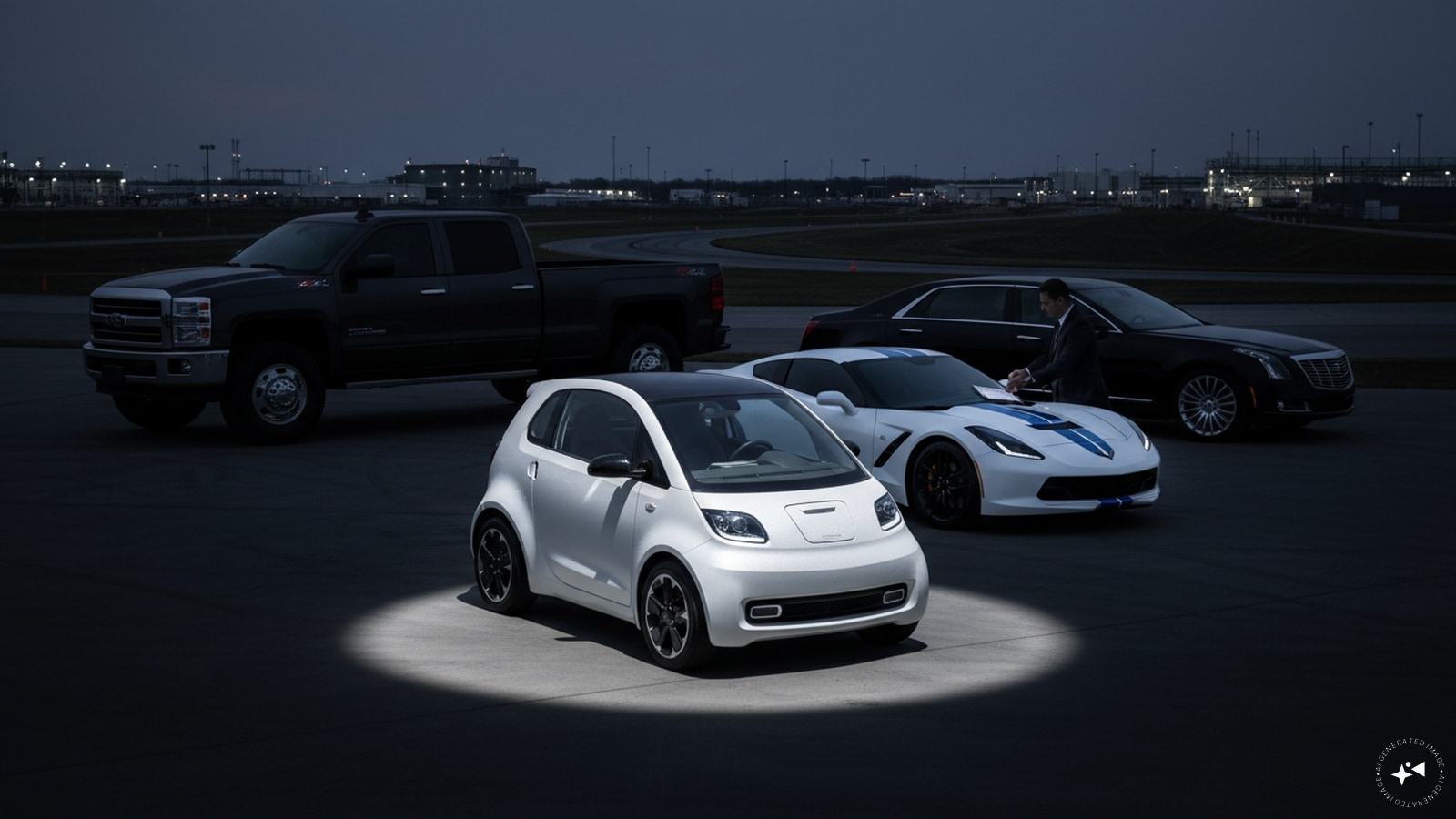
Everyone in the automotive press is currently hyperventilating over BYD’s latest geopolitical chest-pumping. The lazy consensus goes like this: Chinese battery giants are going to swoop into Tokyo, roll out a pint-sized electric runabout, and completely obliterate the sacred Japanese kei car segment. Analysts love a good David versus Goliath narrative. It writes itself. It hits all the right tech-blog traffic quotas.
It is also completely, fundamentally wrong.
I have watched foreign entrants try to crack the domestic Japanese mobility matrix for two decades, burning billions trying to rewrite rules they refuse to understand. They treat Japan like just another export zone waiting to be conquered. That hubris always ends in a financial bloodbath.
BYD’s attempt to miniaturize their philosophy for the Japanese domestic micro-vehicle category misses the entire point of why those tiny boxes exist in the first place. Tokyo does not need another cheap battery on wheels. It needs an ecosystem, a social contract, and a miracle to overcome structural hurdles that Silicon Valley and Shenzhen marketing departments completely ignore.
The Kei Car Illusion
Let us start with basic definitions because automotive journalists love throwing around the term kei jidosha without knowing the blood, sweat, and bureaucratic red tape that built it.
A kei car is not just a small car. It is a strictly regulated tax loophole wrapped in sheet metal. Japanese regulators cap these vehicles at 3.4 meters in length, 1.48 meters in width, and 2.0 meters in height, with engines restricted to 660cc. In exchange for fitting these micro-dimensions, owners get massive tax breaks, cheaper expressway tolls, and—crucially in crowded urban centers—an exemption from the dreaded shako shomeisho, the official garage certificate proving you actually have a dedicated parking space.
Foreign manufacturers look at those specs and think, "Great, just drop a small battery pack into a square box, undercut local pricing, and watch the orders roll in."
That is not how consumer behavior works in an insular island nation with a hyper-loyal domestic manufacturing base.
Japanese buyers do not purchase kei cars because they want a chic, cutting-edge lifestyle statement. They buy them because they are low-risk, hyper-functional utility appliances. Honda's N-Box and Suzuki's Spacia are not bought for their soul; they are bought because their interiors are miracles of spatial engineering, designed to haul everything from a month of groceries to a surfboard while fitting into parking spots narrower than a narrow hallway.
BYD thinks they can win this war on pure hardware specs and sticker price. They are ignoring the psychological barrier of domestic brand loyalty and the ironclad grip of the local dealer networks.
The Infrastructure Dead End
Imagine a scenario where a salaryman in Saitama buys a new Chinese micro-EV because the initial sticker price is twenty percent lower than a comparable Nissan Sakura.
Where does he charge it?
If he lives in a high-rise condominium complex—which millions of urban Japanese do—home charging is virtually nonexistent. Japan's multi-family housing infrastructure was built decades ago without EV readiness in mind. Retrofitting older urban apartment blocks with high-voltage chargers requires navigating endless layers of strata management, building code restrictions, and homeowner association vetoes that move at glacial bureaucratic speeds.
The lazy narrative says that fast chargers are everywhere, so it does not matter. But public charging in Japan is fragmented, plagued by incompatible network cards, slow output speeds, and stations located in awkward corporate lots rather than neighborhood hubs.
Local giants like Nissan and Mitsubishi cracked this code with the Sakura not because they built the fastest car, but because they understood the friction points of Japanese daily life. They built a car that integrates seamlessly with existing home routines and local infrastructure. BYD is bringing a smartphone mentality to an industry governed by plumbing and municipal planning.
The Social Cost of Foreign Badges
Let us talk about status and trust. In North America or Europe, driving an affordable import is a badge of pragmatism or eco-friendliness. In Japan, the automotive landscape is deeply tribal.
When you park a vehicle in a tight neighborhood alleyway in Kyoto or Osaka, your neighbors notice. The car you drive is an extension of your civic responsibility. It signals whether you respect local industrial heritage. Toyota, Honda, Suzuki, and Daihatsu do not just sell cars; they sell peace of mind rooted in decades of local reliability and neighborhood service networks.
If a foreign micro-EV breaks down in a regional town, where is the parts supply chain? How long does it take for a specialized high-voltage technician to arrive from a central depot? Japanese consumers are notoriously risk-averse. They will gladly pay a minor premium for a domestic badge if it means a local mechanic down the street can fix it by Tuesday afternoon.
BYD has deep pockets. They can subsidize marketing campaigns and offer aggressive fleet pricing to corporate buyers. But retail consumer adoption in the micro-segment relies entirely on word-of-mouth trust among families who have driven Suzukis since the Showa era. You cannot buy that kind of generational loyalty with a flashier infotainment screen.
What Everyone Gets Wrong About the Price War
Analysts love to point to price parity as the ultimate weapon. If an import costs less, consumers will abandon local brands.
That theory assumes price is the primary friction point in the Japanese micro-car market. It is not. The primary friction points are resale value, reliability insurance, and spatial integration.
Japanese kei cars hold their residual values remarkably well because the domestic secondary market is massive and predictable. Buyers know exactly what a three-year-old Daihatsu is worth. Nobody knows what the secondary market for a used, early-generation import EV with degraded battery health will look like in five years. The depreciation curve is a black box. Risk-averse buyers hate black boxes.
Furthermore, the domestic automakers are not sitting still. They have deep institutional knowledge of how to squeeze every millimeter of usable space out of those strict dimensional limits. When Honda or Nissan designs a micro-EV interior, they optimize it for the specific physical proportions and daily habits of Japanese drivers. They know where people put their convenience store bento boxes, where umbrellas go when it rains, and how tall the ceiling needs to be so an elderly parent can step inside without bending their back.
Foreign entrants often scale down a global platform or adapt a developing-market runabout to fit the dimensions. It feels foreign. It feels compromised.
The Uncomfortable Reality of Export Hubris
We have seen this movie before. Every few years, an outsider decides they have cracked the code to disrupt a mature, highly localized market through sheer manufacturing volume. They hold a flashy press conference in Tokyo, show off shiny prototypes, and proclaim the death of the incumbents.
Then reality sets in.
The regulatory walls, the cultural nuances, the distribution monopolies, and the sheer competence of local competitors grind the foreign invasion to a halt. BYD makes phenomenal mass-market EVs. Their global expansion is impressive, and in segments where buyers are looking for raw battery capacity and tech features at scale, they are a formidable force.
The micro-car category is an entirely different beast. It is a hyper-specialized, deeply conservative ecosystem built on narrow margins and strict cultural expectations.
Trying to conquer it with a generic imported battery box is like trying to sell instant ramen to a master chef who has spent forty years perfecting his broth. You might win over a few curious tourists, but you will never capture the kitchen.
Stop waiting for the foreign micro-invasion to rewrite the rules. The rules were written in concrete decades ago, and they are not changing for anyone.