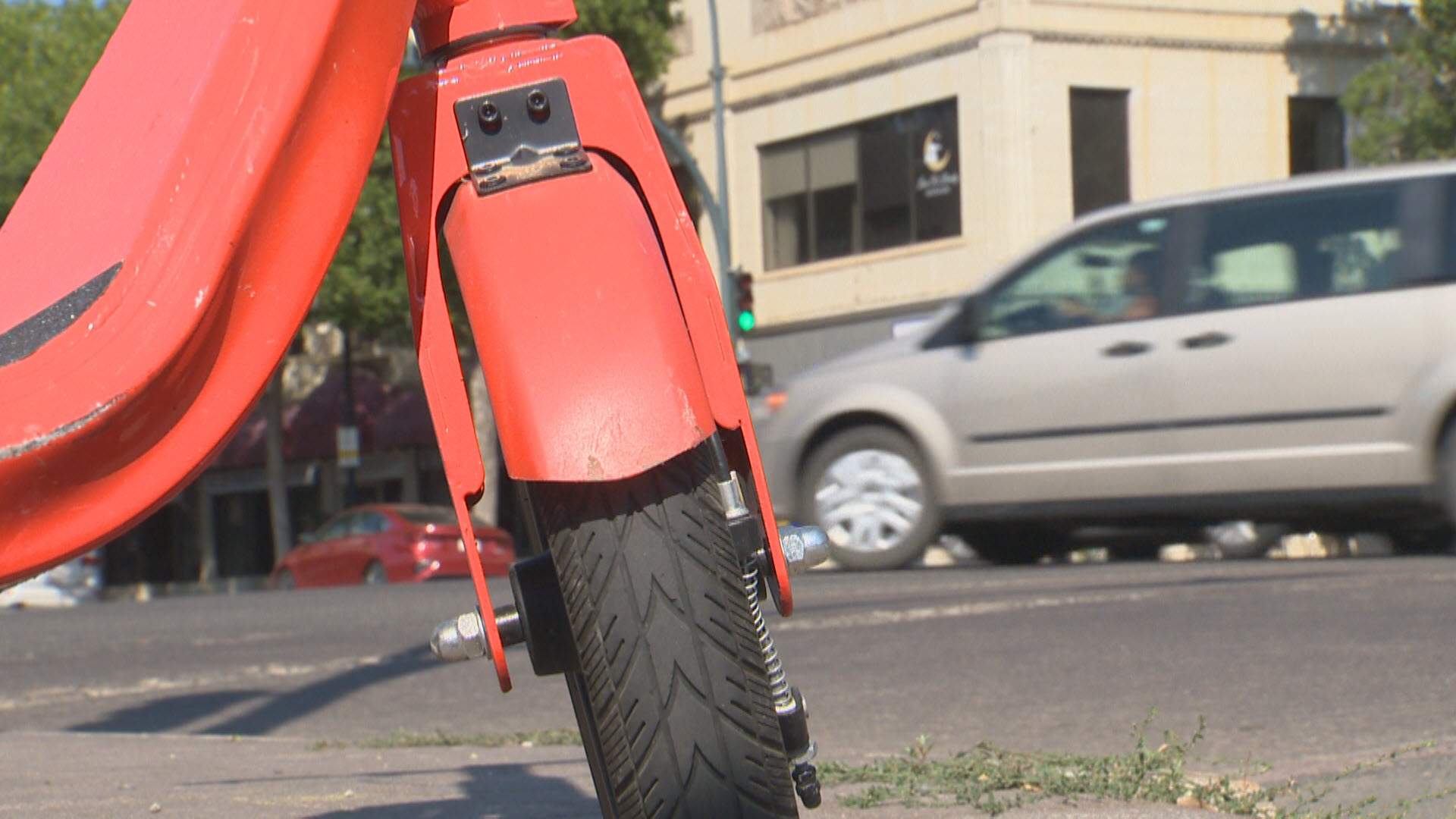
The local detachment wants you to look at a teenager on a lime-green deck and see a menace. The headlines write themselves every time the Burnaby RCMP announces another targeted crackdown on e-scooters. They point to emergency room visits. They wave statistics about sidewalk friction. They frame the whole operation around public safety, civic order, and keeping pedestrians safe from rogue micro-mobility.
It is a masterpiece of institutional distraction.
Every time a municipal police force stands behind a podium to warn citizens about the dangers of personal electric transport, they are committing a quiet sleight of hand. They are hyper-focusing on the symptom of a poorly designed city while letting the actual engine of carnage—two tons of steel combustion engines rolling through residential neighborhoods at forty kilometers an hour—off with a warning.
Let's look at the actual logic here.
When a transit authority or a municipal police detachment ramps up enforcement against e-scooters, they are relying on a lazy consensus: that any vehicle not fitting the traditional 20th-century mold of a car or a registered bicycle is an unregulated hazard. They cite collision data. They talk about sidewalk infractions. What they omit—conveniently—is the kinetic math.
A standard e-scooter weighs roughly fifteen kilograms. A typical commuter riding one at twenty-five kilometers an hour carries a fraction of the momentum generated by an average mid-size SUV. Yet, the regulatory panic is inverse to the threat. We treat a standing scooter like an unguided missile, while treating urban vehicular dominance as a law of nature.
I have watched cities spend decades tweaking crosswalk intervals and installing flimsy plastic bollards, pretending they are solving traffic violence, while traffic engineers continue to prioritize throughput over human survival.
Urban planning has a dirty secret. Our streets were not built for people. They were retrofitted for automobiles in the mid-century, and every rule, sign, and enforcement priority since then has been designed to protect that original architectural mistake. When micro-mobility devices arrived, they didn't just offer an alternative commute; they exposed the absolute fragility of the existing right-of-way hierarchy.
Police departments step up enforcement not because e-scooters are statistically deadlier than cars—they aren't, not by orders of magnitude—but because scooters are easy to ticket. They lack license plates. Their riders are exposed. They represent a chaotic, decentralized disruption to a tax-and-permit enforcement model designed in an era of sedans and station wagons.
If you want to understand why enforcement is happening right now in Burnaby, follow the friction.
The Kinetic Reality Nobody Wants to Measure
Let's talk about injury statistics, because the lazy consensus loves to weaponize emergency room reports without context.
When an e-scooter rider crashes, the primary victim is almost always the rider themselves. They hit a pothole. They misjudge a wet rail track. They take a spill over the handlebars because municipal infrastructure is riddled with neglected asphalt. It is a single-vehicle incident driven by poor maintenance.
Compare that to a motor vehicle collision. When a car hits a pedestrian or a cyclist, the victims are innocent bystanders absorbing the full kinetic transfer of a heavy machine. The societal cost, measured in permanent disability and fatalities, is astronomical.
Yet, police departments lump all micro-mobility accidents into a single basket of panic. They tell you that injuries are rising. Of course they are. Adoption is rising. Whenever any mode of transit scales up, raw incident numbers increase. But look at the per-trip risk ratio. Look at who is killing whom.
Imagine a scenario where every single car in Burnaby was replaced tomorrow by an e-scooter of equivalent commuter volume. The city’s asphalt would look like a chaotic swarm of insects, yes. But urban trauma centers would empty out within forty-eight hours. The death toll from vehicular collisions would drop straight to zero.
The police know this. The city planners know this. But admitting that our infrastructure is inherently hostile to anything weighing less than a thousand pounds requires institutional courage that local governments simply do not possess.
The Infrastructure Gaslight
The standard police advice for e-scooter riders is predictable: stay off the sidewalks, stay out of pedestrian zones, and ride strictly on the road or designated bike lanes.
It sounds reasonable in a press release. It is murderous in practice.
Ask any commuter who has tried to navigate major Burnaby thoroughfares on a small-wheeled vehicle. The bike lane network is fragmented, full of sudden dead ends, blocked by delivery vans, and abruptly dumped into high-speed multi-lane arterial roads where drivers treat turn signals as optional suggestions.
When an e-scooter rider hops onto a sidewalk, they aren't doing it out of malice or a desire to terrorize pedestrians. They are doing it out of self-preservation. They are fleeing an environment where asphalt dominance rules supreme.
Instead of fixing the lanes, municipal authorities deploy enforcement squads. They set up speed checks for machines that top out at thirty kilometers an hour. They hand out fines for lacking a bell while a pickup truck rolls past with a modified exhaust pipe rolling coal.
This is the definition of misplaced regulatory energy.
Urban mobility experts have pointed out for years that safety comes from segregation of mass and speed, not from punitive fines. If you want people off the sidewalks, you must build protected, grade-separated micro-mobility corridors that physically prevent cars from entering. You cannot ticket your way into safety while keeping the dangerous environment intact.
The Economics of Convenience
Why are e-scooters winning despite the regulatory headwinds? Because they solve the last-mile problem in a transit landscape that has failed to keep pace with population growth.
People are not riding scooters because they are trendy. They are riding them because owning and operating a car in the modern urban core is an economic trap. Insurance rates are climbing. Gas prices are volatile. Parking is scarce and extortionate.
Micro-mobility offers a cheap, nimble escape hatch from car dependency.
And that is precisely why the traditional establishment hates it. It bypasses the traditional dealership, the insurance cartel, the municipal parking revenue stream, and the fossil fuel supply chain. A citizen on an e-scooter is economically independent in a way that makes municipal tax administrators deeply uncomfortable. They are moving through the city without generating parking tickets, fuel taxes, or toll fees.
So the enforcement campaigns continue. They are framed around protection, but they function as containment.
The Accountability Vacuum
Let's address the counter-argument that you are likely thinking right now: Rules are rules. If scooters are illegal on sidewalks, riders should follow the law.
This is the classic legalistic dodge. It treats the law as a neutral arbiter rather than a reflection of incumbent power.
When laws are written by politicians who have never ridden a scooter a day in their lives, for a city designed around the internal combustion engine, compliance becomes a hazard. Demanding that a vulnerable road user follow rules optimized for cars is like telling a pedestrian to use the highway because the crosswalk is inconvenient.
The accountability belongs upstream.
Hold the city council accountable for the missing bike lanes. Hold the provincial government accountable for lagging transit integration. Hold the police accountable for allocating resources toward minor administrative infractions while vehicular speeding remains an epidemic across every suburban corridor.
When an enforcement unit boasts about writing dozens of tickets to scooter riders, they are participating in a displacement activity. They are doing the easy thing because the hard thing—redesigning our streets to accommodate human scale over vehicular scale—requires political will.
Stop pretending that a standing electric deck is the greatest threat to public safety on our streets. The danger isn't the kid on the scooter. The danger is the system that forces them to apologize for existing.
If Burnaby actually wanted to curb accidents and injuries, they would park the cruisers, pick up a can of paint, and start building infrastructure that doesn't treat human life as collateral damage for traffic flow.
Until then, every ticket written is just another receipt for a failed status quo.