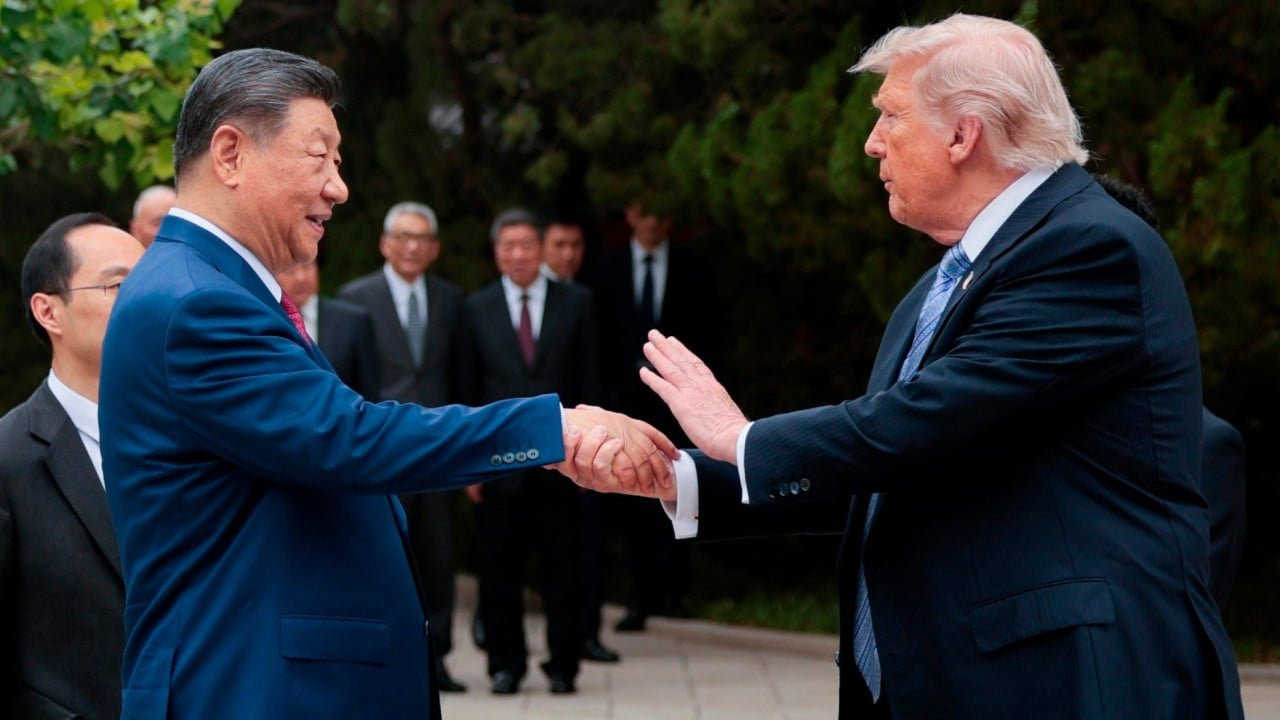
The recent high-stakes summit in Beijing between US President Donald Trump and Chinese President Xi Jinping was spun by both Washington and Beijing as a grand exercise in tactical stabilization. Behind the carefully curated press releases and optical victories, a far more cynical transaction occurred. Stripped of the diplomatic theater, Donald Trump explicitly urged Xi Jinping to use China’s massive leverage to force Russia to the negotiating table to end the Ukraine war. In return, Beijing quietly unfurled its real terms: a sophisticated domestic tech sanctions list designed to choke American access to critical supply chains while securing parity in the global technology race.
This is the transactional reality of modern geopolitics. Washington is discovering that its traditional economic cudgels no longer carry the same weight, while Beijing is demonstrating that it can weaponize its industrial monopoly over critical minerals and manufacturing to dictate terms to the West.
The Art of the Ukraine Ask
During the closed-door sessions in Beijing, Trump made a direct appeal to Xi, requesting that the Chinese leader persuade Vladimir Putin to halt the escalating military offensives in Ukraine and return to formal negotiations. Trump has staked a significant portion of his return-to-office legacy on resolving the European conflict, going so far as to pressure Ukrainian President Volodymyr Zelensky earlier this year to accept an agreement.
The strategy ignores the deep structural codependency that now defines the Sino-Russian axis.
Just days after Trump left Beijing, Xi hosted Putin for a bilateral summit, where the two leaders issued a joint statement asserting that the "root causes" of the crisis must be eliminated. Translate the diplomatic jargon: Beijing will not pull the plug on Moscow. Over 90% of Russia’s imports of sanctioned technology used for weapons production now flow directly through China, up from roughly 80% last year. Chinese banks and technology corporations are actively expanding their footprints in occupied Ukrainian territories, integrating Chinese equipment into local critical infrastructure.
For Xi, the war in Europe is a highly useful strategic distraction. It drains Western military inventories, exhausts American political capital, and binds Russia to China as a subordinate economic partner. Trump’s belief that he can simply negotiate a quick exit by asking Beijing for a favor reveals a fundamental misreading of what drives the Chinese leadership. Xi will not trade his premier strategic buffer against the West for vague promises of American goodwill.
The Tech Sanctions List and the Critical Minerals Trap
While Washington focused on geopolitical optics, Beijing executed a targeted strike on America's soft underbelly: tech infrastructure and critical minerals supply chains. China’s newly consolidated tech sanctions list is not just a defensive measure; it is a blueprint for asymmetric economic warfare.
The conflict shifted away from broad tariffs toward structural resource control. When Beijing implemented strict export-licensing restrictions on rare earth elements and permanent magnets, it exposed a terrifying reality for the Pentagon. The rapid expenditure of advanced American weapons systems in global flashpoints has left the US military deeply vulnerable. Replenishing precision-guided munitions, missile interceptors, and high-tier military electronics now depends on supply chains that run directly through mainland China.
+---------------------------+-----------------------------------------------+
| Strategic Input           | Chinese Supply Chain Dominance               |
+---------------------------+-----------------------------------------------+
| Rare Earth Processing     | ~90% of global refining capacity              |
| Permanent Magnets         | Over 90% of advanced military-grade output   |
| Weapon-Grade Semiconductors| ~94% of Russian supply chain transit lines    |
+---------------------------+-----------------------------------------------+
The tactical ceasefire signed in Busan, South Korea, which temporarily suspended heightened reciprocal tariffs, was a temporary band-aid. Under that agreement, China agreed to pause its additional rare earth export controls in exchange for a 10 percentage point reduction in US fentanyl-related tariffs. Those export controls are scheduled to snap back into force by early November. Beijing knows that Trump’s primary weapon—the threat of sweeping executive tariffs—was crippled by a Supreme Court ruling declaring that the International Emergency Economic Powers Act does not authorize broad, unilateral trade levies.
With US tariff authority tied up in federal litigation, China holds the superior hand.
The Dangerous Illusion of AI and Cyber Parity
The tech battlefield at the summit extended well beyond raw materials into the architecture of artificial intelligence and cybersecurity. The public readouts highlighted a vague commitment to establishing a bilateral AI safety dialogue, but the underlying discussions tell a much darker story.
The Trump administration included major tech executives in its broader delegation, hoping to secure market guardrails for advanced American hardware, specifically concerning high-profile impasses over frontier chip sales like Nvidia’s H200 series. US Trade Representative Jamieson Greer later admitted that substantive discussions on semiconductor export controls never even made it to the table. Beijing successfully decoupled AI safety talks from the broader tech blockade, ensuring they can discuss abstract global risks while continuing to build out their domestic semiconductor capacity using mid-tier, non-sanctioned equipment.
Even more troubling was Trump's public concession regarding offensive cyber capabilities. When questioned by reporters on whether he confronted Xi about state-sponsored cyber intrusions targeting American infrastructure, Trump responded with unprecedented equivalence:
"I did. He talked about attacks that we did in China. You know, what they do, we do too."
By conceding moral and operational parity, the administration handed Beijing a massive propaganda victory. The American intelligence community has long classified Chinese cyber operations as the most persistent, asymmetric threat to Western civil infrastructure. Erasing that distinction in a single press gaggle severely undermines years of coordinated multilateral defense policy.
The Structural Realities Left Behind
The fundamental flaw of the administration's current approach to China is the belief that complex, generational systemic rivalries can be resolved via transactional, one-on-one deals between heads of state. Beijing plays a longer game. Chinese policymakers are acutely aware that within less than three years, a new American election cycle could bring a different administration to power, yet the bipartisan, institutional consensus against China’s rise will remain intact.
Consequently, Beijing has no incentive to offer permanent structural concessions. They are content to offer short-term agricultural purchase commitments and vague anti-fentanyl cooperation to keep the tariff threat at bay while systematically reinforcing their domestic tech ecosystem.
The TikTok joint venture finalized earlier this year—where ByteDance retained a minority stake while American investors handled domestic data oversight via Oracle—is being touted by Washington as a template for resolving tech disputes. In reality, it is an outlier. You cannot copy-paste a social media compromise onto a supply chain crisis involving hypersonic missile components, lithium-ion battery dominance, and the raw processing of neodymium magnets.
Western defense and technology sectors must face an uncomfortable truth. As long as the United States remains structurally dependent on Chinese refining capacity for the raw materials that build its weapons and power its grids, diplomatic summits will remain an exercise in managing American retreats. The Beijing summit did not mark the beginning of a grand global reset; it proved that China has successfully built an economic fortress capable of resisting American pressure, leaving Washington to trade away long-term strategic leverage for the mere illusion of short-term global stability.