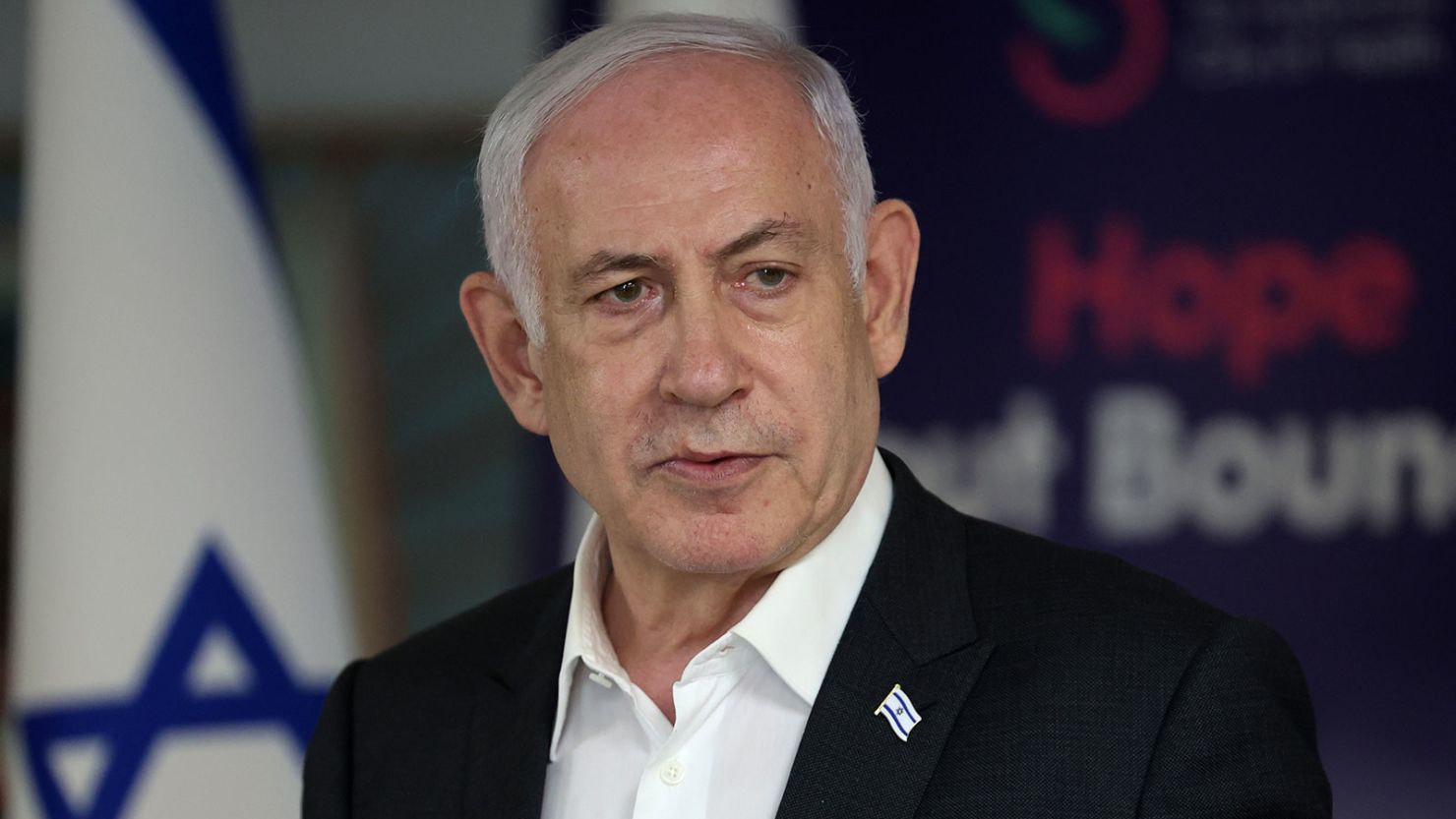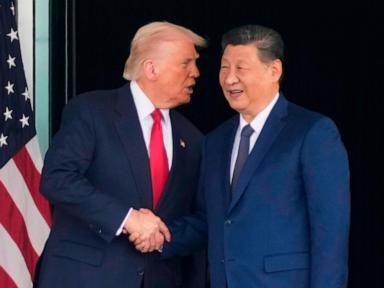
The grand stage in Beijing is set for May 14, 2026, but the red carpet cannot hide a fundamental shift in the global order. Donald Trump and Xi Jinping are not meeting to end a trade war; they are meeting to manage a divorce that neither side can yet afford to finalize. While the official narrative will likely highlight "historic" soybean purchases and a fragile ceasefire on tariffs, the reality is far grittier.
The United States enters this summit with its leverage clipped by a spreading conflict in the Middle East that has blocked the Strait of Hormuz, making energy security a shared but desperate vulnerability. China, meanwhile, is grappling with an economy that refuses to ignite, forcing Xi to play a cautious hand while privately tightening his grip on the critical minerals that keep American factories humming.
The Board of Trade Illusion
The centerpiece of this summit is the proposed "Board of Trade," a new institutional mechanism designed to move away from the chaotic, ad hoc tariff volleys of 2025. It sounds like progress. In practice, it is a strategic retreat for a Washington administration that has realized global 10% tariffs—recently struck down in part by the U.S. Court of International Trade—are a blunt instrument that often bleeds the wielder.
Trump needs a win that looks like a deal but acts like a wall. By bringing a literal "who's who" of American industry to Beijing—Elon Musk, Tim Cook, and the CEOs of BlackRock and Goldman Sachs—the administration is attempting to force open China’s regulated payment systems. They want more than just selling grain; they want the plumbing of the Chinese economy to run on American software and finance.
China sees through this. Beijing’s willingness to buy 500 Boeing aircraft or meet soybean quotas is a tactical sacrifice. They are buying time. For every Boeing jet purchased, Xi secures another month of relative stability to continue "de-risking" his own supply chains from Western interference.
The Secret Weapon of Rare Earths
While the cameras focus on the handshake, the real battle is being fought in the periodic table. China currently throttles the supply of permanent magnets and rare earth elements essential for everything from F-35 fighter jets to the EVs Elon Musk is trying to sell.
The U.S. remains dangerously dependent. Recent "anti-foreign sanctions" laws in Beijing have turned these minerals into a geopolitical kill switch. Trump’s team is pushing for a guaranteed flow of these materials, but Xi knows that once he gives up that leverage, he has nothing left to stop the next wave of American export controls on high-end AI chips.
The administration’s "maximum pressure" campaign on AI safety is a thin veil for a technological blockade. They are telling Beijing that they can talk about AI ethics, but the actual hardware remains off-limits. It is a dialogue of the deaf: one side wants the ingredients for the future, while the other wants to keep the oven locked.
The Iran Factor
The blockade of the Strait of Hormuz has changed the math for both leaders. The U.S. Navy is currently intercepting tankers, some of which are bound for Chinese ports. This creates a friction point that wasn't on the radar two years ago. Trump wants Xi to lean on Tehran; Xi wants Trump to stop the blockade.
This isn't about trade anymore. It's about survival. China is Iran’s largest crude buyer, and every day the Strait remains closed, the "China Dream" of 5% growth slips further away. If Trump can trade a softening on tech sanctions for a Chinese-led peace in the Middle East, he might take it. But that would require trusting a partner who has spent the last decade learning how to circumvent every deal ever signed.
Non Negotiable Red Lines
There are areas where the "art of the deal" hits a brick wall. The Heritage Foundation and other hawkish circles have made it clear that certain concessions would be viewed as a surrender.
- Fentanyl Precursors: Beijing uses drug enforcement as a bargaining chip, turning the taps on and off based on the temperature of trade talks. This is no longer a policy issue; it's a political landmine for Trump.
- Taiwan: Chinese readouts are obsessed with the island, while Trump focuses on the trade deficit. This disconnect is where the danger lies. Xi is pushing for a shift from "not supporting" Taiwan independence to "explicitly opposing" it.
- Technology Theft: The administration cannot afford to look weak on IP theft while simultaneously asking tech CEOs to invest more in the mainland.
The summit is a compliance checkpoint, not a reset. If the U.S. lowers fentanyl-related tariffs back to 10%, it expects a total shutdown of the precursor labs. Anything less will be seen as a failure of the administration's core promise to protect the American heartland.
The Corporate Shield
The presence of the "CEO Delegation" serves a dual purpose. For Trump, it provides a shield. If the deal goes south, he can blame the "globalist" interests of the very people he brought along. If it succeeds, he is the master orchestrator of American prosperity.
For the CEOs, it’s a terrifying tightrope. Apple and Tesla are deeply embedded in Chinese manufacturing. They are effectively hostages to the relationship. Their presence in Beijing is less about seeking new markets and more about protecting the ones they already have from being liquidated in a fit of geopolitical pique.
The outcome of the Beijing summit will not be a return to the status quo. It will be a formalization of the "Managed Friction" era. Both nations are building parallel universes—different internets, different payment systems, and different supply chains. They are just trying to make sure the transition doesn't trigger a global depression or a kinetic war.
Expect a joint statement full of lofty goals and specific, albeit modest, purchase agreements. But watch the fine print on export controls and "national security" exceptions. That is where the real war is being waged, and that war is far from over.
This video provides an in-depth look at the geopolitical pressures, including the Middle East conflict and trade tensions, that are shaping the high-stakes meeting between the two leaders.
http://googleusercontent.com/youtube_content/1