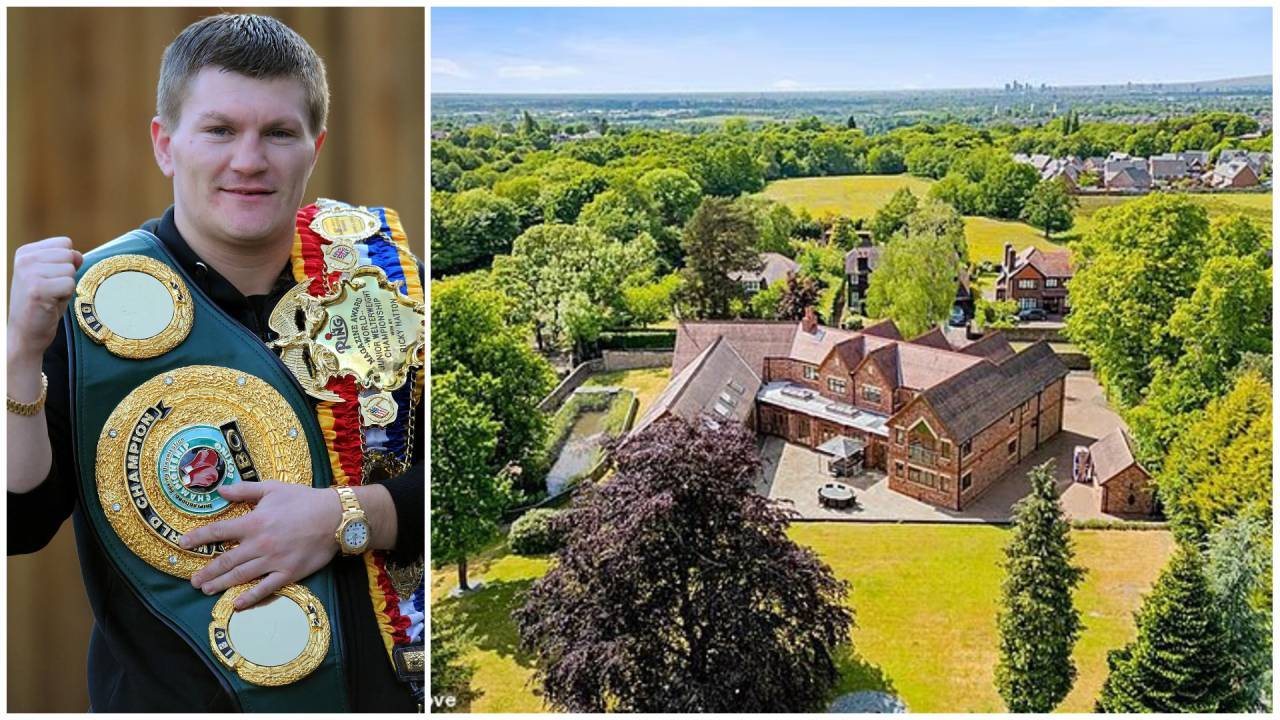
The luxury mansion once owned by late British boxing icon Ricky Hatton in Gee Cross, Greater Manchester, recently cleared Land Registry documents for £1.5 million—marking a steep £350,000 drop from its original £1.85 million asking price.
Tabloids rushed to frame the transaction through a lens of morbid sensationalism, tying the markdown directly to the tragic circumstances of his death inside the property in September 2025 at the age of 46. Real estate realities in high-end British provincial markets, however, are rarely solved by ghost stories or psychological stigma alone. Behind the numbers lies a complex intersection of high-value asset liquidation, regional housing liquidity limits, and the structural friction that occurs when an intensely personalized celebrity home hits an indifferent open market.
The Anatomy of a Luxury Price Slash
Property valuation at the upper tier of the Greater Manchester commuter belt operates on strict margins. When the five-bedroom detached residence first appeared on listings prior to Hatton's passing, agents set the benchmark at £1.85 million. That figure relied on the assumption that premium square footage, custom leisure installations, and celebrity provenance would command a heavy surplus.
It failed. Following the tragedy, the home was temporarily withdrawn, re-emerging at £1.75 million before sliding further to £1.65 million, and finally closing at £1.5 million.
Every veteran property broker recognizes this pattern. High-end homes equipped with bespoke modifications often suffer from severe over-capitalization. Buyers spending upwards of a million and a half pounds rarely want to inherit another man's complete architectural autobiography. When a house carries heavy custom branding, the pool of viable buyers shrinks dramatically.
Customization Versus Market Liquidity
Built in 2010, the Gee Cross residence was heavily molded around Hatton’s personal identity. It featured an indoor swimming pool, a jacuzzi, a private gym, a dedicated cinema room, and a sprawling games room outfitted with a professional bar. Most notably, the grounds and interior acted as a shrine to his lifelong allegiance to Manchester City, incorporating stadium seats salvaged from Maine Road alongside a traditional British telephone box.
For a die-hard fan, these features represent priceless memorabilia. For a standard high-net-worth buyer looking for neutral luxury, they represent an expensive demolition and renovation project.
Stripping out custom memorabilia, re-tiling leisure complexes, and modernizing personalized entertainment spaces requires a significant capital injection. Prospective buyers factor those future renovation liabilities straight into their initial offers. A £350,000 reduction is not merely a reflection of market hesitation; it is the exact financial cushion required to neutralize a heavily customized footprint.
The Wider Estate Puzzle
The sale of the Gee Cross property also highlights the quiet operational pressures facing celebrity estates following sudden, intestate, or complex passings. Reports surrounding the distribution of Hatton's estimated multi-million-pound fortune have pointed toward familial disagreements and probate delays.
When executors face mounting maintenance costs, council tax liabilities on vacant high-value properties, and ongoing estate administration fees, holding out for an ambitious asking price becomes a financial liability. Liquidity takes precedence over maximum valuation. Selling an asset £350,000 under target is often preferable to letting a luxury property sit on the books for years while overheads bleed the wider estate dry.
The market does not sentimentalize a champion. It prices square footage, location, and the cost of change. The final ledger on Hatton's former home reflects standard real estate economics colliding with the stark reality of liquidating a heavily personalized fortress under pressure.